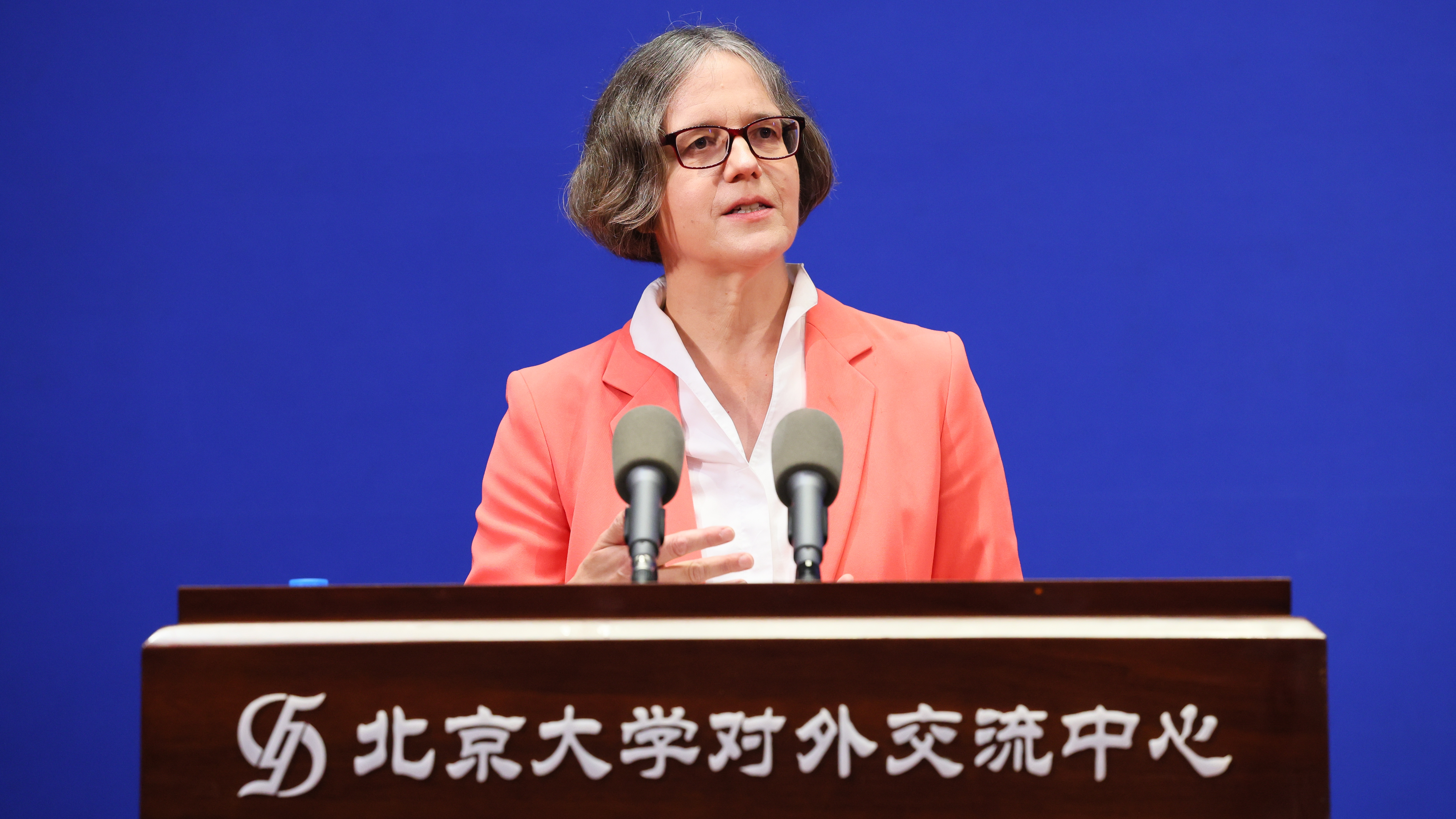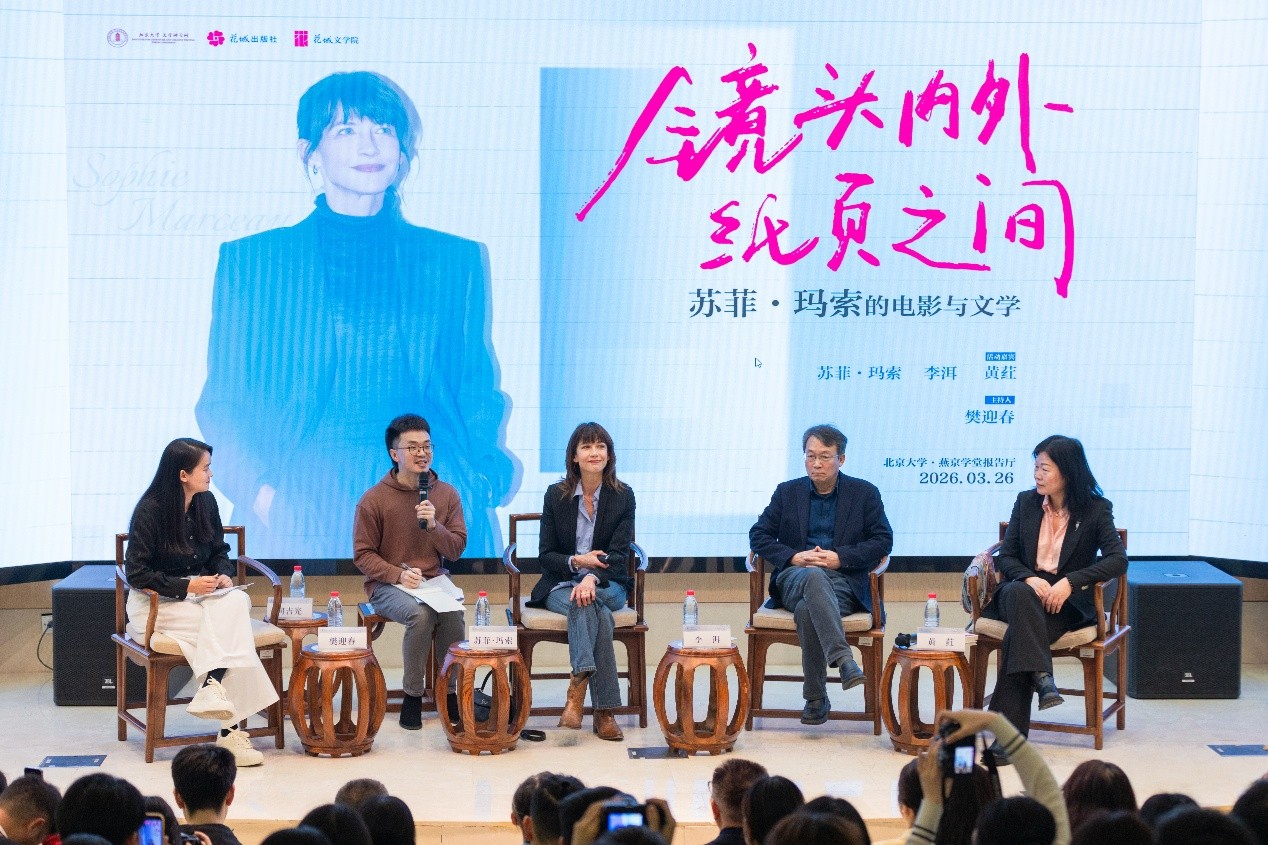
Sophie Marceau in a symposium to promote the Chinese translation of her book 'La Souterraine' at Peking University.
Peking University, March 30, 2026: Sophie Marceau, one of the best-known French actresses, regards writing as her sanctum, an open-ended journey on a vast spiritual meadow where emotions can be given free rein, as she described it.
“I write every day!” she exclaimed, during a symposium at Peking University (PKU) on March 26, the first stop of her tour to promote the recently published Chinese translation of her book
La Souterraine. “I would feel I have done nothing if I skip a day.”
Also speaking at the event were Li Er, a winner of the Mao Dun Literature Prize and a professor at the Department of Chinese Language and Literature, PKU; Huang Hong, translator of the book and a professor of French language at Nanjing University; and Fan Yingchun, an associate professor at the Department of Chinese Language and Literature, PKU.
This book is a collection of 13 short novels and 7 poems that offer an immersive exploration of the fate of being a woman through different life stages. It won the 2024 Marguerite De Navarre Literary Prize, marking a second successful foray into the literary world after her 1996 semi-autobiographical novel
Telling Lies.
Affectionately known as the “French rose”, Sophie gained international recognition at the age of 14 with her breakout role in the film
La Boum (1980), and has since been widening her renown with performances in global blockbusters such as
Braveheart (1995),
Anna Karenina (1997), the 19th James Bond film
The World Is Not Enough (1999), etc.
The transition from the big screen to the pages brought out another aspect of artistic expression in Sophie. When asked why she crossed from acting to writing, her answer was firm and decisive: “People think I should be in front of the camera, not behind it. But I don’t have a boss, so I do whatever I want to do.”
Where film-making is an art of group effort, writing is a lonely journey of soul-searching and self-reflection, she noted. But to Sophie, the two forms of artistic expression nevertheless “share in the purpose of using words to weave a web of emotions.”
The book’s title,
La Souterraine, is a reference to underground river, a metaphor for the undercurrents of emotions, memories, and the female sensitivity, according to Sophie. It is also the title of the first novel in the book. “It represents the secret flow of the female voice which has historically been repressed and intimidated,” Huang Hong offered her interpretation. “That’s why Hélène Cixous thinks women must take up the pen and write about themselves.”
In answering questions from students, Sophie admitted that she was once daunted by the fame and money of the movie world, and it was writing that rescued her from this fear and gave her liberty to express herself.
“Writing to me is the augmentation of the unbridled but subtle voice deep inside my head.”
On the topic of love in one’s childhood, she said that the absence and presence of it carried the same weight, both contributing to later life development. She drew on her own experience as an illustration: “I never went to college and I learned everything during work. Life is complicated, but there are many opportunities.”
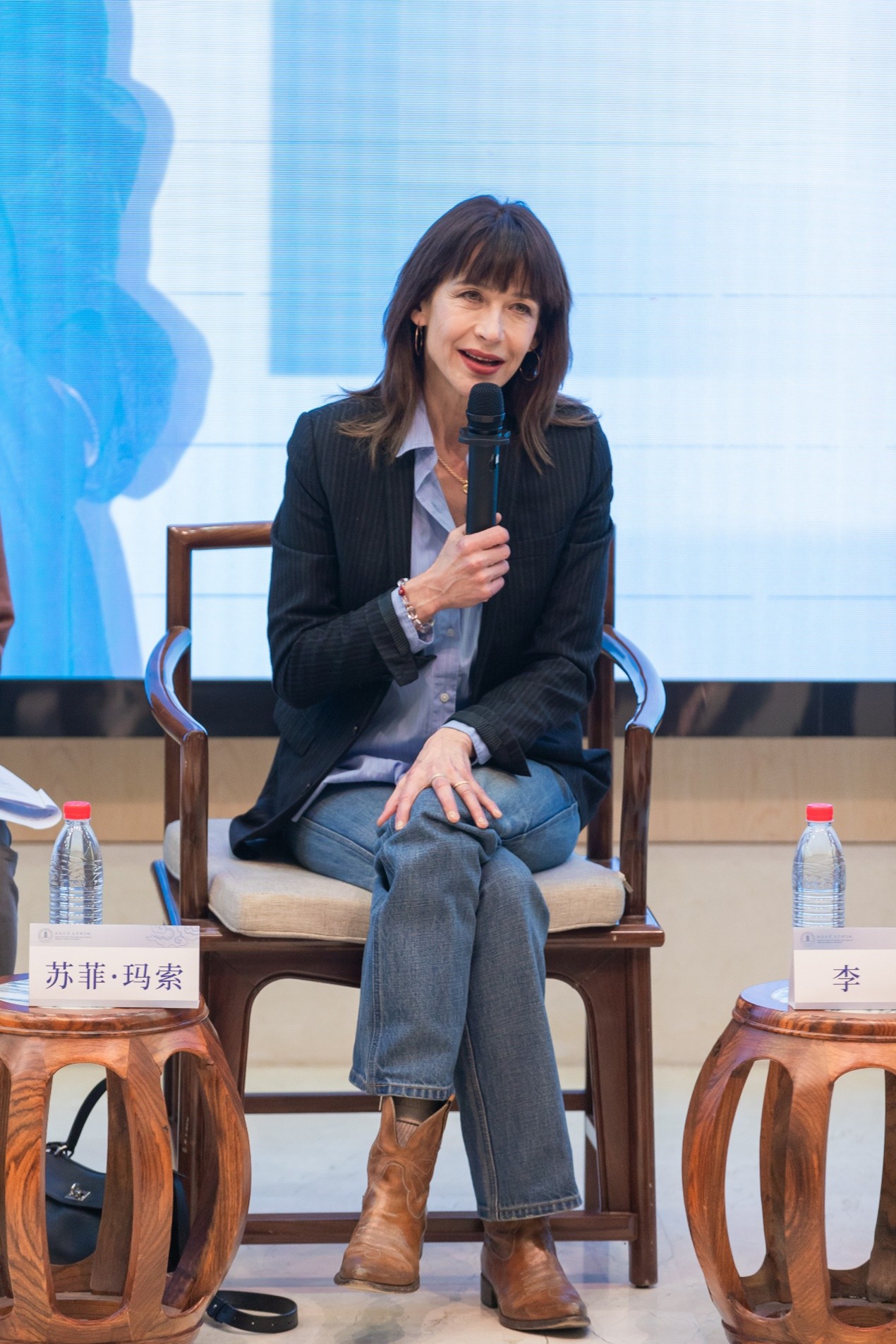
Sophie Marceau
Written by: Chen Shizhuo
Edited by: Zhang Jiang
Photo by: Guo Mengjiao