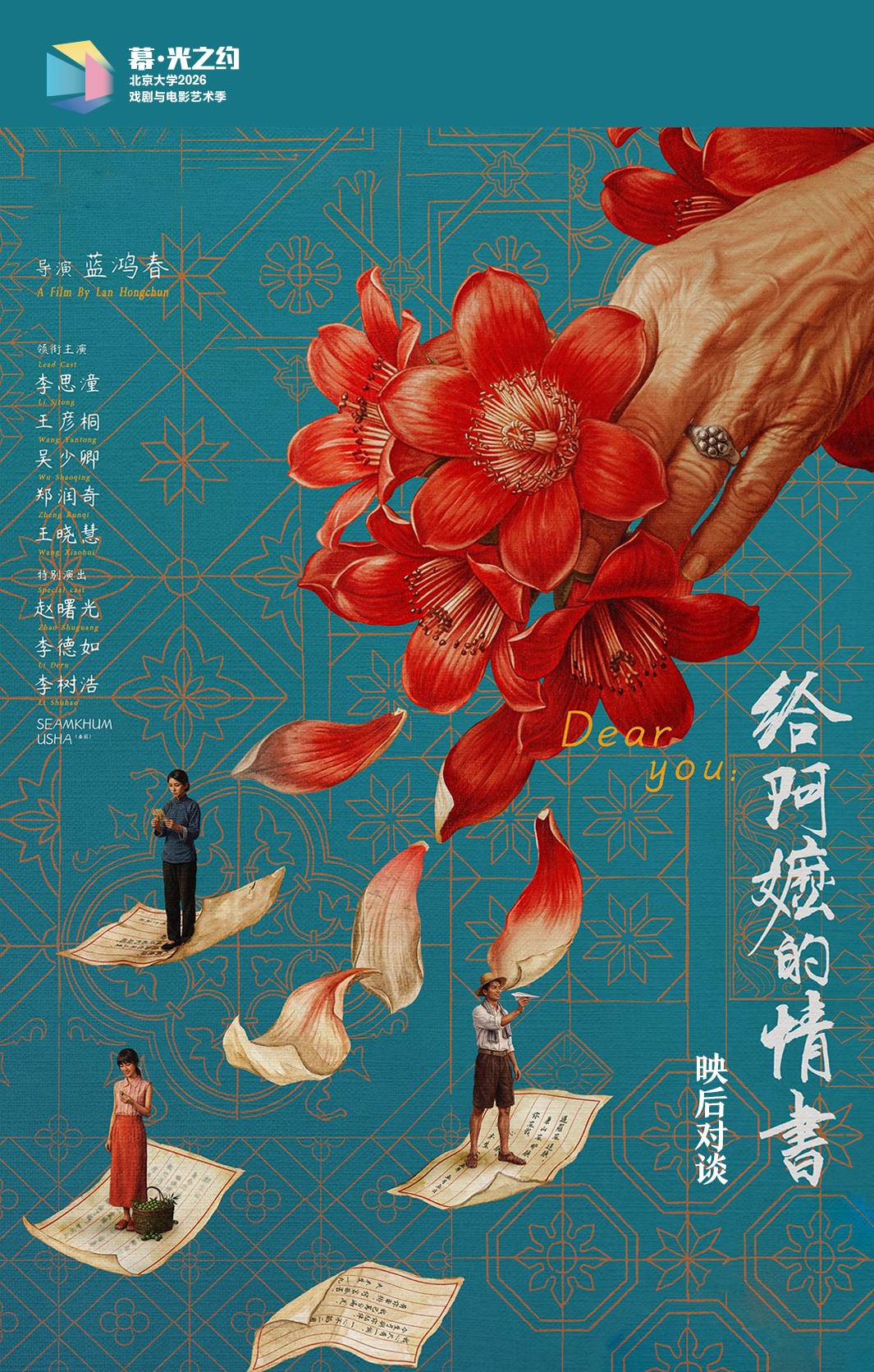
Peking University, May 26, 2026: On the night of May 22, audiences gathered at the PKU Hall for a campus screening of the new Chinese film Dear You (Gei A Ma de Qing Shu, literally A Love Letter to Grandma). The screening followed the film's first PKU showing on May 19, when its creative team joined audiences for a post-screening discussion with Professor Chen Pingyuan of PKU's Department of Chinese Language and Literature.
Currently topping China's box office,
Dear You's tender story of letters, longing, and reunion has resonated with audiences nationwide since its release on April 30.
Set between the present day and the 1940s, the film follows Chaoshan migrants who traveled to Siam, now known as Thailand, for work. The stories unfold through
qiaopi—letters and money sent by overseas Chinese to their families back home. In an era when communication relied on paper, ink, and perilous journeys across the sea, these letters were proof of survival, vessels of memory, and emotional lifelines between those who left and those who waited.
The story follows Musheng, who leaves home to make a living in Siam; Shurou, his wife who remains in Chaoshan with their three children; and Nanzhi, a young woman whose quiet devotion helps preserve the couple's bond for decades to follow. Through their intertwined lives, the film presents not only romantic and familial devotion, but also a moving depiction of sisterhood—of women helping women endure hardship and separation.
Throughout the theater, rowdy laughter broke out at its playful innuendos, only to soften into quiet sobs during scenes of memory and loss. This pendulum swing between comedy and grief gave the film a cathartic quality: inviting viewers to laugh and cry collectively.
Much of the film's poignancy lies in the smallest gestures: a letter read aloud, a nostalgic meal, a piece of cloth bought for someone far away, a message sent without certainty of its arrival. The cinematic shots focus on these ordinary acts of care that seem to carry the weight of a lifetime.
One of the film's most distinctive features is its full use of Chaoshan dialect, with Chinese subtitles. Rather than treating dialect as a decorative detail, the film allows it to draw viewers closer to the rhythms of Chaoshan life—its markets, rituals, and domestic chores.
Beyond the screen, the film has sparked renewed attention to Chaoshan culture in real life, setting off a tourism boom in parts of Chaoshan where the film was shot, according to a report by
South China Morning Post.
At PKU, the May 19 and May 22 screenings offered a moment to reflect on migration, family memory, and the emotional cost of distance. For viewers familiar with immigrant histories, the film's letters may have revived emotions: the longing for someone afar, the guilt of departure, and the hope that love sustains distance and years of waiting.
Written by: Ashley Leung
Edited by: Chen Shizhuo