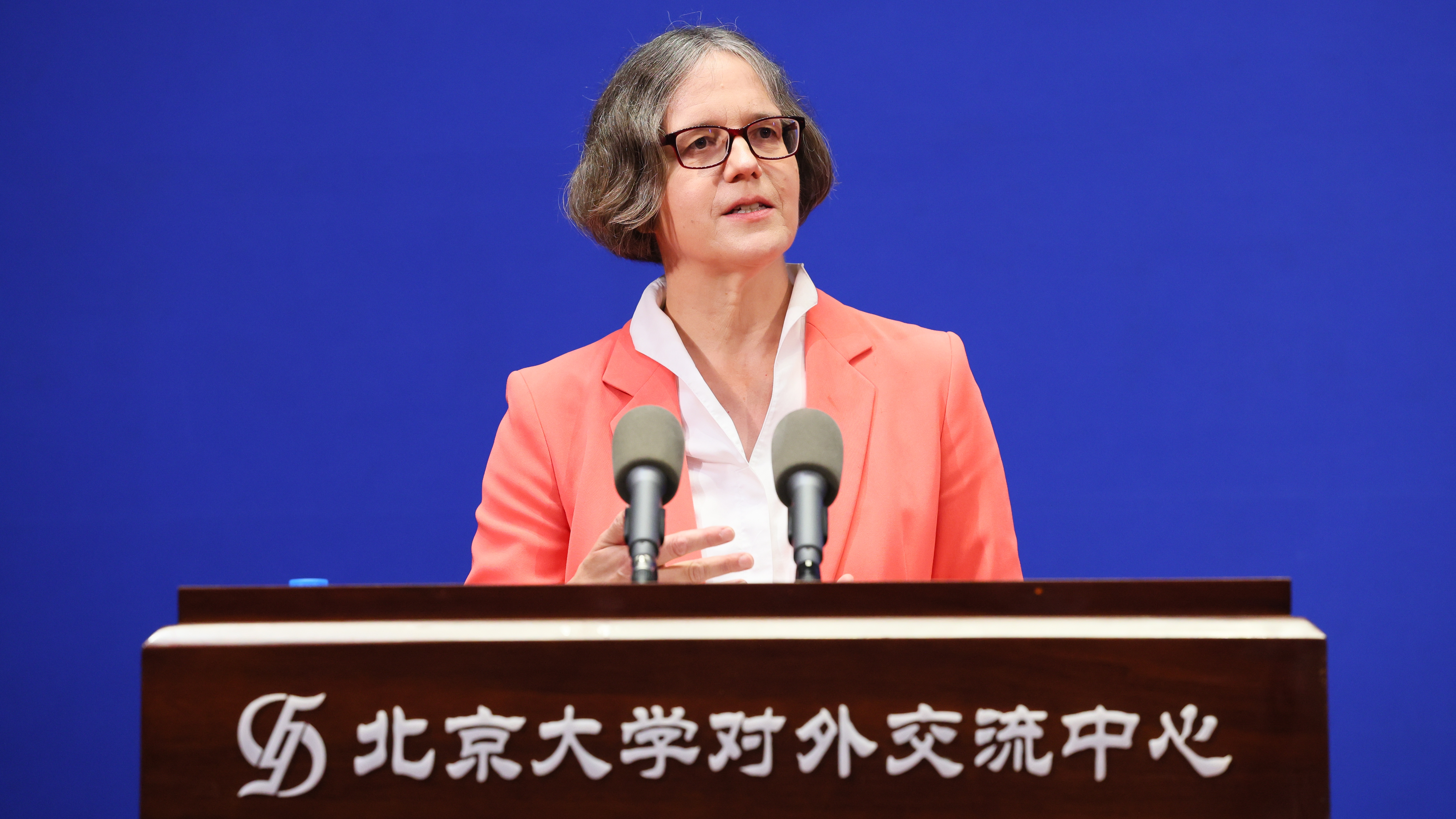
Peking University, April 1, 2026: Dr. Wang Binbin, Founding Director of Climate Future Global Innovation Lab (C Force) and Associate Research Professor at Peking University’s Institute for Carbon Neutrality, has introduced a new theoretical framework called “Civilization-Based Solutions” (CbS) as a rethink on global environmental governance. She has explained this framework in two recently published papers co-authored with other scholars.
The two papers — one in Chinese and one in English — were published in February 2026. The Chinese paper was published in The Journal of International Studies, an academic journal issued by the School of International Studies, PKU; and the English paper in the SSCI journal Environment: Science and Policy for Sustainable Development.
The purpose of CbS is to restore a harmonious human-nature relationship by factoring “holistic understanding of indigenous peoples and local communities (IPLCs)” into technological fixes for climate and biodiversity. It calls for a “radical return to the original wellsprings of human ingenuity — the diverse, time-tested wisdom of how to live well within the ecological bounds,” as described by the English paper.
At the core of the framework is a persuasive appeal for a foundational shift around three pillars — values, knowledge, and governance.
On values, CbS emphasizes drawing on ancient wisdoms such as China’s “Tian Ren He Yi” (the unity of heaven and humanity) and the African Ubuntu philosophy of solidarity to restore harmony between mankind and nature.
The African Ubuntu philosophy of solidarity.
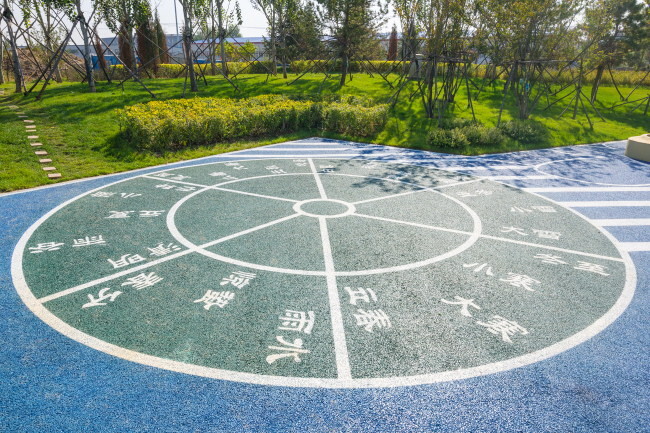
On knowledge, the framework calls for a dialogue of complementary Indigenous knowledge systems — from the Andean philosophy of Buen Vivir to China’s 24 Solar Terms — to foster a “synergistic ecology” where they can co-evolve and yield localized solutions.
The twenty-four solar terms painted on the ground.
Last but not least, CbS argues that governance must be devolved to local communities, empowering them to steward lands according to their own knowledge and systems, citing the Sacred Groves of India and the community conservancies of Namibia as successful examples.
Furthermore, Wang also proposed three practical pathways for implementation: using the Earth Charter as the ethical operating system, building a global digital commons to bridge traditional and scientific knowledge, and fostering climate action through global dialogues rooted in traditional wisdom.
Written by: Tang Xiao Tong, Chris
Edited by: Chen Shizhuo
Source: PKU News (
Chinese)