Peking University, April 27, 2026: What should the new world order look like? Islamic and Confucian philosophers searched for a shared answer in a cross-civilizational dialogue held at Peking University on April 14.
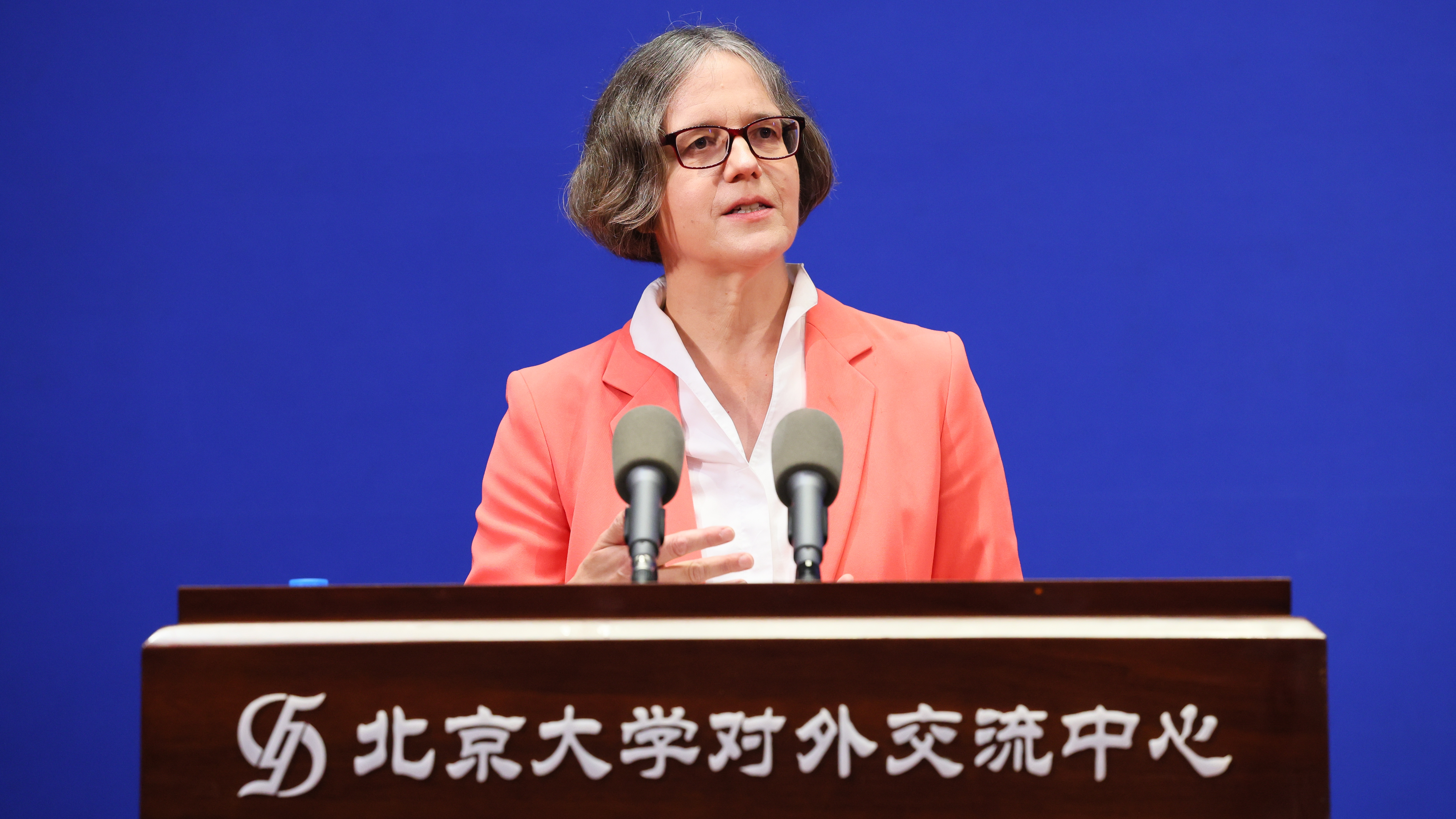
Datuk Dr. Osman Bakar, Professor Emeritus and Rector of the International Islamic University Malaysia, opened with a keynote titled "Philosophical Humanism in Confucianism and Islam: Convergence and Divergence." Though it was his first visit to China, Bakar is no stranger to Confucian thought. He sees the two civilizations as closer than the world assumes. "Humanism is the common theme," he said.
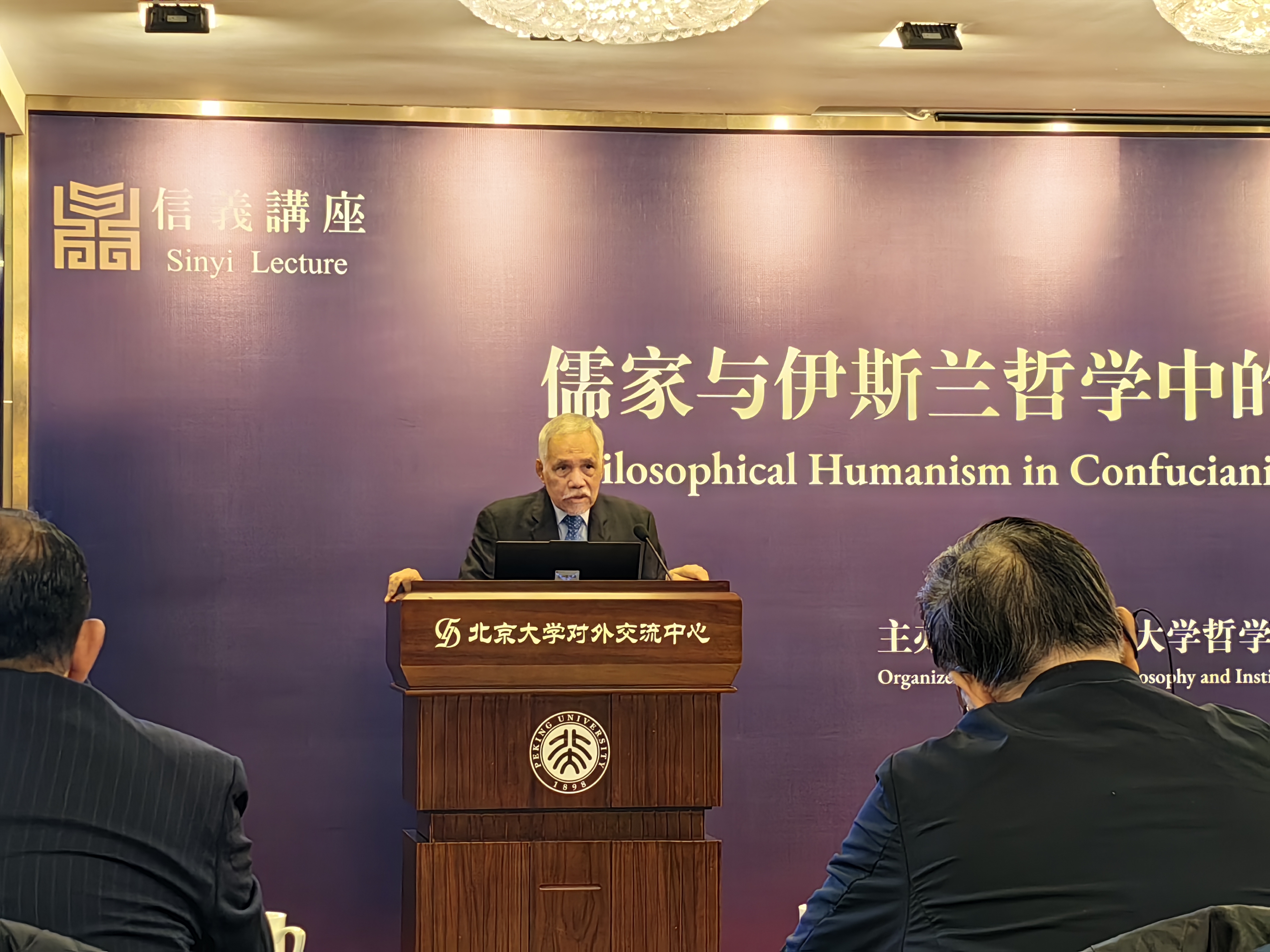
Osman Bakar delivering his keynote speech.
Humanism, broadly defined as a system of thought about human nature, perfection and happiness, takes different forms in each tradition. Confucianism is centered on ren (humanness) and li (ritual), while Islam is grounded in theomorphic-spiritual virtues and humanity's relationship with God, according to Bakar.
The convergence runs deep. Both the Confucian junzi (noble man) and the Islamic insan kamil (the perfect person) represent an ideal of human perfection achieved through creative self-transformation. Both traditions place education and moral leadership at their center, as exemplified by the doctrines of the Confucian li and the Islamic Sharia.
Yet the divergences are equally important. Confucianism embraces ancestor worship; Islam holds that only God is worthy of worship. Their visions of spiritual progression also differ: where Confucianism moves from transcendence toward human immanence, Islam seeks to balance both. Underlying both, Bakar argued, is a sense of collective duty that stands in contrast to the individualism valued by the West. "Order is based on consensus and harmony," he added.
The lecture was followed by a panel discussion with Chen Lai, Distinguished Professor of Humanities at Tsinghua University, moderated by Wang Zhongjiang, Professor of Philosophy at Peking University. When Wang raised Samuel Huntington's "clash of civilizations" theory, Chen gave a direct answer: "The proposed clash was the West's reaction to the rise of Confucian and Islamic civilizations; it does not imply a conflict between them."
Bakar agreed, and went further. "The basic idea is not clash but learn," he said, pointing to how the Islamic world once absorbed advanced technology from ancient China before transmitting it to the West. History, he argued, has shown that "the new world order should be based on mutual understanding and openness."
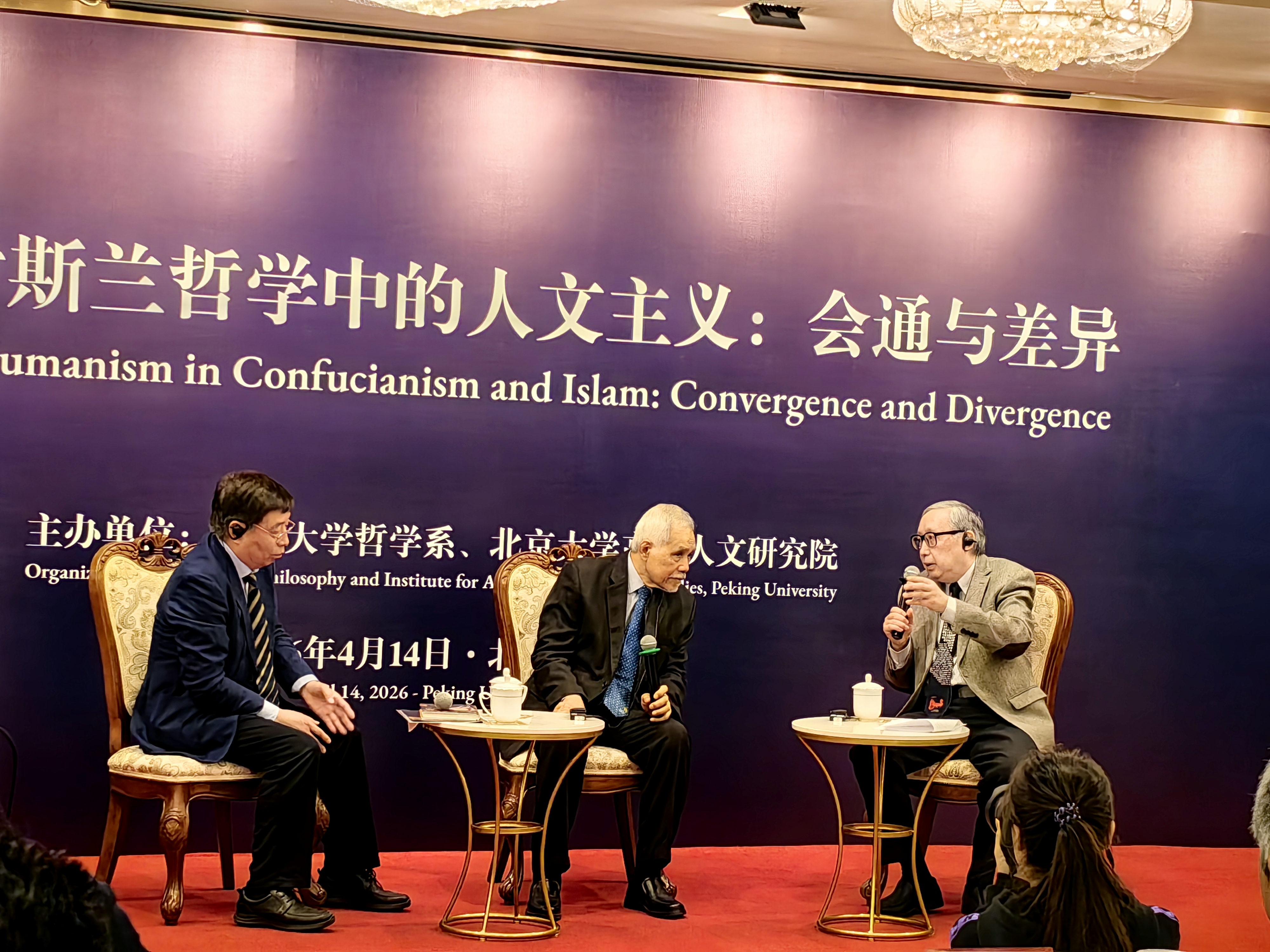
Bakar and Chen in a dialogue moderated by Wang.
This event is part of the Sinyi Lecture series organized by the Institute for Advanced Humanistic Studies and the Department of Philosophy and Religious Studies at Peking University, and continues a tradition of the "Islam-Confucian Dialogue" first held in Cambridge in 1994 by Bakar and Tu Weiming, the institute's founder. The dialogue has since drawn support from scholars and governments in both China and Malaysia.
Reported and written by: Aden Tan
Edited by: Chen Shizhuo
Photo by: Aden Tan