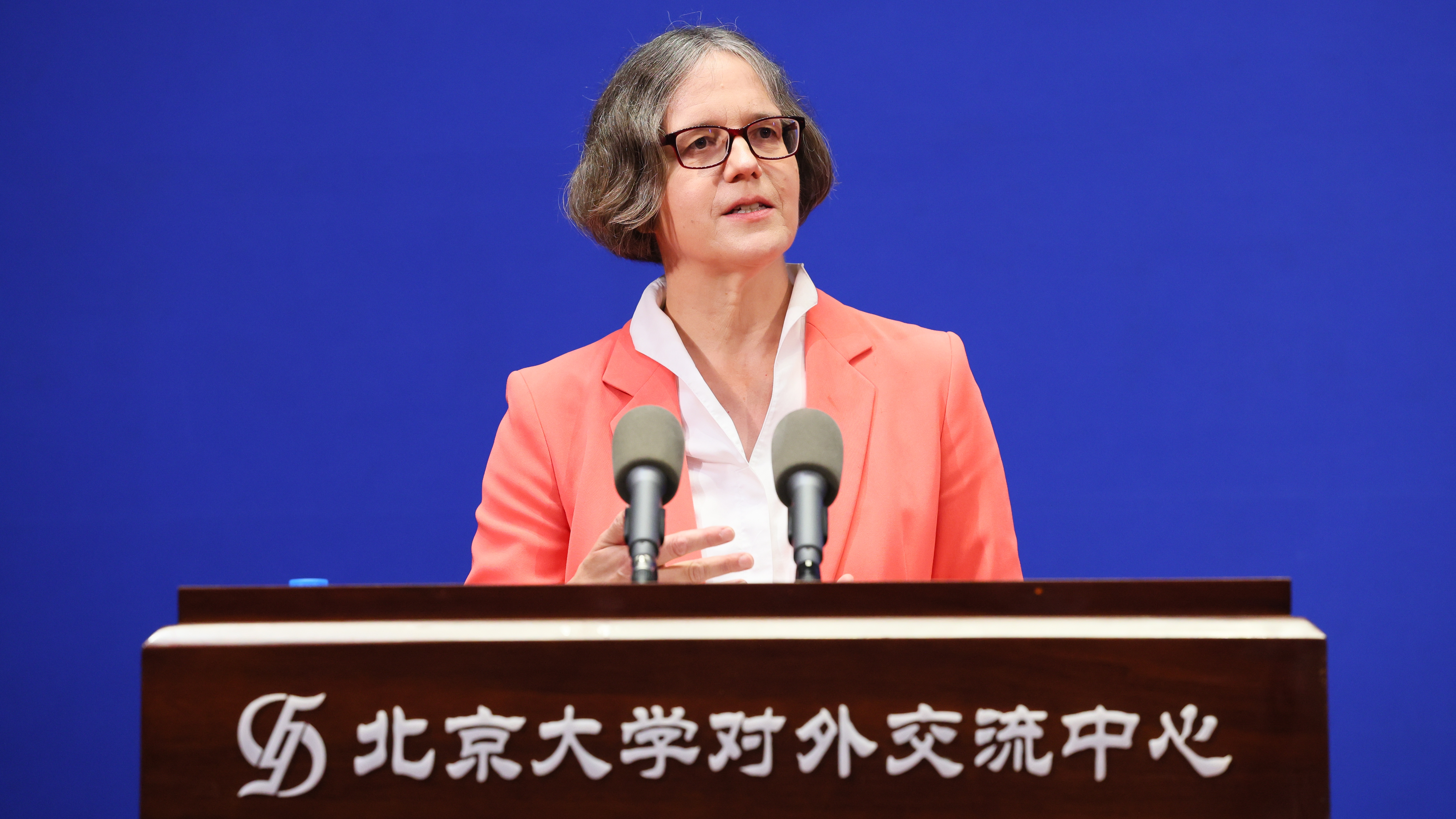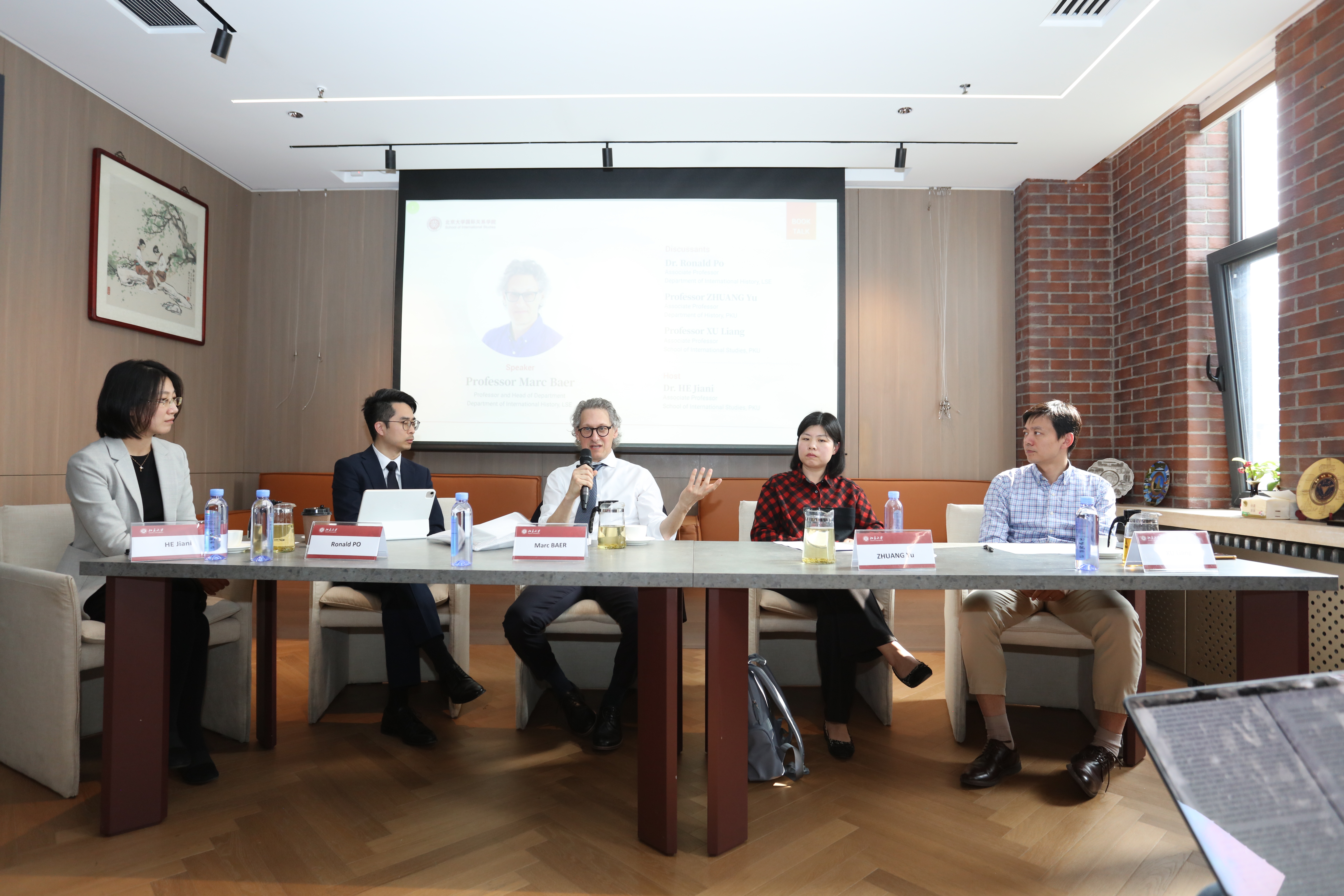
Professor Marc Baer gave a talk about his new book at Peking University on April 17.
Peking University, April 28, 2026: On April 17, Marc David Baer, Professor of International History at LSE, gave a talk about his book "The Ottomans: Khans, Caesars, and Caliphs." He drew on connections between the Mongol, Roman, and Islamic Empires to explain how each influenced the Ottoman Empire.
Held at Peking University's (PKU) School of International Studies, the talk commemorated LSE and PKU's 20th year of collaboration.
Hosted by Professor He Jiani (PKU), and joined by Ronald Po (LSE), Zhang Yu (PKU) and Xu Liang (PKU), the talk offered a reinterpretation of imperial Ottoman identity.
Professor Baer's work reframed the Ottoman Empire not as an outsider to the West, but as an integral European, Asian, and African power. He emphasized that the Ottomans were not merely "conquerors at the gates," but active participants in the Renaissance and the Reformation.
During the talk, he suggested that the question pivotal to all statecraft was "who belongs to the state and why?" The book answered this question by tracing Ottoman history over three distinct phases of identity-formation.
Firstly, he traced Mongol linkages with the example of an inscription at Topkapi Palace (present-day Istanbul), "Over the gate of the first courtyard, he calls himself a Khan."
He then argued that the Ottoman Empire drew on the legacy of Roman intellectual history in the aftermath of Constantinople's fall.
Finally, he described the influences of the Caliphate on the empire. What started as a relatively secular state with religious fluidity regressed into a monolithic religious identity.
A panel discussion then followed, shifting the focus beyond Europe to the Indian Ocean. While European history often focused on the Atlantic, Professor Baer reminded the audience that in the 16th century, the real wealth lay in China and India.
The Ottomans were global players, engaged in maritime warfare against the Portuguese as far as Indonesia. What Professor Baer termed a "Global World War" highlighted an empire that was technologically savvy and deeply curious about the world, possessing some of the earliest maps of the Americas while prioritizing the lucrative trade routes of the East.
Professor Baer concluded by urging scholars to move beyond Atlantic-centric frameworks and view history as a shared global inheritance.
In an era defined by unprecedented changes, understanding the Ottoman legacy reminds us that the world has always been a complex, shared space.
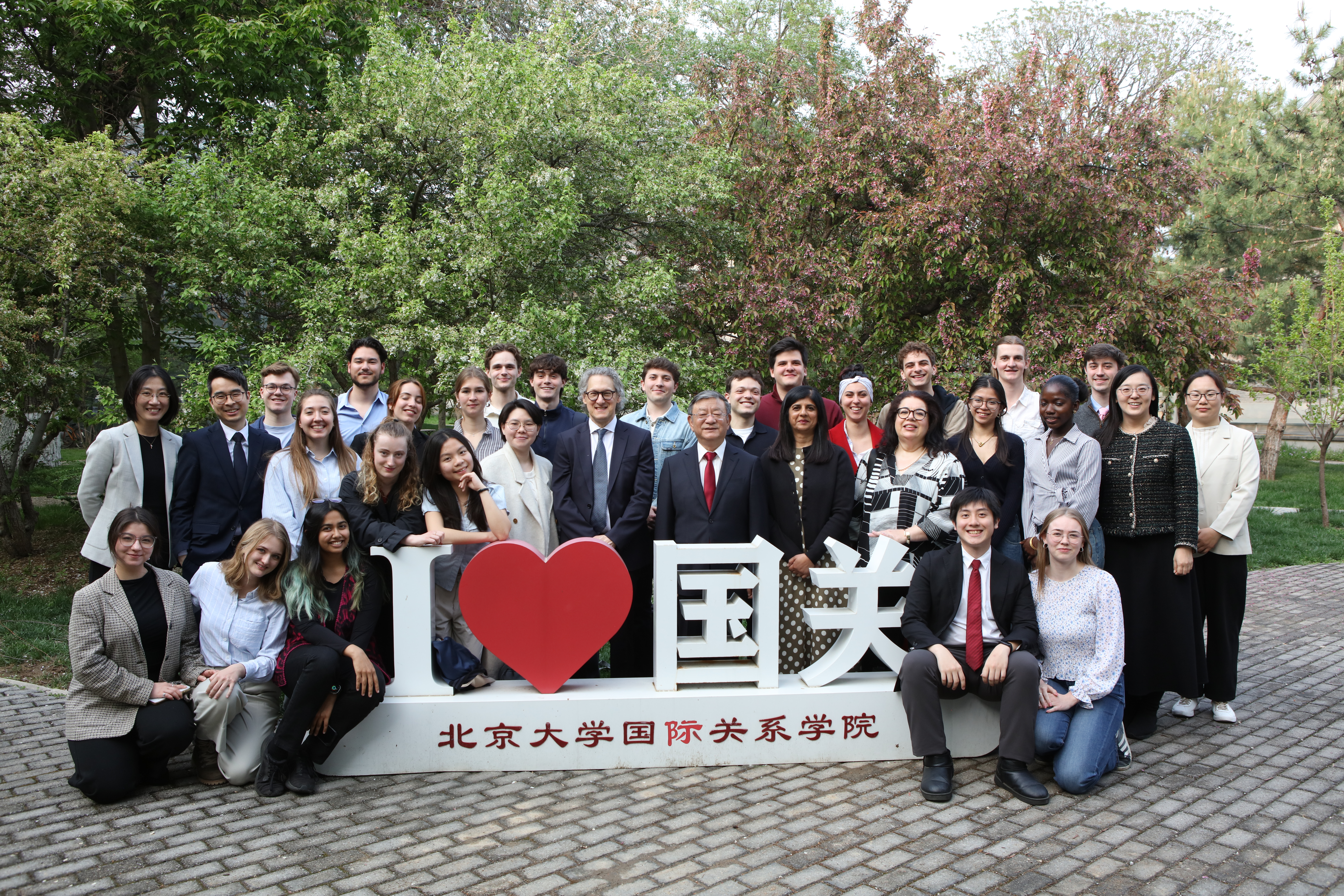
Students and faculty of PKU School of International Studies in a group photo with Professor Marc Baer.
Reported and written by: Khor Hui Min & Vanrika Satyan
Edited by: Chen Shizhuo