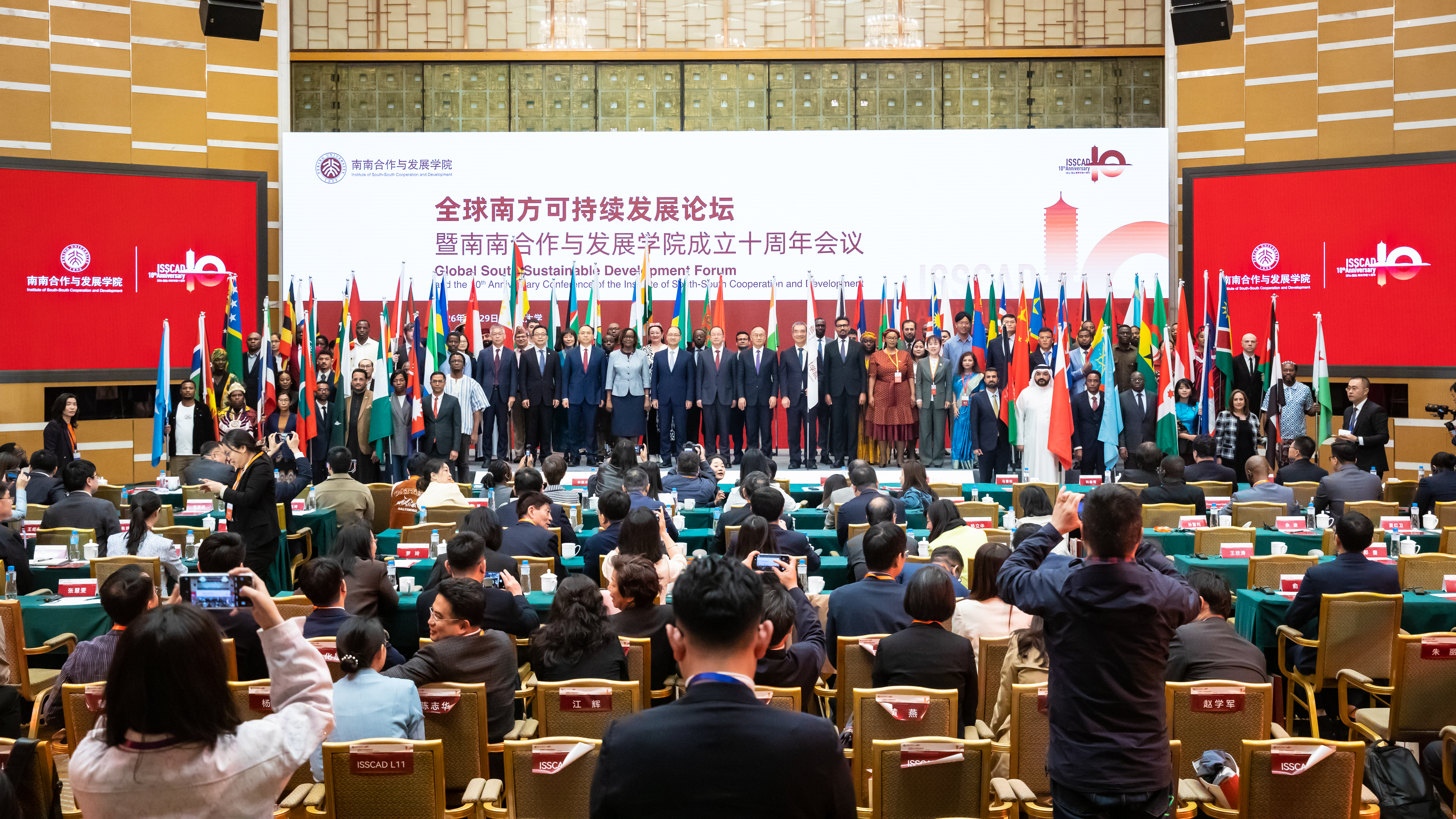
Peking University, April 30, 2026: On April 29, 2026, the Global South Sustainable Development Forum & the 10th Anniversary Conference of the Institute of South-South Cooperation and Development (ISSCAD) were held at Peking University (PKU).
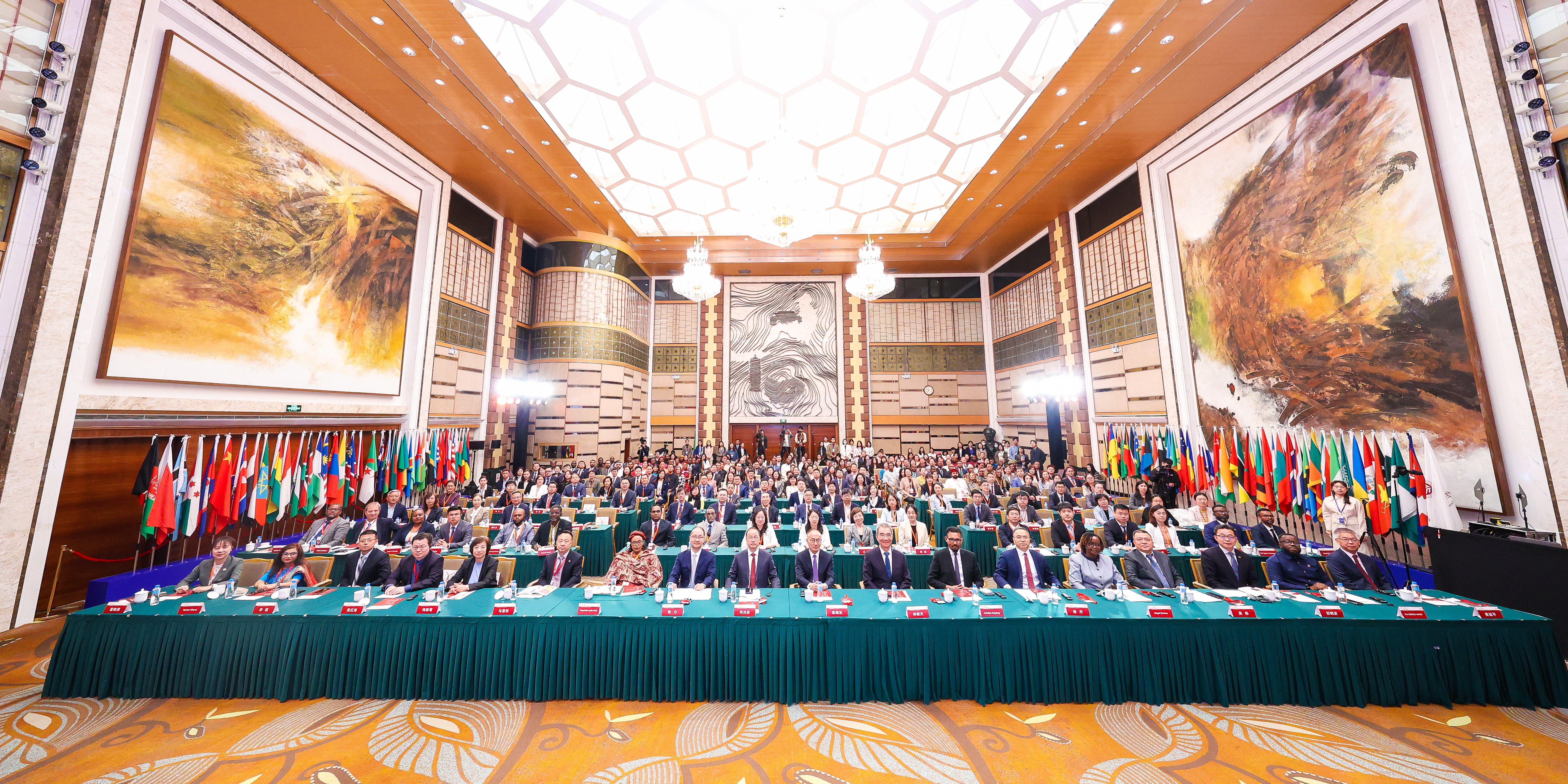
Peking University holds forum to commemorate the 10th anniversary of Institute of South-South Cooperation and Development.
Huang Yiping, dean of ISSCAD, presided over the opening ceremony, extending a warm welcome to the attending distinguished guests, PKU faculty and students, and media personnel.
In his opening speech, He Guangcai, chair of PKU Council, traced the institute's progress through three areas: theoretical innovation, talent cultivation, and mutual learning among civilizations. Together, he said, these have provided academic support and practical experience for Global South countries seeking development paths suited to their own national conditions. Looking ahead, he urged the institute to continue acting as a promoter of China’s governance experience, a torchbearer for South-South cooperation, and a driver of global governance reform.
Chen Xiaodong, chairman of China International Development Cooperation Agency, underlined that South-South cooperation is deeply rooted in solidarity and mutual assistance. He commended ISSCAD for advancing talent exchange, academic mutual learning, and win-win cooperation.
Zhang Li, assistant minister of Ministry of Commerce of China, described ISSCAD as a key platform for training high-level professionals for developing countries, and a pillar for advancing South-South cooperation.
Yang Dan, director general of the Department of International Cooperation and Exchanges, Ministry of Education of China, noted that ISSCAD represents an exemplary model of international educational collaboration, demonstrating PKU’s commitment to global development.
Arkebe Oqubay, former senior minister of Ethiopia, highlighted ISSCAD’s decisive role in shaping development dialogue, sharing China’s experience, and advancing inclusive and sustainable growth across the Global South. He added “ISSCAD is an indispensable forum for sharing knowledge, building mutual confidence, and advancing inclusive growth”.
Abigail Shoniwa, ambassador of the Republic of Zimbabwe to China, said Zimbabwe has directly benefited from ISSCAD programs and will continue sending outstanding talents to the institute to share policy insights and advocate for a multilateral system that truly serves all of humanity.
Justin Yifu Lin, honorary dean of ISSCAD, emphasized that ISSCAD distills development experiences of China and other developing countries, shifting cooperation from one-way exchanges to sustained two-way collaboration. He called for further expanding enrollment and enhancing educational quality, to advance South-South cooperation through knowledge sharing, and promote global development via practical mutual learning.
Student and alumni representatives shared how their studies at ISSCAD equipped them to address national development challenges upon returning home, illustrating the institute’s success in cultivating global talent. Ismail Zabeeh, 2025 intake doctoral candidate and former state minister of Maldives, said studying at ISSCAD had changed how he thinks about development challenges — less as isolated national problems and more as shared ones with shared solutions. Then, Eric Dodoo-Amoo, class of 2022 doctoral alumnus and head of China desk at Ghana’s Ministry of Finance, requested current students to take their peer relationships seriously. “The colleague next to you today,” he said, “may be the counterpart you negotiate with in 15 years.”
A special lighting ceremony and flag parade featuring students and alumni from 82 countries marked the 10th anniversary, symbolizing unity and shared aspirations of the Global South.
The afternoon think-tank forum focused on Sustainable Development of the Global South and New Landscape of South-South Cooperation. Huang Yiping delivered a keynote speech on forming the Global South consensus, while Busani Ngcaweni of the University of Johannesburg spoke on China’s four global initiatives and Africa’s Agenda 2063. Chaired by Lei Xiaoyan, chair of the management council of the National School of Development, and Deng Ziliang, assistant dean of ISSCAD, the forum brought together experts and practitioners from China, Singapore, Oman, South Africa, Lesotho, Egypt, Malawi and other countries for in-depth discussions on sustainable development and the evolving landscape of South-South cooperation.
Closing the forum, Huang Yiping said ISSCAD would spend its next decade expanding enrollment, deepening research partnerships, and strengthening its role as a think tank on development issues. “Ten years is a milestone,” he said, “but it is also a new starting line.”
 Source
: Institute of South-South Cooperation and Development (ISSCAD)
Edited by: Aishwarya Sapkota, Chen Shizhuo