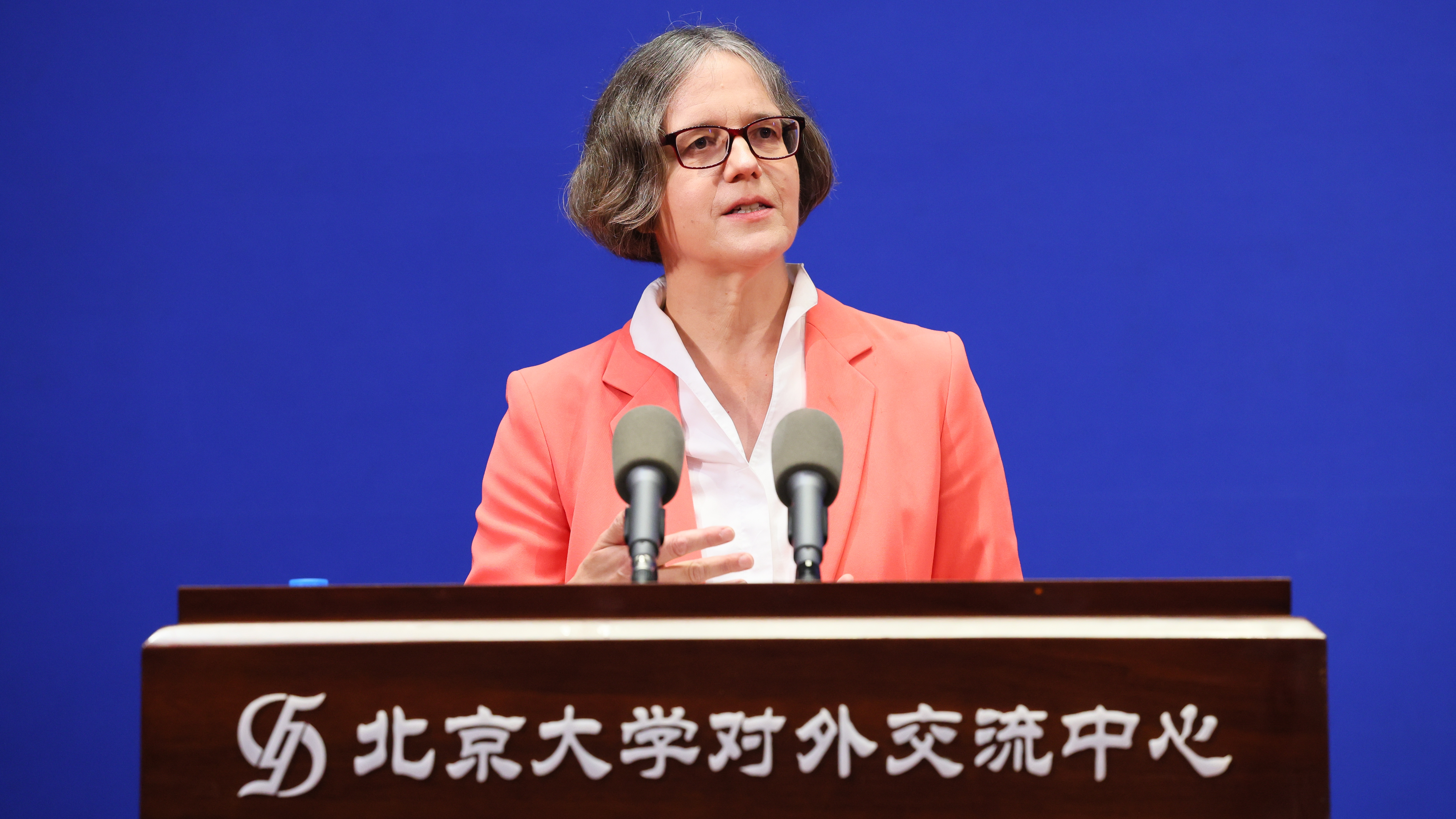
Peking University, September 22, 2026: Co-hosted by Peking University, the International Union for Conservation of Nature (IUCN), the Hong Kong Polytechnic University (PolyU), the Nature-Based Solutions Asia Center Innovation Base, and several other institutions, the International Conference on Nature-based Solutions: Addressing Climate Change was held on September 19–20 at the College of Architecture and Landscape Architecture, Peking University. Prof. Wang Zhifang, vice dean of the College of Architecture and Landscape Architecture at Peking University, and Prof. Wang Yuhong of PolyU served as co-chairs of the conference.
At present, the world faces the compounded challenges of accelerating climate change, biodiversity loss, and mounting pressure on sustainable development, while conventional engineering-based approaches have shown their limitations in addressing certain complex real-world problems. Nature-based solutions (NbS), which seek to balance environmental and development demands by harnessing the capacity of ecosystems themselves, have become a vital instrument in confronting these crises worldwide. Advancing NbS entails not only placing nature at the core of decision-making, but also exploring pathways that deliver ecological benefits, social well-being, and economic value in tandem.
Against this critical backdrop in global ecological governance, the conference built a high-level platform for dialogue across disciplines, geographies, and sectors. Bringing together leading scientists, policymakers, industry practitioners, and representatives of businesses and communities worldwide, the conference aimed to explore implementable NbS pathways in response to global crises such as climate change and biodiversity loss, thereby contributing diverse perspectives to global sustainable development.
Keynote speakers of the conference included Riccardo Valentini, director of the Division of Climate Impact at the Euro-Mediterranean Center on Climate Changes and the winner of the 2007 Nobel Peace Prize; He Hong, academician of the Chinese Academy of Engineering and director of the Institute of Urban Environment, Chinese Academy of Sciences; Zhu Hehua, academician of the Chinese Academy of Engineering and Distinguished Professor at Tongji University; Charles Waldheim, John E. Irving Professor of Landscape Architecture, Harvard University Graduate School of Design; and Nathalie Seddon, professor of biodiversity and founding director of the Nature-based Solutions Initiative in the Department of Biology at the University of Oxford.
The conference featured 14 thematic sessions addressing NbS across multiple dimensions: enhancing climate resilience through the conservation and restoration of natural spaces such as forests and wetlands; planning green infrastructure to mitigate urban waterlogging and improve community well-being; and establishing a multi-level framework for the coordinated development of ecology, society, and the economy, so as to translate NbS into integrated pathways for climate mitigation and adaptation, biodiversity restoration, and the transition toward a nature-positive economy. Marking the first anniversary of the passing of Professor Yu Kongjian of Peking University, the conference convened a special session entitled “Yu Kongjian’s Academic Legacy: Reflections and Future Directions.” As a pioneering practitioner and leading advocate of NbS, Yu devoted his career to introducing China’s NbS experience to the world and demonstrated the pivotal role of landscape architects in climate change adaptation. More than a dozen scholars from universities across the country gathered to review and reflect upon Yu’s theoretical contributions and global practice in ecological security patterns, sponge cities, and ecological infrastructure, and to discuss the contemporary relevance of his scholarship for advancing NbS today.
The conference was dedicated to building international consensus, sharing cutting-edge research findings and exemplary practices from around the world, and fostering more ambitious commitments and agendas for international cooperation. Against the broader backdrop of the pursuit of a future in harmony with nature, the conference further invigorated the NbS cooperation network across Asia and beyond, supporting countries worldwide in jointly addressing the climate and biodiversity crises and translating the Sustainable Development Goals into concrete actions.
Source: College of Architecture and Landscape Architecture, Peking University
Edited by: Chen Shizhuo