Editor’s note: Peking University this year has had the honor of having 6 of its professors elected into the Chinese Academy of Science and the Chinese Academy of Engineering, a convincing demonstration of its prowess in research and innovation. In this series, we unpack the stories behind the scenes regarding to those distinguished scientists, shedding light on their professional journey and their personal side, informing a well-rounded profile.
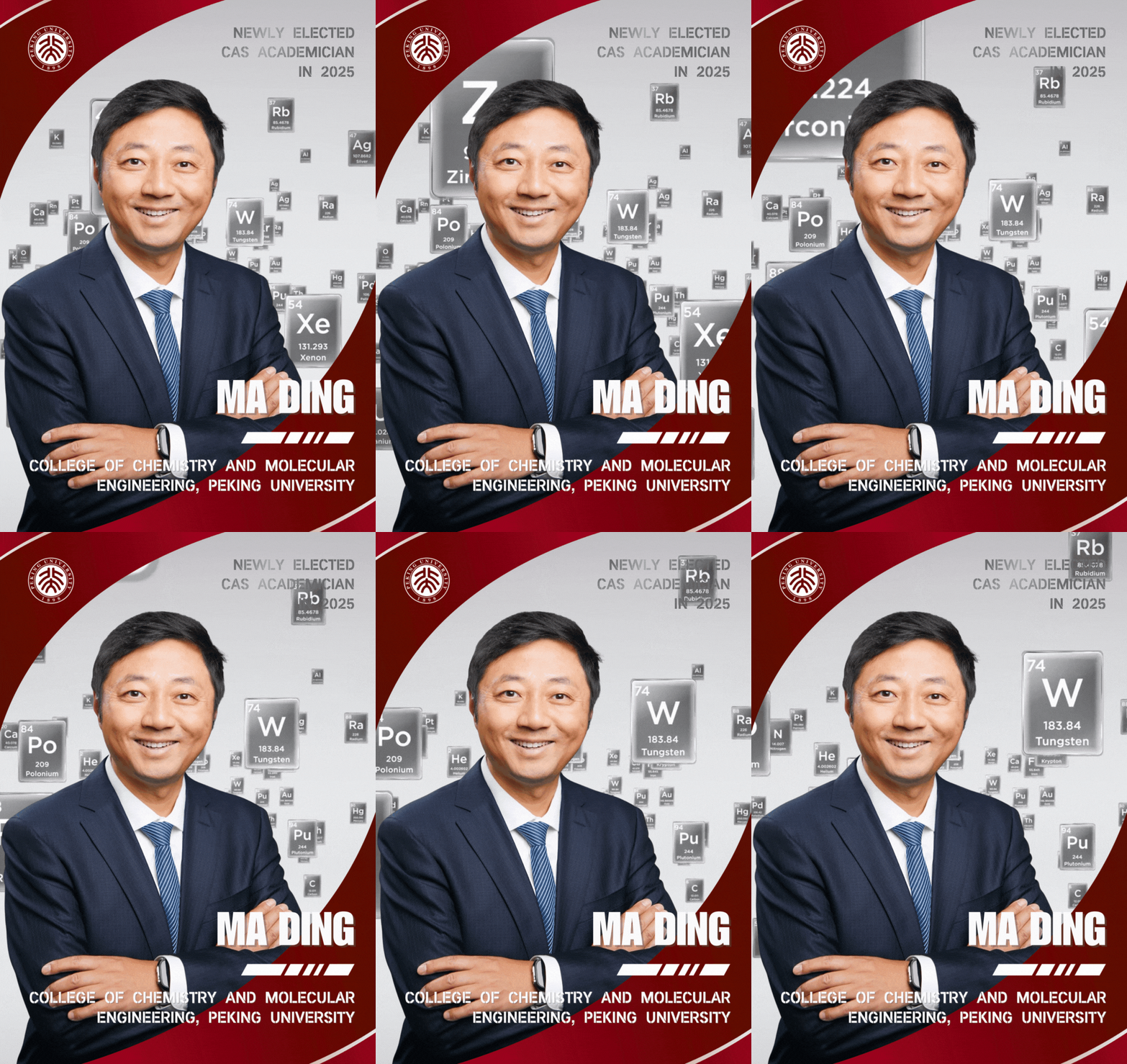
Peking University, December 19, 2025: For Ma Ding, catalysis is not only a science that reshapes reaction pathways, but also a bridge to the unknown world beyond. Every experiment, every discussion, and every journey contributes to the generation of new possibilities.
Professor Ma Ding of the College of Chemistry and Molecular Engineering at Peking University, a newly elected member of the Chinese Academy of Sciences, has built his research around heterogeneous catalysis—one of the central pillars of modern chemistry and the energy industry.
Developing catalysts that deliver high activity, high selectivity, and long-term durability is central to enabling greener and more cost-efficient energy and chemical transformations. In Ma’s view, catalysis research goes beyond chance success after hundreds or thousands of attempts.
Instead, it is about gaining precise insight into microscopic reaction processes at the molecular and atomic levels to enable rational design.
“Doing research requires the courage to tackle hard problems, but not every hard problem is worth tackling,” Ma says. “What matters is addressing the important scientific questions that our times demand.”
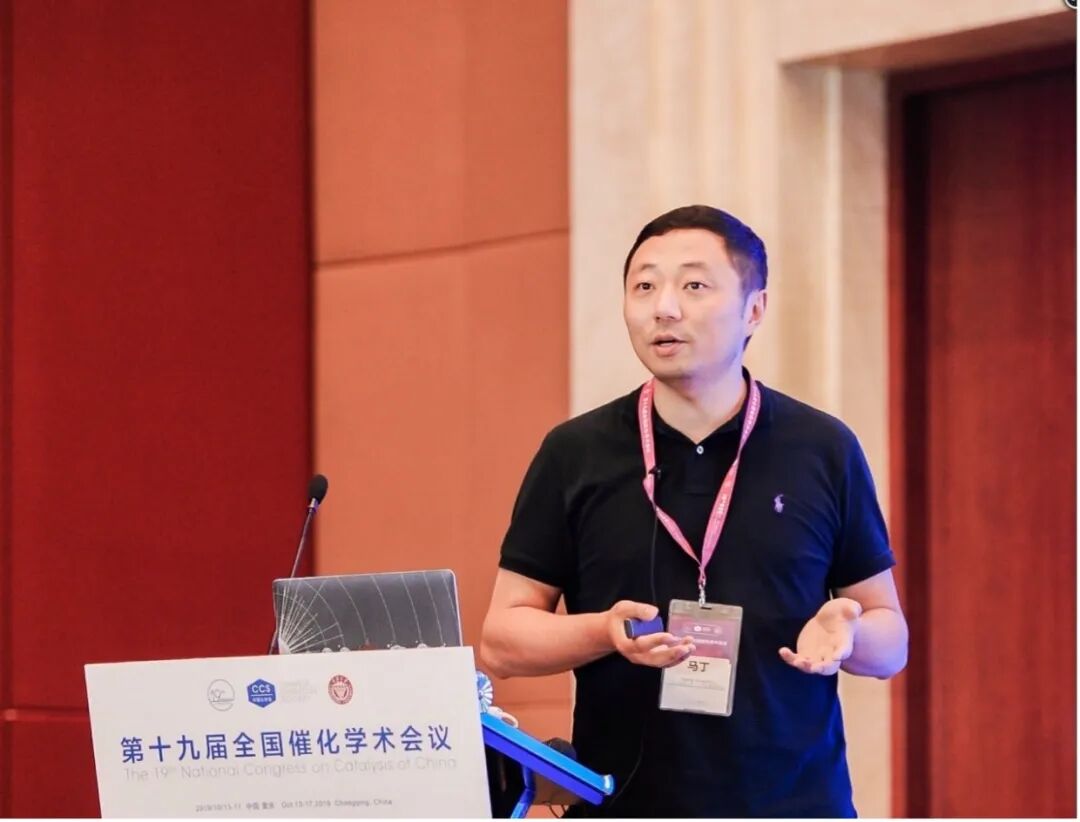
Against the backdrop of the global energy transition and China’s goals of carbon peaking and carbon neutrality, Ma’s research group has gradually crystallized three core research directions: overcoming key challenges in hydrogen production, reshaping pathways of the carbon cycle, and advancing the recycling and valorization of waste plastics.
Through fundamental, mechanism-oriented breakthroughs, the group seeks to generate knowledge that can ultimately translate into real-world impact. Together, these three directions balance the exploration of new energy pathways with the optimization of existing ones, all pointing toward the shared goal of sustainable development.
After years of sustained effort, 2025 marked a breakout year for Ma’s research group, with its scientific output reaching new heights in both quality and quantity.
In the area of hydrogen production, the group published two papers on consecutive days, one in Nature and the other in Science. Although both studies addressed hydrogen generation, they pursued fundamentally different and complementary technological pathways. The Nature paper centered on the use of rare-earth–modified catalysts, while the Science study focused on zero-carbon hydrogen production, achieving high-throughput hydrogen generation under mild conditions with no carbon dioxide emissions.
At the end of October, Ma’s group achieved another major breakthrough by tackling a long-standing challenge in iron-based Fischer–Tropsch synthesis, a problem that has long defied intensive efforts by researchers worldwide. Following more than a decade of exploration in C1 chemistry, the group and its collaborators discovered that introducing halogenated compounds at parts-per-million concentrations into the reaction gas can function like an electronic switch, precisely tuning the surface state of the catalyst. This strategy dramatically reduced carbon dioxide byproducts from around 30% in conventional processes to below 1%, bringing carbon emissions close to zero and boosting the yield of high-value olefins to over 85%.
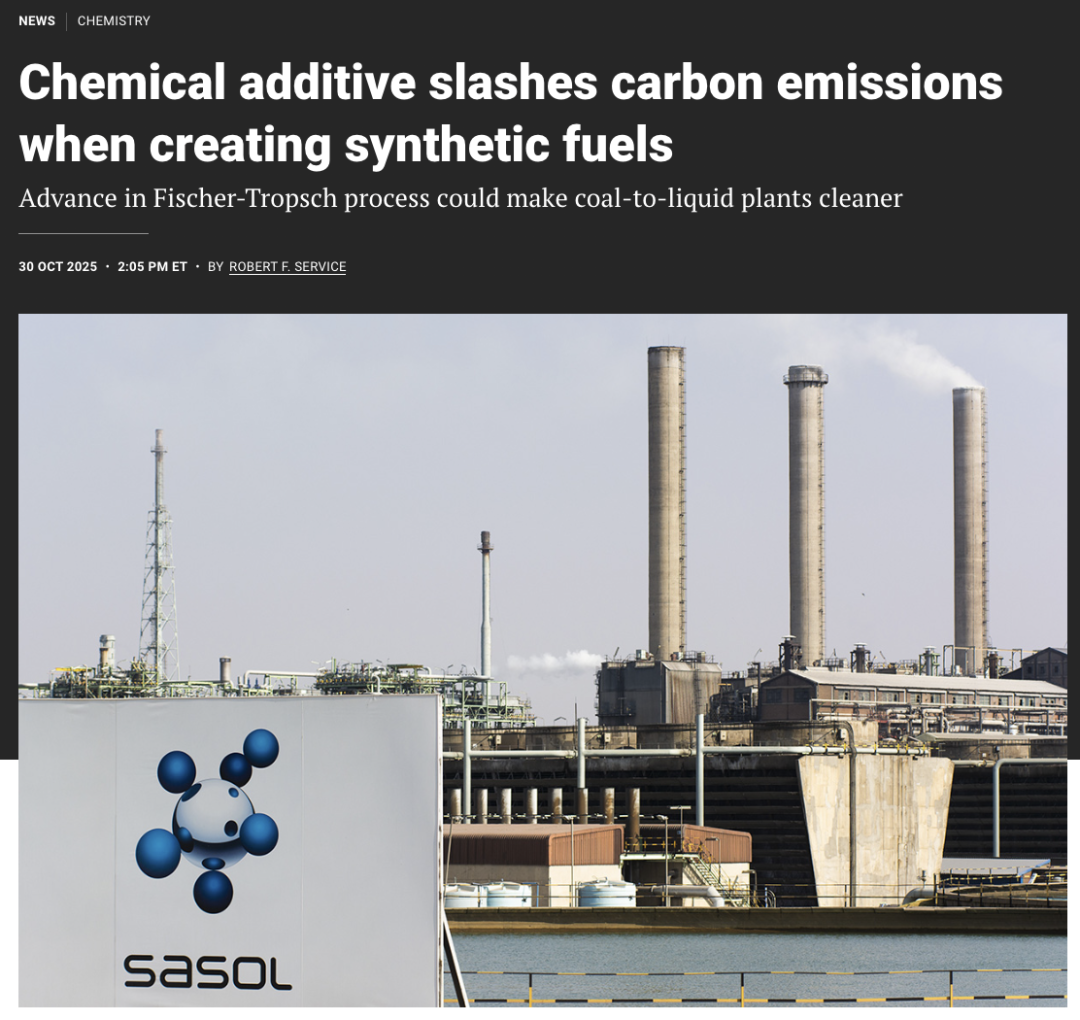
A news article in ‘Science’ about this research.
For Ma’s group, once an important scientific question is identified, the focus is on in-depth investigation—from developing conceptual frameworks and validating strategies to ultimately advancing the work toward industrial application. Those achievements, published in top-tier journals and offering China-rooted solutions to the global energy transition, stand as milestones along the group’s bold pursuit of scientific truth.
The atmosphere in Ma’s research group has never been dull. Within the broad framework of heterogeneous catalysis, group members are encouraged to pursue different research directions aligned with their own interests. During group meetings, group members take turns presenting their progress, and ideas from different directions often seem to “catalyze” one another in unexpectedly productive ways. In discussions, Ma sits among the students. When he senses a point worth probing further, he will spring to his feet, stride to the front of the room, and dive into animated exchanges with the group.
Ma takes particular pleasure in this “catalytic” process of intellectual exchange. His academic vision is never confined to heterogeneous catalysis, or even to chemistry itself. He keeps a close eye on research across a wide range of disciplines and frequently engages in cross-disciplinary collaboration. “Scientific problems today require people from different fields to work together,” Ma says. “In this era, lone wolves may still exist, but they are few and far between. What we should do is build our own academic community, mobilizing everyone’s strengths and working together to solve scientific problems.”
Ma’s interests extend well beyond the laboratory, ranging from hiking, cycling, and photography to involvement in cultural heritage preservation. As a poster hanging outside his office reads, “Let’s run away”, he continues to explore and engage with the world, even amid a demanding schedule.
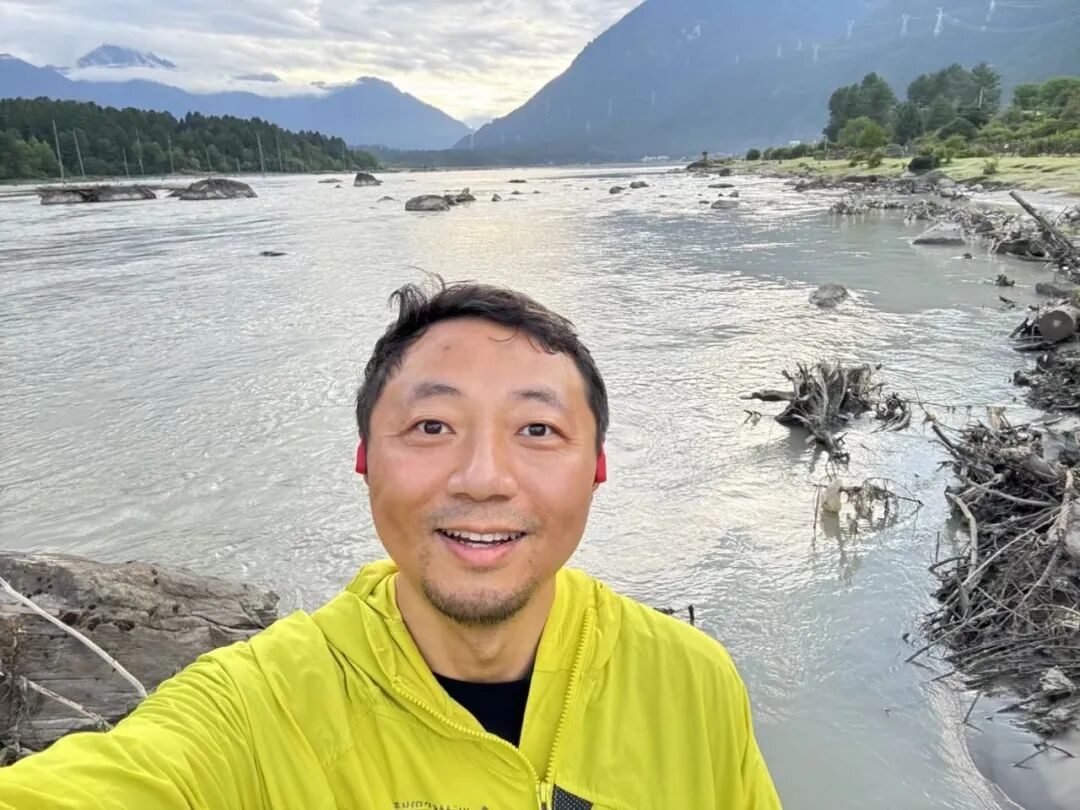
Ma Ding runs a 10k in Xizang.
Chemistry, as an experimental science, requires long hours of patience—waiting, observing, and seeking out new phenomena. Yet Ma holds that such effort is also subject to diminishing returns. In his view, only through a rhythm that balances intensity with release can true breakthroughs and creativity emerge.
Written by: Wang Ruochen
Edited by: Sean Tan, Chen Shizhuo
Source: PKU WeChat (
Chinese)