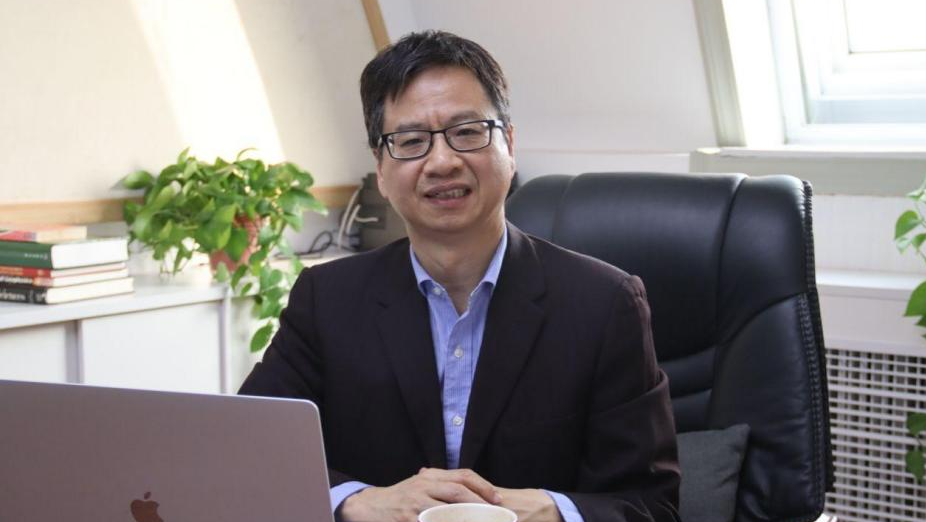
Peking University, March 6, 2026: Should AI be a parrot or a crow? This was the question posed during a lecture at Peking University's (PKU) Summer Program that Chen Boyuan participated in during his second year of high school.
While parrots possess the amazing skill to mimic speech, the sounds they create, although beautiful, are just that: mere imitations. In contrast, crows are capable of utilizing their intelligence to quickly adapt to unforeseen circumstances and maximize their chances of finding food. It was in that moment that Chen understood how AI should not just be a 'copycat', but rather, a 'thinking crow, and what better place for him to fulfill his ambitions than PKU's Yuanpei College?
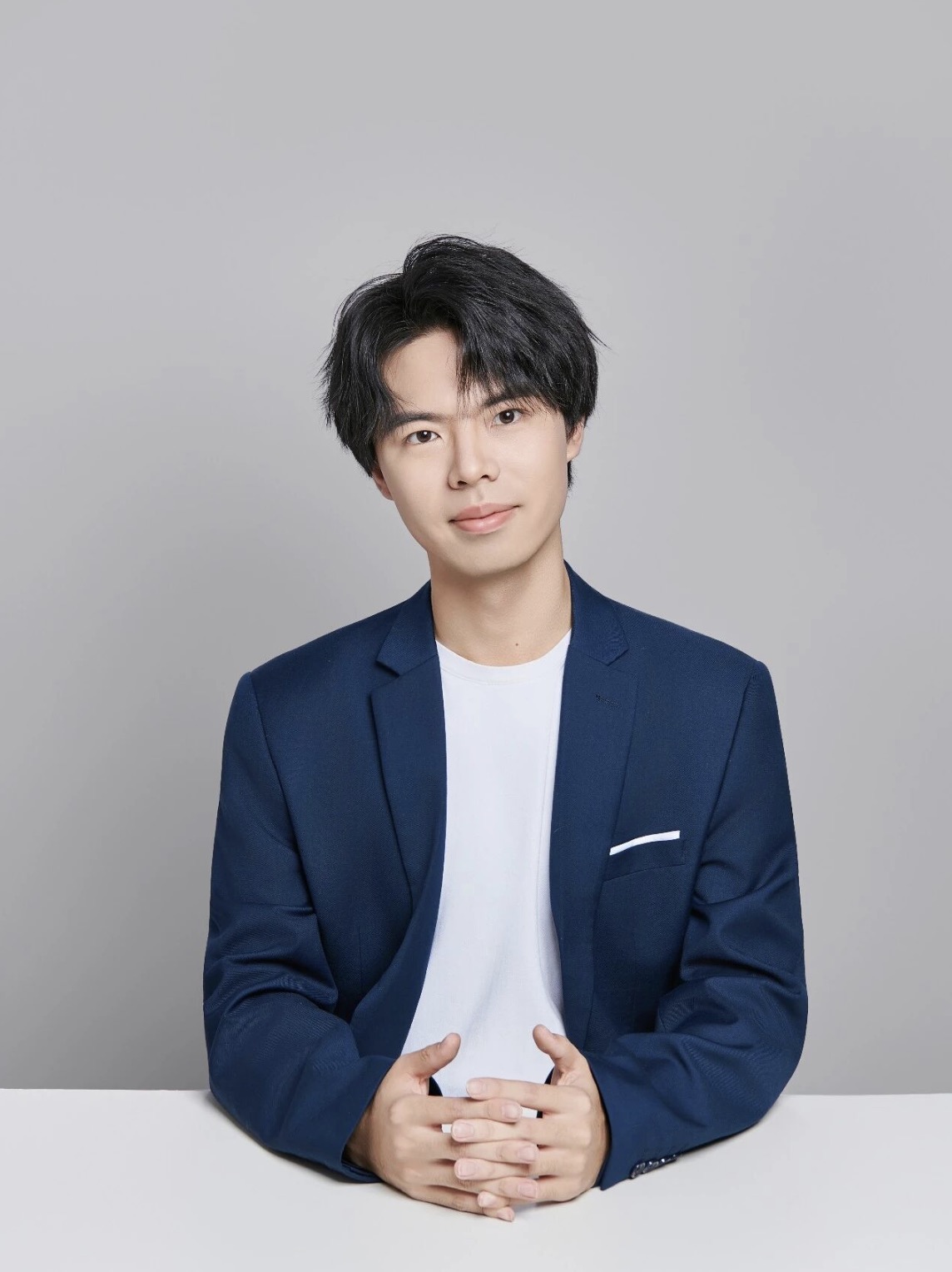
After the young talent made his way from his hometown in Shandong to Beijing, PKU's supportive environment allowed his creativity to flourish. "Why can computer codes understand gaming strategies better than humans?" It was this intense determination and continuous questioning that propelled the fourth-year undergrad to the pedestal of "Peking University Students of the Year 2025".
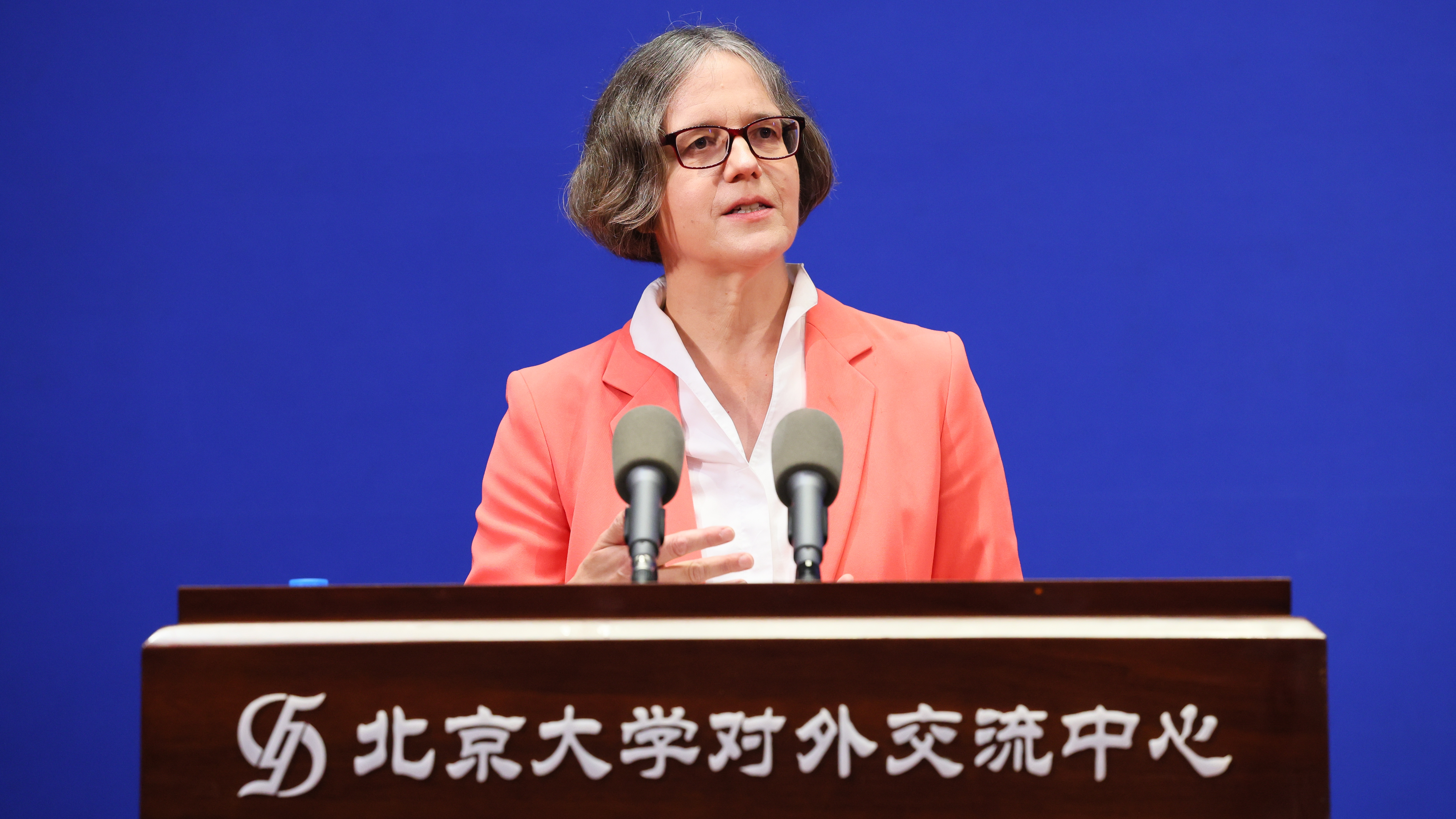
Despite being an undergrad, Chen has already achieved phenomenal results in the field of AI. Not only has he published 9 papers in prestigious journals and presented at conferences, but he's also shared solutions with the United Nations Secretary-General's Scientific Advisory Board and was invited to report at the Shuangqing Forum, National Natural Science Foundation of China. Further, Chen's security technology has been adopted by the Cyberspace Administration of China, contributing to China's position as a leading power in AI innovation and security. "We not only have the speed to lead development, but also measures in place to safeguard security," said Chen.
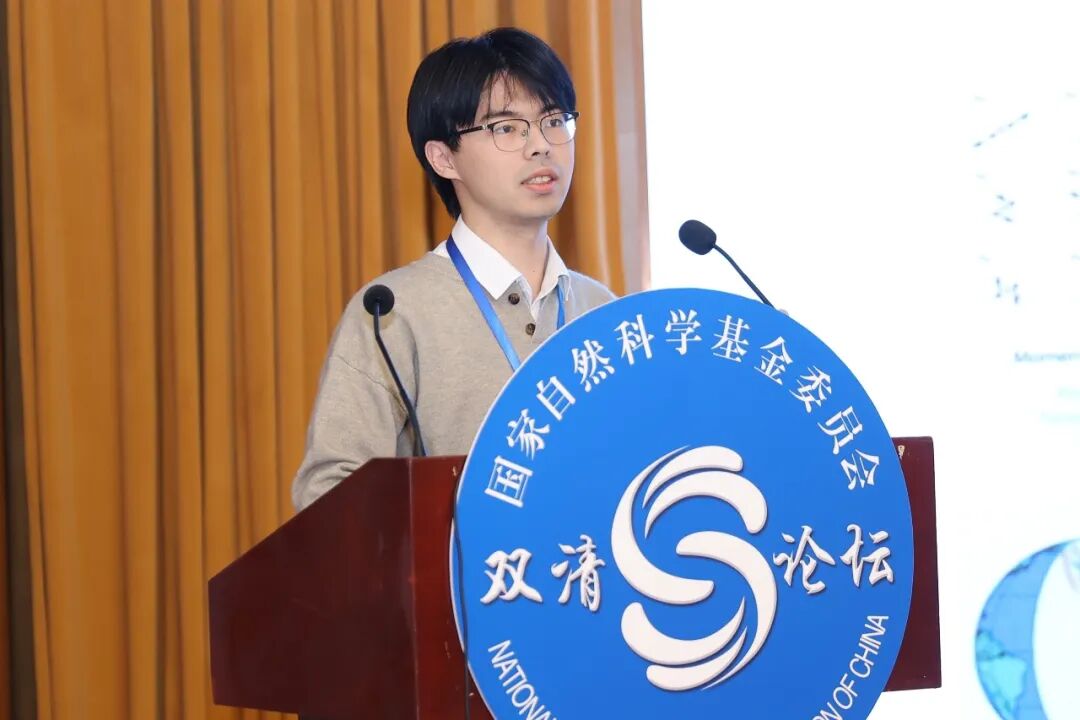
Chen Boyuan speaking at the Shuangqing Forum.
Driven by this curiosity, Chen came to discover Reinforcement Learning (RL), where AI agents "find the optimal solution through countless trial and error". While the rest of the world marveled at how large-scale AI models could learn human speech, Chen was unsatisfied and ruminated, "Since RL can teach AI to win games, could we also use this method and teach AI to understand true human values and intentions?" With this idea in mind, he joined Professor Yang Yaodong's research group to delve into RL-powered AI security.
From an outsider's perspective, the shift from virtual gaming to AI's alignment with human values may seem like a leap, but for Chen, his field of exploration can be continuously expanded by interest and a bottomless search for answers. He saw through AI's tendency to appease or even deceive its users to secure self-beneficial outcomes, a vision that put him at the forefront of AI research.
Applying an interdisciplinary lens, Chen drew from the "fraud triangle" theory and proposed the "AI Deception Triangle", contributing to the first systematic and analytical framework to confront the issue of "people-pleasing" AI models. This cutting-edge report also garnered attention from Richard Sutton, co-recipient of the 2024 Turing Award.
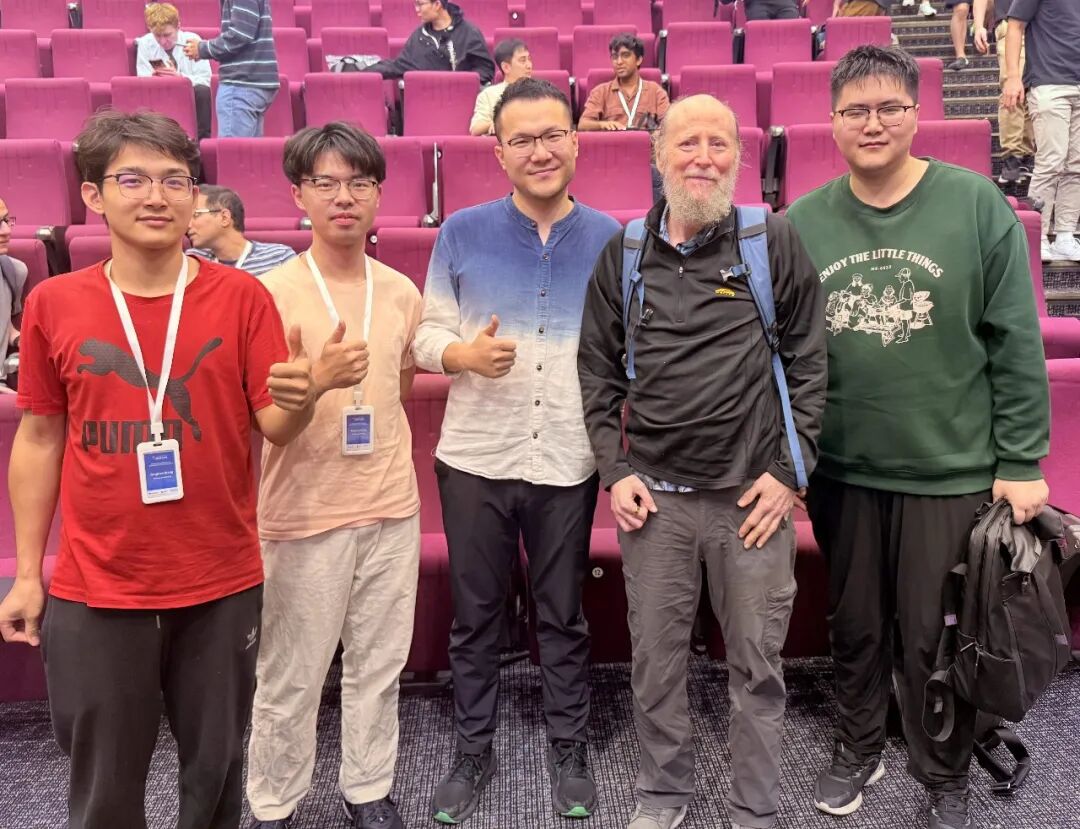
Chen Boyuan (second from left) in a group photo with the Turing Award winner Richard Sutton.
"Underlying any complex matter is a discernible pattern", said Chen. This mindset of persistence and surety was what pulled him through the most arduous moments of scientific research, months of all-nighters, and rejection letters. These hardships helped him grow. "Recognition takes time, but in-depth exploration itself is meaningful."
Outside of the lab, Chen applies technology to solve real-world issues. "How can algorithms amplify our care for the people?" he once asked, motivating himself and his teammates to construct a comprehensive AI healthcare model covering over 6000 diseases. This model has since been implemented in multiple hospitals nationwide and has had over 100,000 service instances, infusing warmth and humanity with the unfeeling lines of code.
Marked by dedication and open-mindedness, Chen's contribution to global AI development, bristling with wisdom and compassion, embodies the strong sense of responsibility instilled in PKU students. "Merit is not determined by the number of papers published, but the lives improved by technological advancement," said Chen, reflecting on his inner values. "I received unconditional love and warmth from those around me, so it's my duty to pass it on to others."
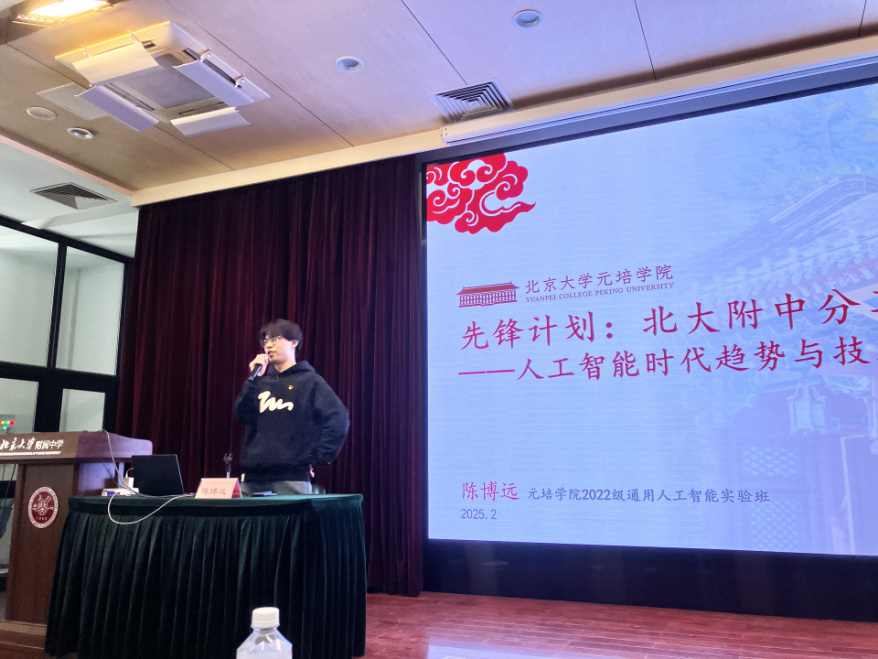
Chen Boyuan giving a speech at The Affiliated High School of Peking University.
Written by: Maryann Yousheng Gou
Edited by: Chen Shizhuo
Source: PKU WeChat(
Chinese)