Editor's Note:"Southbound Journey" is a path of progress brimming with hope and mission. It points to the vast Global South - a land full of vitality and challenges, where the most urgent needs and grandest visions of human development converge. The Institute of South-South Cooperation and Development at Peking University is dedicated to sharing the governance experiences of China and other developing countries, and to cultivating high-level government officials for these countries. Batch after batch of graduates from ISSCAD, armed with the knowledge and broadened horizons they gained at Peking University and the deep friendships they forged, have taken up key positions in their home countries or international organizations, and have dove into the front lines of development, becoming the "stars" that illuminate the way forward.
As ISSCAD approaches its tenth anniversary, the National School of Development has organized a dialogue between current students and alumni. Together, they explore the common questions of development, embarking on a deep “co-research” journey that transcends the boundaries between theory and practice, connects local experiences with global perspectives, and integrates the wisdom of young people both at home and abroad.
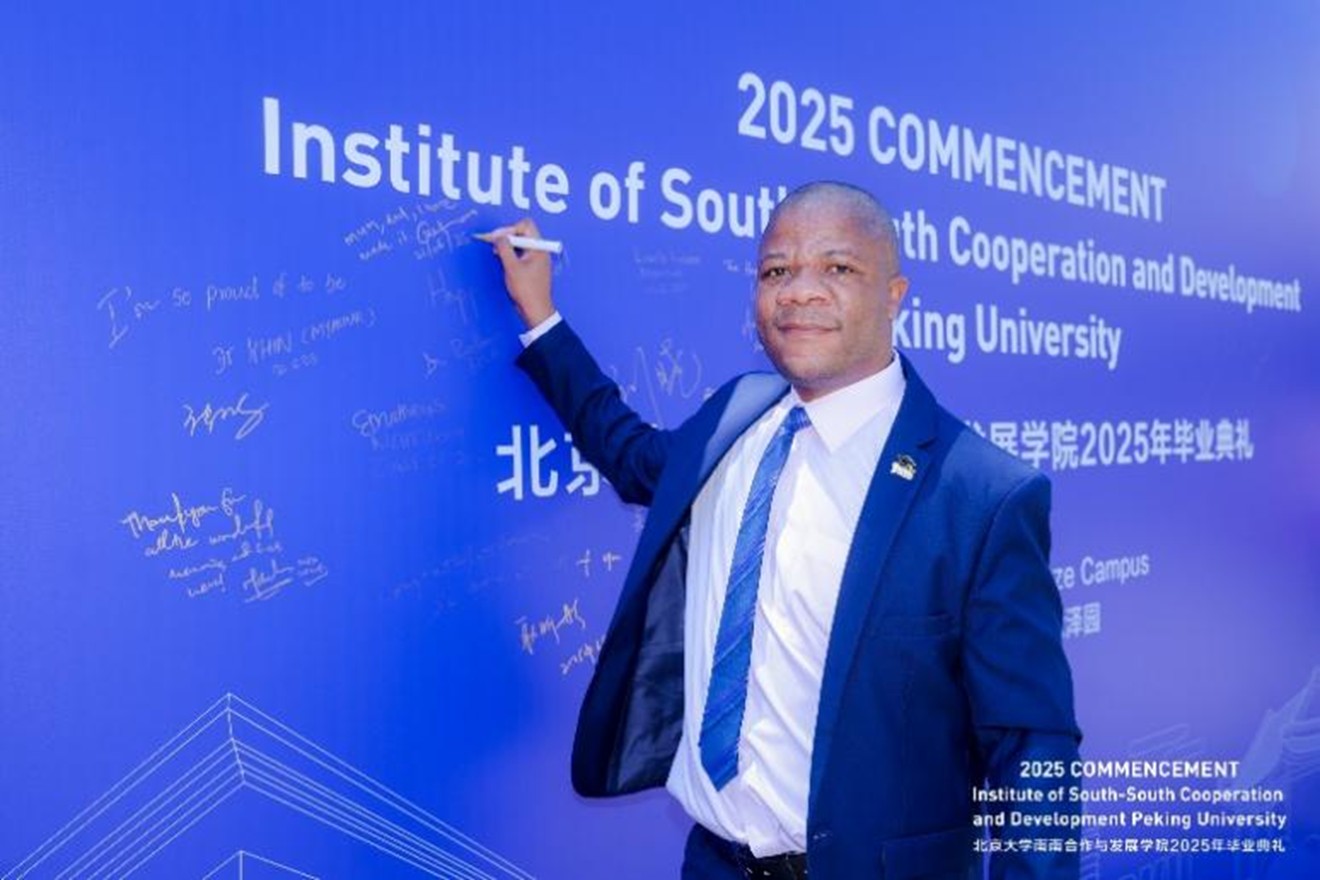
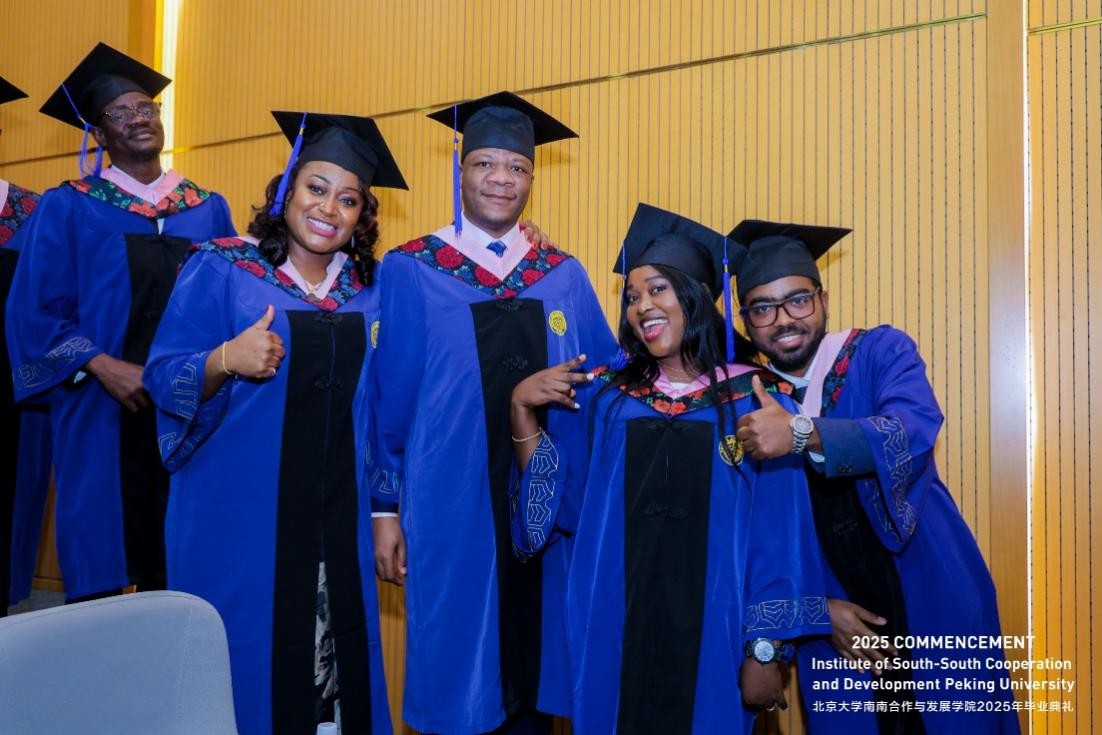
Irvin at the 2025 ISSCAD Graduation Ceremony.
Peking University, April 28, 2026: Irvin Chitambara is a 2025 graduate of the Master's program in Public Administration (National Development) at the Institute of South-South Cooperation and Development (ISSCAD), and he hails from Zimbabwe. Since 2008, he has worked as a secondary school teacher and, in 2014, he pursued a bachelor's degree in Human Resource Management at Lupane State University. Upon graduation, he transitioned into a personnel management role within the national education system. In 2024, he came to ISSCAD through a government-to-government MOFCOM scholarship program. His research work was awarded second place in the 2025 Peking University Baoping Prize for Outstanding Thesis in Africa Studies. After graduation, he will return to Zimbabwe to continue promoting policy innovation in public education and human resource reform, working toward a more equitable and efficient national education system.
From the Workshop Floor to Chengzeyuan
Before coming to China, Irvin Chitambara worked as a human resources officer and had spent ten years as a secondary school teacher. But before entering the classroom, he worked as a cleaner in a car repair shop for three years to save up for his tuition fees—a chapter that marked the beginning of his professional journey and shaped his understanding of both "effort" and "opportunity."
Irvin had long aspired to pursue a master's degree but was constrained by financial limitations. After years of relentless effort, he was finally accepted into Peking University through a government scholarship program. Irvin was thrilled when he received the admission offer, but he soon realized that significant challenges lay ahead. In the beginning, courses like Micro Economics and statistics In Social Science Research which required a lot of calculations felt overwhelming, and he even struggled with the imposter syndrome. But the generous support of his professors and the warm help from classmates gradually changed everything. Over time, he adapted to the rhythm of academic life at Peking University and found his footing.
One moment outside the classroom left a lasting impression on him. During a guest lecture filled with dense jargon, one of the professors joked, "Why do economists always have to make things sound so complicated with charts and tables?" Irvin found the comment not only amusing but also comforting—it reminded him that even when engaging with intricate theories or renowned scholars, dialogue could still be open, kind, accessible, and relatable.
From Borrowed Models to Local Solutions
With over a decade of firsthand experience in Zimbabwe's education system, Irvin chose to center his master's thesis on the challenges of implementing Results-Based Management (RBM) in rural schools. “RBM has been pushed in our country for years, but many teachers don't actually understand its value," he noted. "It's become more of a routine formality than something that improves teaching quality." For example, all teachers at primary school level are expected to teach ICT with the same performance targets, however some schools have computers, electricity, and trained ICT teachers—while others lack even a basic text book on ICT. In such cases, when students hear the word "mouse," all they can relate to and picture is a rodent, not the computer device! The study intended to reveal how the current RBM system treats unequals equally.
He wanted to use his research and writing to highlight these inequalities in education access and propose fairer, more effective performance evaluation systems. Initially, his policy suggestions echoed the conventional call for "more government investment." But Professor Yu Changhua, however, enlightened him: "You come from a resource-constrained country—shouldn't you be looking for solutions that don't rely on extra funding?" That advice was a turning point. Irvin went back to the drawing board, rethinking and refining his thesis policy recommendations so that they could be more feasible in the context of financial resource constraints. In the end, it was this shift—from seeking more resources to optimizing policy design—that played a big part in his clinching second place in the 2025 Peking University Baoping Prize for Outstanding Thesis in Africa Studies Students Award.
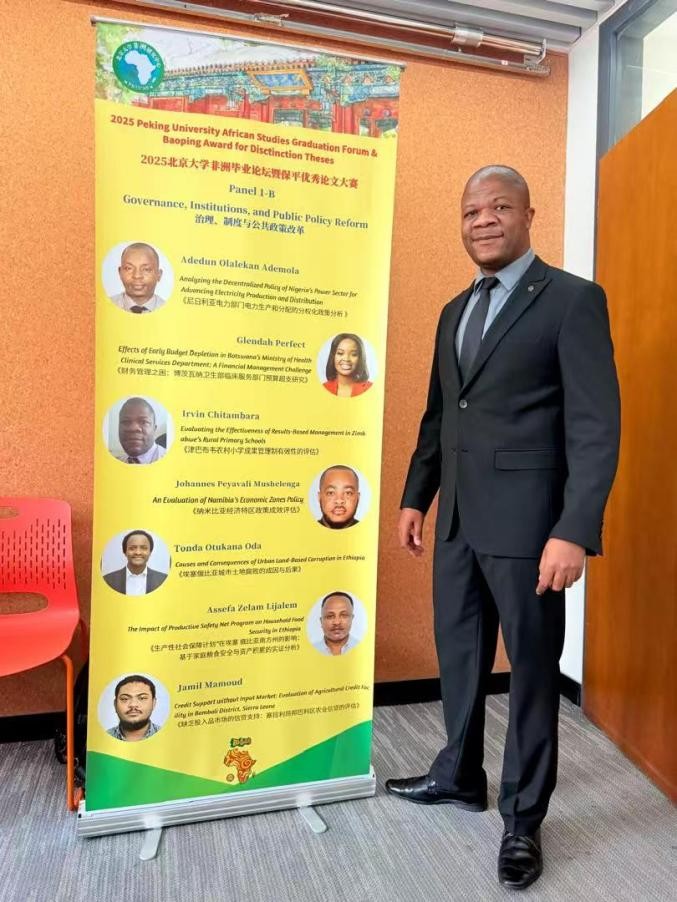
Irvin at the 2025 Peking University Africa Graduation Forum and Baoping Outstanding Thesis Award Competition.
Professor Justin Yifu Lin's New Structural Economics theory had a profound impression on Irvin, particularly its emphasis on comparative advantage and contextual adaptation. He came to a deep realization that no system design should be copied wholesale; it must be adapted to the realities of one's own country. He believes Zimbabwe, too, needs to continue along this path—pursuing practical, low-cost approaches to steadily improve people's living standards.
As digital transformation sweeps the globe, Irvin is also reflecting on the potential of AI. He emphasized that raising public awareness of AI is crucial in Zimbabwe, where many people still use AI tools only at a superficial level without grasping their true value. The key, he noted, lies in helping people understand the importance of asking questions—the quality of the questions directly determines the value of the answers AI can provide. Irvin further explained that if effectively harnessed, AI could offer developing countries like Zimbabwe invaluable opportunities to tackle major challenges such as poverty.
From Academic Research to Spiritual Legacy
"I'm the only Zimbabwean student here," Irvin said with a trace of regret. To him, ISSCAD is not only a place to study public management but also a space for cross-cultural understanding and mutual inspiration. In Beijing, he studied alongside classmates from more than ten countries and sometimes attended courses with Chinese students. He lived in the international student dorm, sharing an apartment with a roommate from Sierra Leone. "There is a strong spirit of collaboration here. Everyone wants to see others graduate too. When I go back home, I want to encourage more students to grab this life changing opportunity too, and study here."
Irvin (third from left) with classmates at the 2025 ISSCAD Graduation Ceremony.
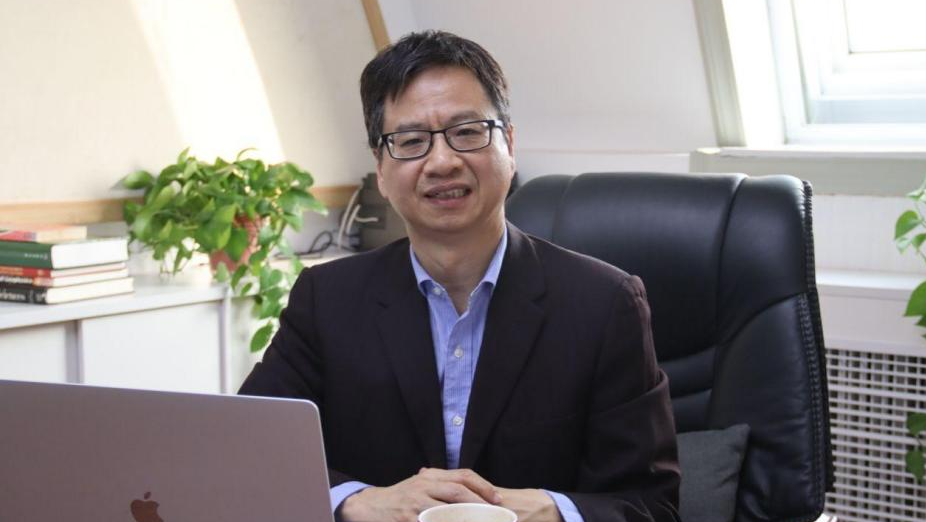
While writing his thesis, Irvin came to deeply understand what true academic spirit means. His advisor, Assistant Professor Huang Qingyang, not only provided careful guidance on research direction but sometimes demonstrated an even deeper familiarity with Zimbabwe's education system than Irvin himself. Every draft he submitted was returned with line-by-line feedback—from structure and logic to grammar and punctuation, even the tiniest detail was carefully noted. "Sometimes I went to bed at 4 a.m. and had to be up at 7am to be in time for the 9am class," Irvin admitted, "but now that I look back, it was all worth it." Through this academic rigor, he came to appreciate what it means to be precise, grounded, and committed to excellence—and it strengthened his belief in using research to shape real-world policy reform.
When speaking of the school's administrative staff, Irvin was full of appreciation: "They're always patient, organized, and never tire of helping." These seemingly small details helped him feel a consistent sense of kindness even before he stepped into the classroom, and deepened his understanding of the importance of listening, collaboration, and resilience. He hopes to carry forward and pass on this spirit.
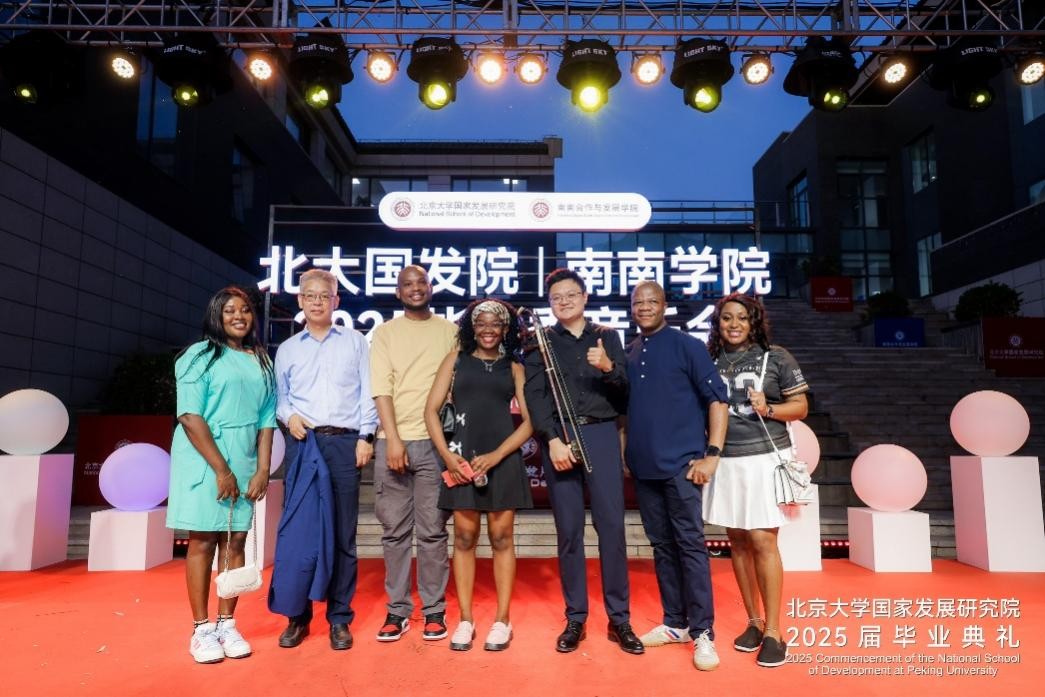
Irvin (second from right) with his supervisor, Professor Huang Qingyang (third from right), at the Graduation Season Concert.
As his time in China came to an end, Irvin admitted to feeling a sense of reluctance. He once visited the Great Wall of China and remembered with pride the Chinese saying loosely translated to "he who has never been to the Great Wall is not a true hero."
He believed that his journey at ISSCAD, analogous to trekking through the Great Wall, can be a symbol of resilience, determination, and achievement.
Irvin taking part in an ISSCAD thematic activity, climbing the Huanghuacheng Great Wall.
After returning to Zimbabwe, he will serve one more year in government, as required. He hopes to write more policy commentaries with real-world impact and share insights from China’s institutional design and practical experience. He also wants to encourage more Zimbabwean students to study in China and to deepen the exchanges between China and Zimbabwe.
Irvin Chitambara’s journey at Yanyuan has been an extraordinary path of transformation—from a grassroots worker to a scholar of development. He is not a conventional traveler, but a pathfinder determined to move through the fissures of reality—coming with questions about Zimbabwe’s education, and returning with the wisdom of China and the spirit of South-South cooperation. One year of study made Peking University a second home in a foreign land. The starlight of late-night writing, the breath-taking sight at the top of the Great Wall, and the sparks of cross-cultural exchange together formed a beautiful tableau—one that will be cherished in Irvin’s memory and passed on as inspiration for others.
Interviewed and edited by: Ye Miaotong
Source: ISSCAD