Editor's Note: “Southbound Journey” is a path of progress brimming with hope and mission. It points to the vast Global South - a land full of vitality and challenges, where the most urgent needs and grandest visions of human development converge. The Institute of South-South Cooperation and Development at Peking University is dedicated to sharing the governance experiences of China and other developing countries, and to cultivating high-level government officials for these countries. Batch after batch of graduates from ISSCAD, armed with the knowledge and broadened horizons they gained at Peking University and the deep friendships they forged, have taken up key positions in their home countries or international organizations, and have dove into the front lines of development, becoming the “stars” that illuminate the way forward.
As ISSCAD approaches its tenth anniversary, the National School of Development has organized a dialogue between current students and alumni. Together, they explore the common questions of development, embarking on a deep “co-research” journey that transcends the boundaries between theory and practice, connects local experiences with global perspectives, and integrates the wisdom of young people both at home and abroad.
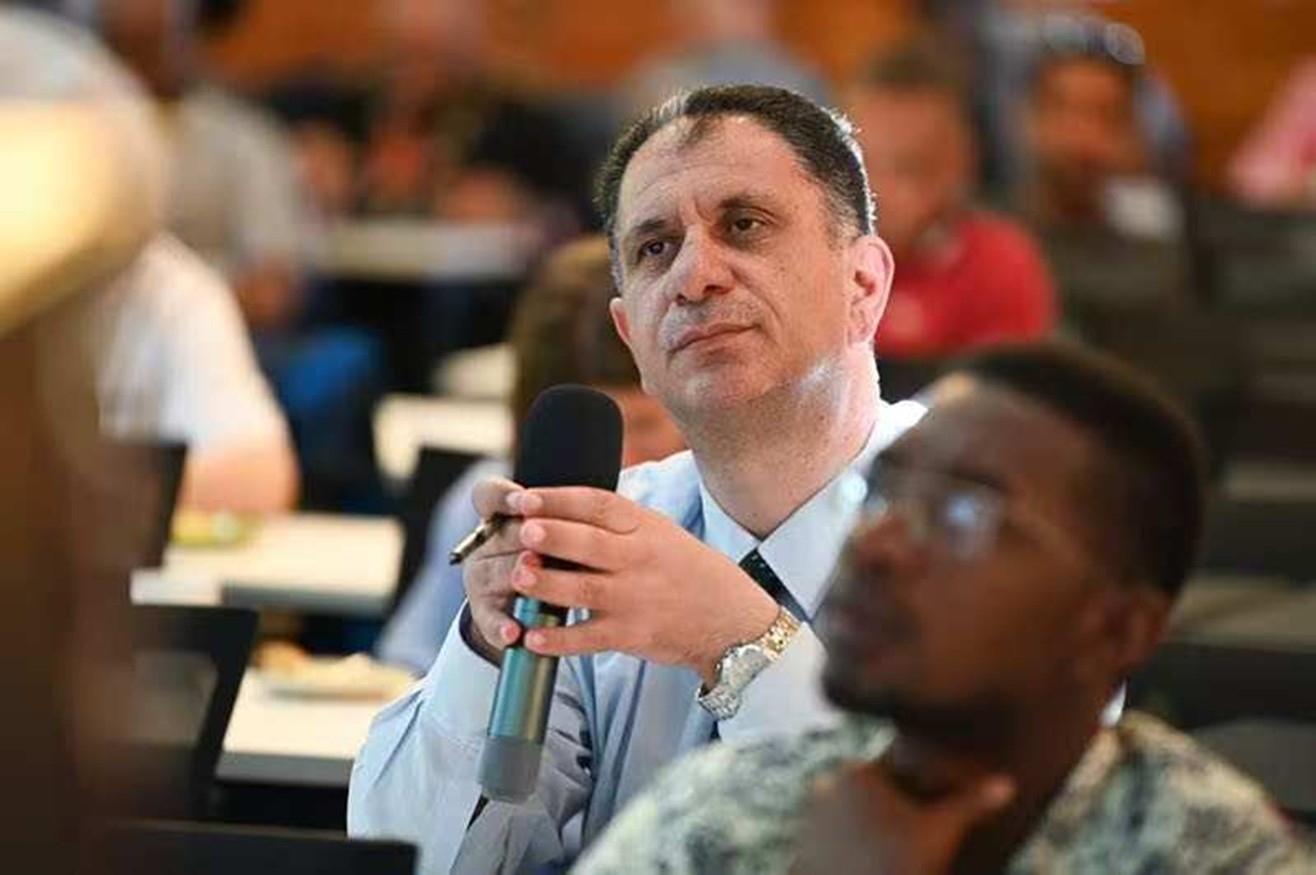
Raed actively participating in a session at PKU.
Peking University, April 30, 2026: Raed Ali Mohamad Abdalqader, a 2021 PhD graduate from Peking University's Institute of South-South Cooperation and Development (ISSCAD), hails from Jordan. He earned his Bachelor's degree in Agricultural Science from Jerash University, Jordan, in 1999, followed by a Master's degree in Agricultural Economics and Agribusiness from the University of Jordan. Since 2007, he has served as a Socio-Economic Researcher at the Jordanian National Agricultural Research Center (NARC), accumulating nearly 17 years of government experience. Driven by a deep interest in China's development experience, he enrolled at ISSCAD in the fall of 2018. After graduation, Raed returned to Jordan, integrating the policy research methodologies and cutting-edge development concepts learned in China into his work, striving to optimize Jordan's agricultural policies and upgrade its value chains through academic research.
Rooted in Homeland: From Jordan's Fields to Peking University's Halls
Raed's academic and professional journey is deeply rooted in his homeland, Jordan. After obtaining his Bachelor's degree in Agricultural Science from Jerash University in 1999, he earned a Master's in Agricultural Economics and Agribusiness from the University of Jordan sixteen years later, focusing his research on Jordan's renowned olives value chain. "Although Jordan is a water-scarce nation," Raed notes, "it possesses a rich agricultural heritage, producing some of the world's finest olive oil." His deep engagement with his country's olive industry ignited his passion for agricultural economics. During his years as a Socio-Economic Researcher at NARC, he witnessed firsthand the gap between policy ideals and on-the-ground realities. This tangible experience became a key motivation for his pursuit of knowledge in China. He recognized the immense value of China's remarkable development speed and successful poverty alleviation experience for Jordan, which faces similar challenges. The ISSCAD's focus on South-South cooperation and practical policy solutions perfectly aligned with his quest. When he finally arrived on the PKU campus, the reality surpassed his expectations: the opportunity to learn from distinguished professors and engage with outstanding peers from diverse nations proved far more enriching than he had anticipated.
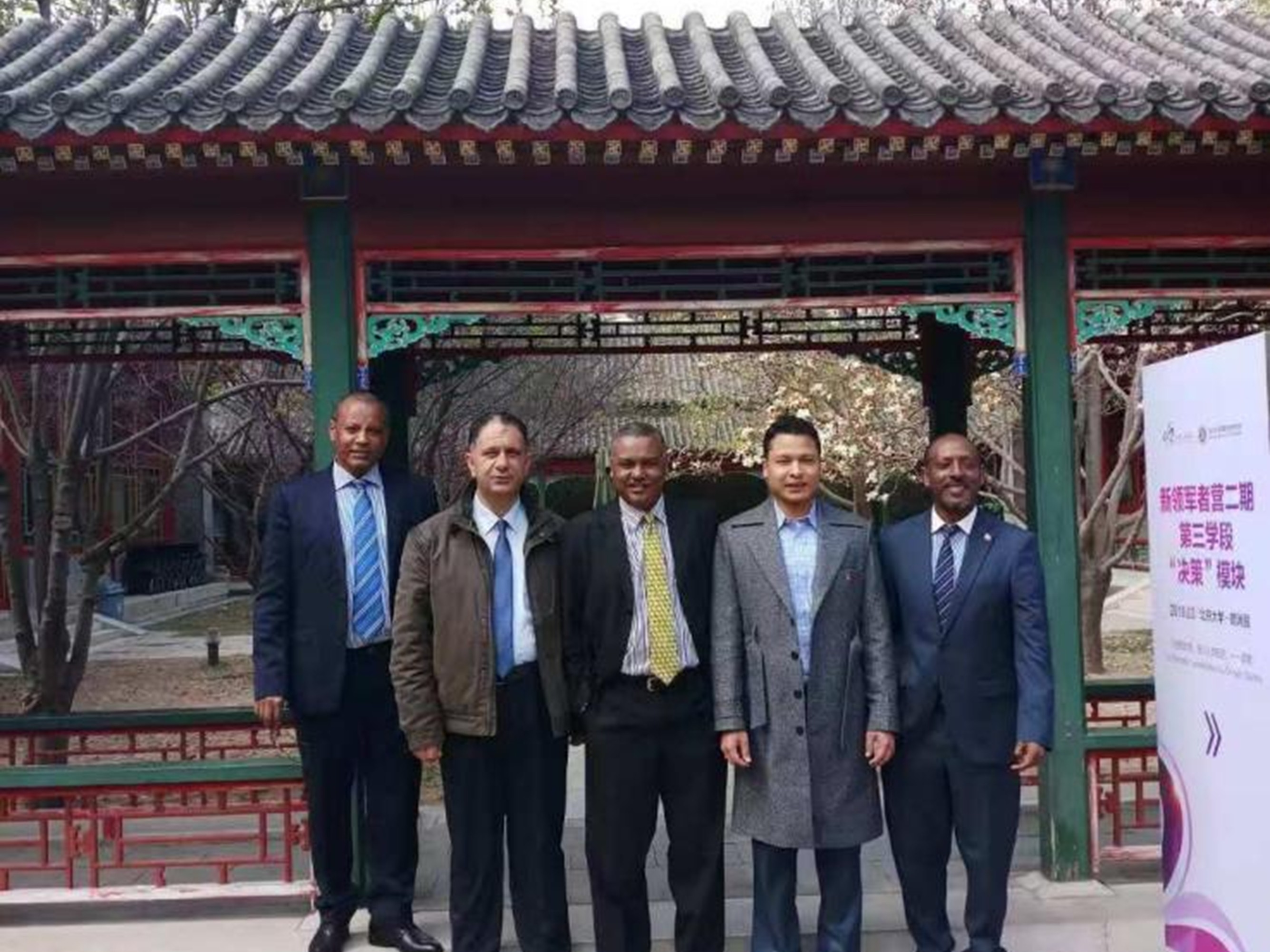
Raed (second from left) with classmates at ISSCAD.
At ISSCAD, under the dedicated guidance of his supervisor, Professor Xi Tianyang, Raed focused his doctoral research on the impact of economic diplomacy on development. A pivotal suggestion from Professor Xi – shifting the comparative focus of his study from China to Egypt, a country with closer parallels to Jordan – significantly enhanced the research's feasibility and relevance. Through a systematic comparative analysis of economic diplomacy practices in Jordan and Egypt, Raed uncovered the core reasons for disparities in development outcomes: despite employing similar economic diplomacy tools, differences in institutional frameworks, policy coordination mechanisms, political stability, and business environments led to markedly different results. This grounded, policy-oriented research not only addressed important academic questions but also clearly pointed toward directions for policy optimization. He gained a profound understanding that effective economic governance must transcend traditional diplomatic frameworks and genuinely create sustainable economic and social value through trade agreements, investment promotion, and pragmatic international cooperation.
Warmth Amidst Challenge: Forging Bonds Across Cultures
Initial arrival in China presented hurdles. Adapting to a new academic system and overcoming language barriers were primary challenges. As a Muslim, concerns about daily meals also weighed on him. However, the warmth of the PKU community soon eased these anxieties. Raed shares his strategy for integration: actively befriending Chinese peers, proactively seeking guidance from professors, and enthusiastically participating in the diverse extracurricular activities organized by the university for international students. He was deeply moved by the kindness and sincerity of the Chinese people: "They are remarkably humble and friendly, genuinely treating international friends as one of their own." Life in China ultimately became simple, fulfilling, and convenient.
Once integrated, China's development practices delivered a profound impact far exceeding his expectations. He witnessed firsthand how large-scale infrastructure projects and precisely targeted policy measures fundamentally transformed rural landscapes within a relatively short timeframe. This completely overturned his prior belief that "such rapid development under resource constraints was impossible." "China is a highly advanced nation," he marvels. "The sophistication of its communication technology and the sheer scale of its information infrastructure truly took my breath away."
The genuine friendships forged at PKU became his most treasured possessions. To this day, he maintains close contact with his former professors and Chinese classmates. "This friendship is worth cherishing for a lifetime because I hold a sincere love for the Chinese people and the land of China," he states emphatically. His experiences traveling across China's magnificent landscapes and historical sites left an indelible mark: "China boasts a captivatingly long history, hospitable people, and unparalleled natural grandeur. The image of this great nation is now deeply etched in my mind and my life."
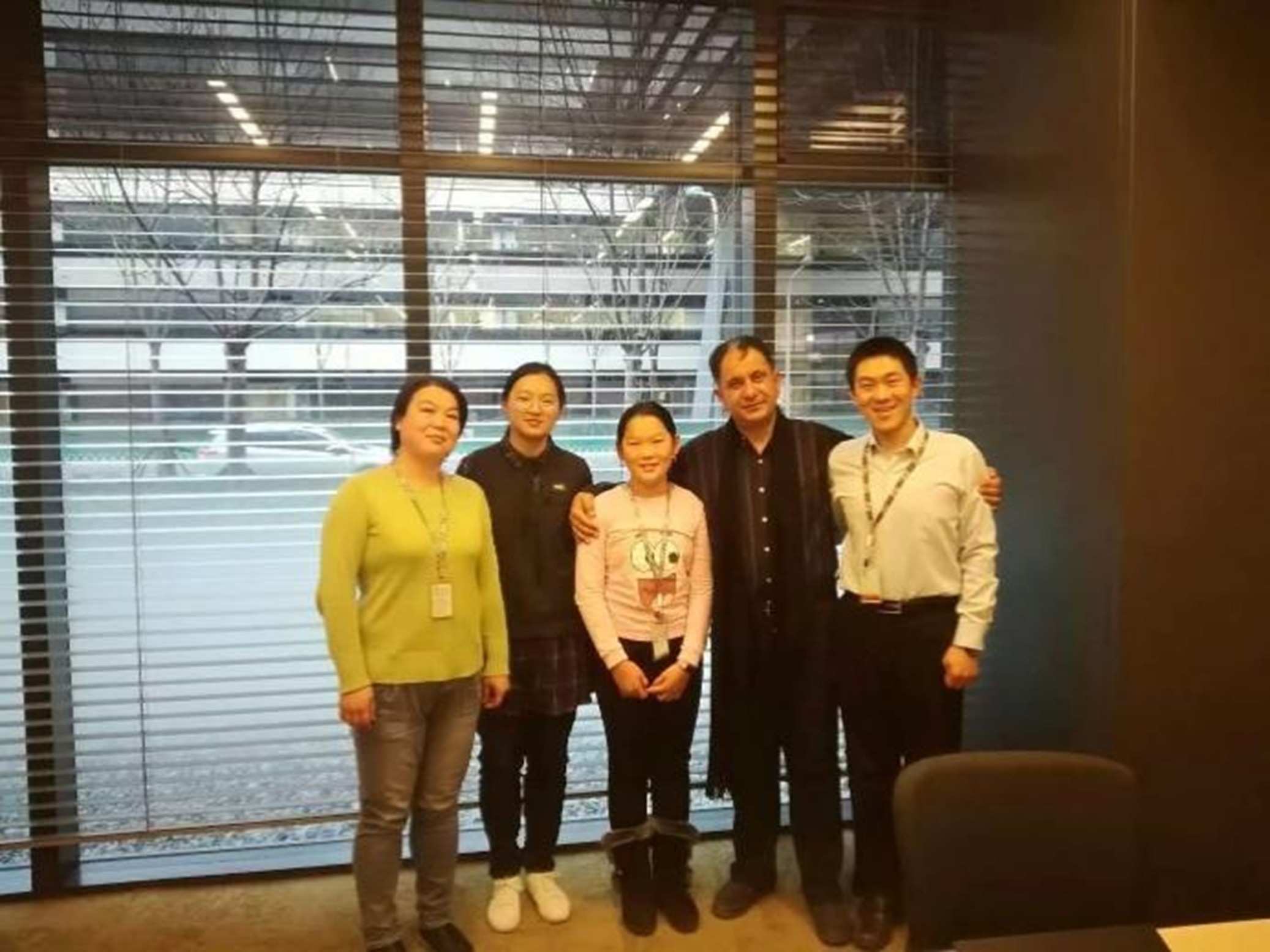
Raed (second from right) sharing a warm moment with his Chinese friend's family.
Academic Refinement: Applying Chinese Insights to Jordanian Soil
Upon completing his studies and returning to NARC, Raed immediately began integrating the evidence-based policy approach emphasized at ISSCAD and cutting-edge international development practices into Jordan's agricultural strategy formulation. He highlights the multi-dimensional capability enhancement gained from this experience: "It significantly sharpened my policy analysis skills, deepened my understanding of the complex pathways of economic development, and underscored for me the indispensable role of cross-cultural cooperation in tackling shared challenges." This refinement of abilities is clearly reflected in his daily work. He strives to translate his learning into practice by actively participating in the development of national strategies related to the green economy, food security, and sustainable development. He promotes advanced agricultural technologies and conducts training sessions for farmers and rural women to enhance productivity and management skills. He conducts in-depth research on bottlenecks in Jordan's agricultural development and, based on data analysis and lessons from successful case studies, provides recommendations for optimizing the design of the agricultural credit system. This effort aims to steer policy resources toward small and medium-scale farmers, helping them access new technologies and improve their operational models.
In the field of agricultural value chain research, he fully leverages his expertise. Through his analysis of the olive market structure and distribution channels, he provides theoretical support for the upgrading and transformation of Jordan's specialty agricultural products, significantly enhancing their market competitiveness and increasing farmers' incomes. When colleagues noticed his innovative ideas and inquired about their origins, he never hesitated to point out that these inspirations stemmed from China's development experience, the systematic training at ISSCAD, and the profound wisdom of Chinese culture. He regards this period of study as a profound "transformation": it not only reshaped his career trajectory and greatly broadened his global perspective but, more importantly, endowed him with the ability to contribute to his country's development through systematic approaches and practical tools.
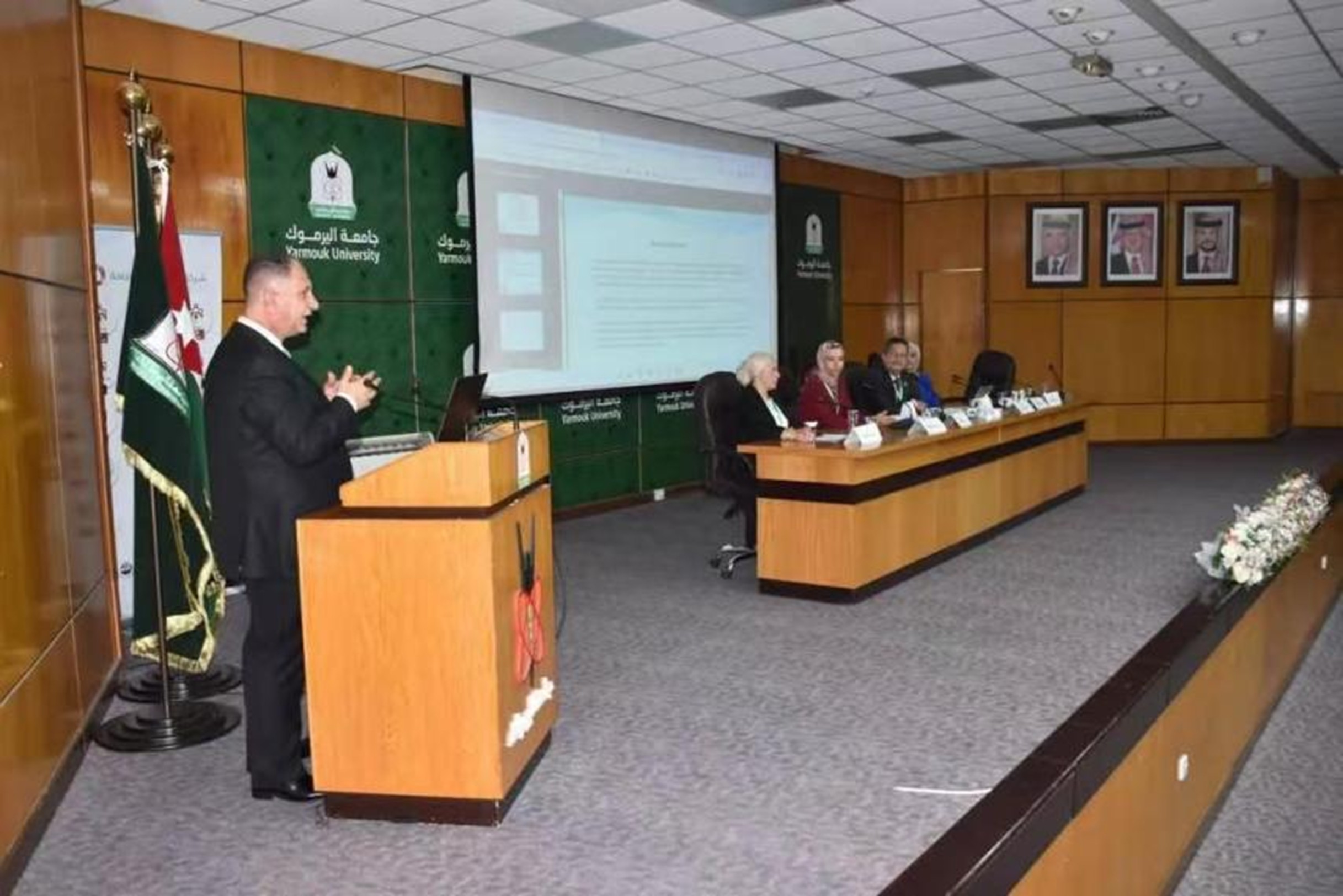
Raed attended an academic conference.
Looking ahead, he demonstrates a firm commitment to continuous learning: "A doctoral degree is not the endpoint. I plan to return to China for further professional training. The spirit of Chinese scholars, who always keep pace with the times and relentlessly innovate, is something we should consistently follow and learn from." This willingness to continue learning complements his extensive practical experience. Over the course of his 17-year career, he has co-authored the Jordan case study for the World Bank Group’s agribusiness report, served as an implementing member of the Food and Agriculture Organization (FAO) food security project while also training team members, and participated in collaborative initiatives with international institutions such as the International Fund for Agricultural Development (IFAD) and the International Center for Agricultural Research in the Dry Areas (ICARDA), focusing on rural development, agricultural value chain enhancement, and policy analysis for the agricultural sector. Furthermore, his role as a member of the Sustainable Development Research Committee for Cooperative Economics and Social Innovation at the Arab International Institute for Peace and Education, along with his experience presenting research findings at several major international conferences, underscores his persistent dedication to integrating a broad global perspective with practical solutions to address the real challenges of Jordan’s agricultural development.
Advice for Future Students: Embrace Openness, Draw Strength from Transformation
For prospective international students considering studying in China, Raed highly recommends the ISSCAD program, especially to those with open minds eager to learn from China's diverse experiences – not just in economic development, but also the admirable aspects of the Chinese lifestyle and work ethic. He suggests learning some basic Chinese before arrival to ease into daily life and emphasizes maintaining an open mindset: be receptive to new experiences and willing to challenge preconceptions. "Engaging with Chinese people and their culture," he assures, "is far more accessible and rewarding than you might imagine."
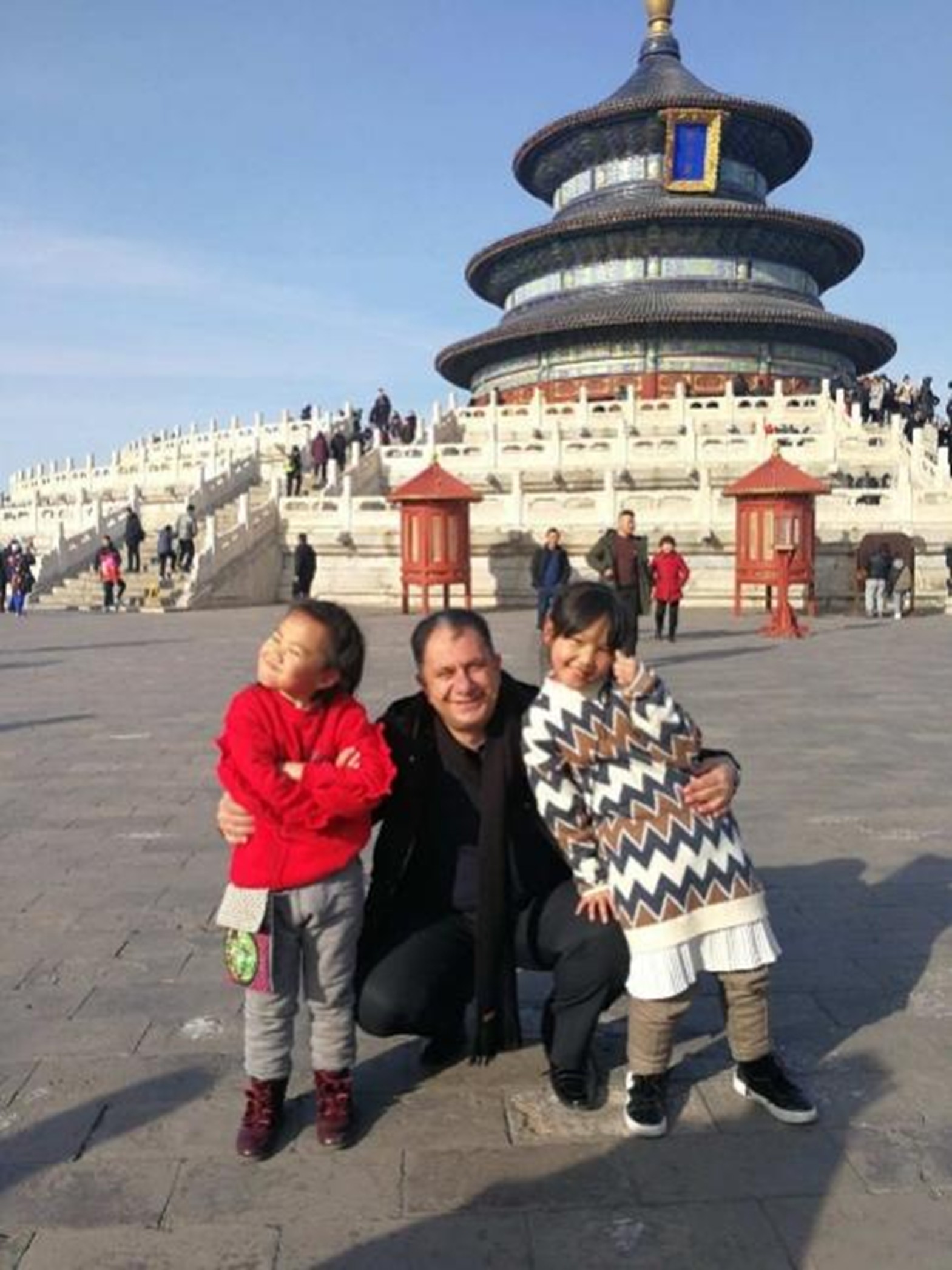
Raed interacting with Chinese children at the Temple of Heaven.
From a researcher at Jordan's NARC, to a scholar of development policy at Yan Garden, and returning home as a practitioner of transformative concepts, Raed gained not only advanced theoretical tools and rigorous research methodologies but also a deep comprehension and personal experience of the essence of Chinese development principles like "targeted policy implementation" and the "unity of knowledge and action."
"I miss China and the Chinese people immensely, and I eagerly anticipate the day I can return." This deep affection has already translated into concrete action: he continuously analyzes China's successful poverty alleviation cases for Jordanian colleagues, vividly shares his experiences with his children, and tirelessly sows the seeds of his PKU years. In his work, he steadfastly adheres to the principle forged at ISSCAD: combining a global vision with local care. This experience, deemed "transformative" beyond the academic degree itself, has become his guide for navigating contemporary challenges. Today, standing firm on Arab soil, he uses the wisdom acquired in China to continually nurture Jordan's development practices. Through concrete actions, he embodies the true spirit of South-South cooperation, ensuring that this enduring bond with China continues to nourish the grand endeavor of humanity's shared development.
Source: ISSCAD
Interviewed and edited by: Chang Huyang