Peking University, July 9, 2026: Professor Ma Siwei of the School of Computer Science, Peking University has won the Second Prize of the National Scientific and Technological Progress Award for his team’s work on Audio Video Coding Standard (AVS). It has become China’s home-grown ultra-HD video compression standard, which now underpins broadcasts from China Central Television (CCTV) to the Olympics Games
Ma’s project built an integrated industrial ecosystem, linking front-end acquisition, mid-end encoding and transmission, and back-end display and presentation, in partnership with companies including DJI and BOE Technology.

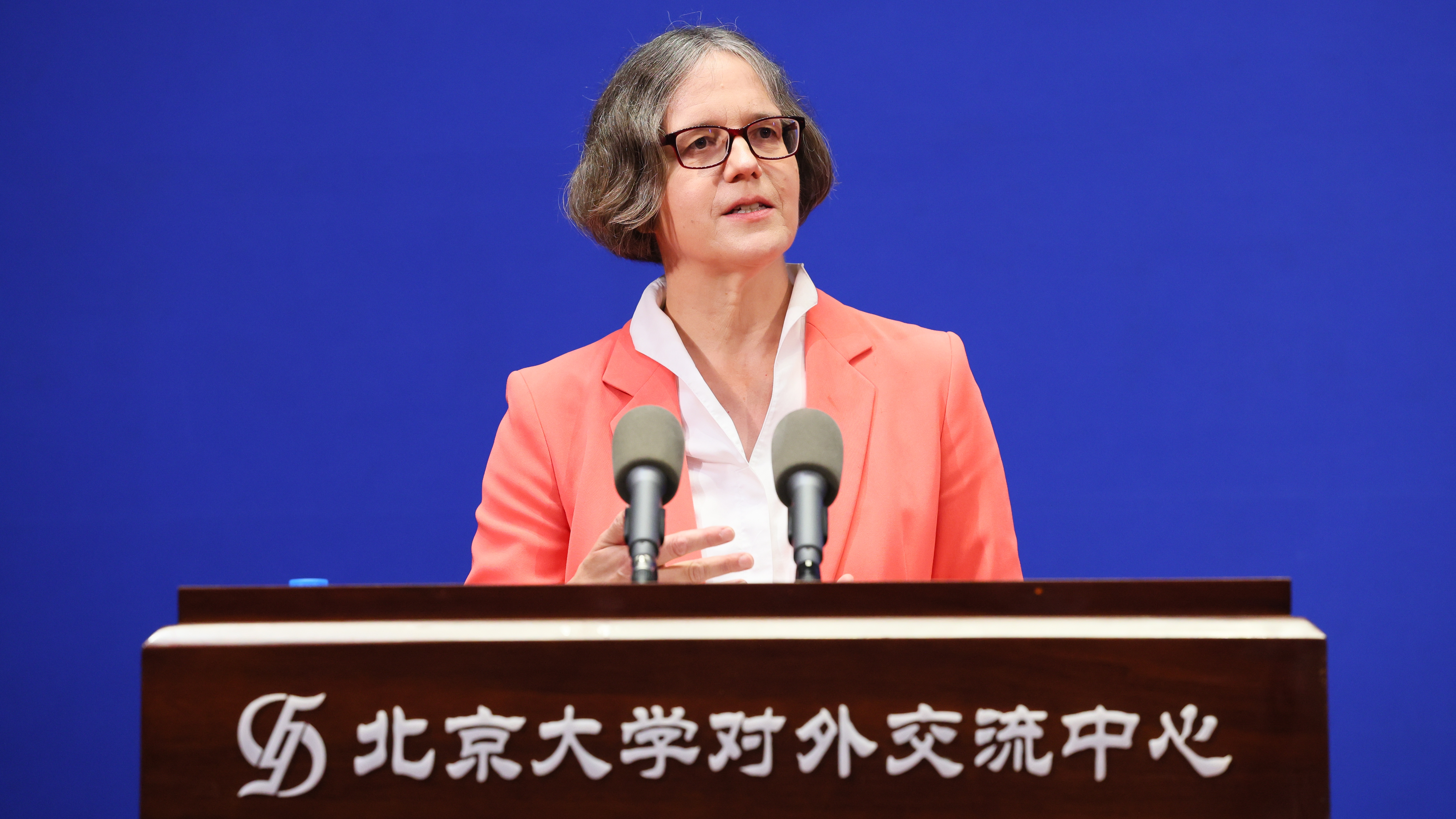
Professor Ma Siwei
The journey to this recognition was long and arduous. Ma pointed out that China independently developed the VCD player in 1992. China's manufacturing base for VCD and DVD players grew rapidly and cheaply. But the country had missed the window to secure patent protection for the underlying technology, and only joined the International Organization for Standardization in 1996, by which point other countries had already completed the foundational work. As a result, Chinese manufacturers had to pay licensing fees to a scattered group of foreign patent holders, some of whom pushed for higher returns. Patent fees were as high as $25 per DVD device, leaving Chinese manufacturers with razor-thin margins. “We don’t have the core patent technology, which is the biggest problem,” Ma said.
"At the time, people questioned whether we could even set our own technical standard," Ma said. The first generation of AVS faced especially severe broadcast-quality testing requirements, and Ma recalled working through the night to prepare test data ahead of his PhD defense in 2005. Although the standard was approved as a national standard in 2006, it did not see widespread commercial adoption until 2012, a full decade after the work began. "If you stop halfway, you get no results at all,” he said.
That hard work has since paid off. AVS-powered 4K broadcasting was used for China's 70th anniversary celebrations in 2019, and 8K channels have become standard at CCTV and Beijing Television since 2021. At the 2024 Paris Olympics, a CCTV outside broadcast vehicle built on AVS3 technology drove past the Arc de Triomphe, drawing extensive coverage from French and European media. The standard has since been folded into the DVB framework used in European broadcasting, putting Chinese-made AVS equipment on display floors across the continent.
The road to innovation never ends. Looking ahead, Ma sees the next leap for AVS coming from generative AI. Traditional coding works at the level of pixels and blocks, but AI generation models can represent video with text and images, potentially achieving compression ratios many times greater than current methods allow. AVS4 is already exploring this "generative coding" pathway, he said. Major platforms such as Alibaba have become active partners, given their urgent need for more efficient video storage at scale.
Because companies hold advantages in data, computing power and market access, Ma argues that universities should strengthen support for researchers seeking industry partnerships. China now produces vast numbers of engineering graduates each year that universities lack the capacity to absorb, while companies generate jobs and reward entrepreneurship, drawing in much of that talent. “Universities need to build bridges to the market on researchers’ behalf,” said Ma, calling for stronger institutional support.
Ma traces his own persistence to his mentor, Gao Wen, an academician of the Chinese Academy of Engineering. Gao taught him to measure research not by visibility but by impact, using an analogy of escalating firepower: papers that make noise and are quickly forgotten are “firecrackers”; work that solves a contained problem is a “handgun”; research requiring coordinated teams is a “cannon”; and projects of strategic, national consequence are “atomic bombs”. Ma places AVS firmly in the last category. “Without AVS, our entire video industry today would be exposed to enormous intellectual property risk,” he said. That same philosophy now shapes how he mentors his own students. He prioritizes the impact of research, adding that “if a paper doesn't solve a real problem, it isn't worth much.”
Ma's teaching style reflects a core belief: learning requires active, sustained engagement. His office door is never closed, and no student needs an appointment to walk in. He doesn’t view this as a disruption, because “a computer science student who can't multitask hasn't really learned what computer science is about.”
That same spirit of active engagement carries over into his approach to the age of AI. He encourages students to engage with large language models constantly, but warns that unqualified reliance is dangerous. “Students must layer independent thought on top of AI-generated content.”
The lesson, Ma says, extends beyond research and teaching. “Success takes decades, not headlines,” he noted, before adding that “the work only counts if you're willing to stick with it long after it stops feeling new and exciting.”
Written by: Aden Tan
Edited by: Chen Shizhuo