Editor's note: Nine Peking University professors and associate professors have been announced as the winners of this year's Peking University Teaching Award, which is an annual award that recognizes outstanding educators in the school. The award comprises two categories: the Teaching Achievement Award and the Teaching Excellence Award, and is befittingly announced each year on September 10, the Teacher's Day in China. In this series, we celebrate these distinguished teachers by sharing their unique methods on cultivating bright minds and views on the future of education.
Peking University, October 6, 2026: For Professor Su Yanjie, teaching a course on developmental psychology should begin before a person can speak, walk or even be seen. It is about understanding how people develop within the environments in which they live, and how their experiences shape the way they understand themselves and others.
One of the recipients of the 2026 Peking University (PKU) Teaching Achievement Award, Su has taught developmental psychology at PKU for many years, taking students through the human lifespan from the earliest stages of life to childhood, adolescence, adulthood, aging and death.
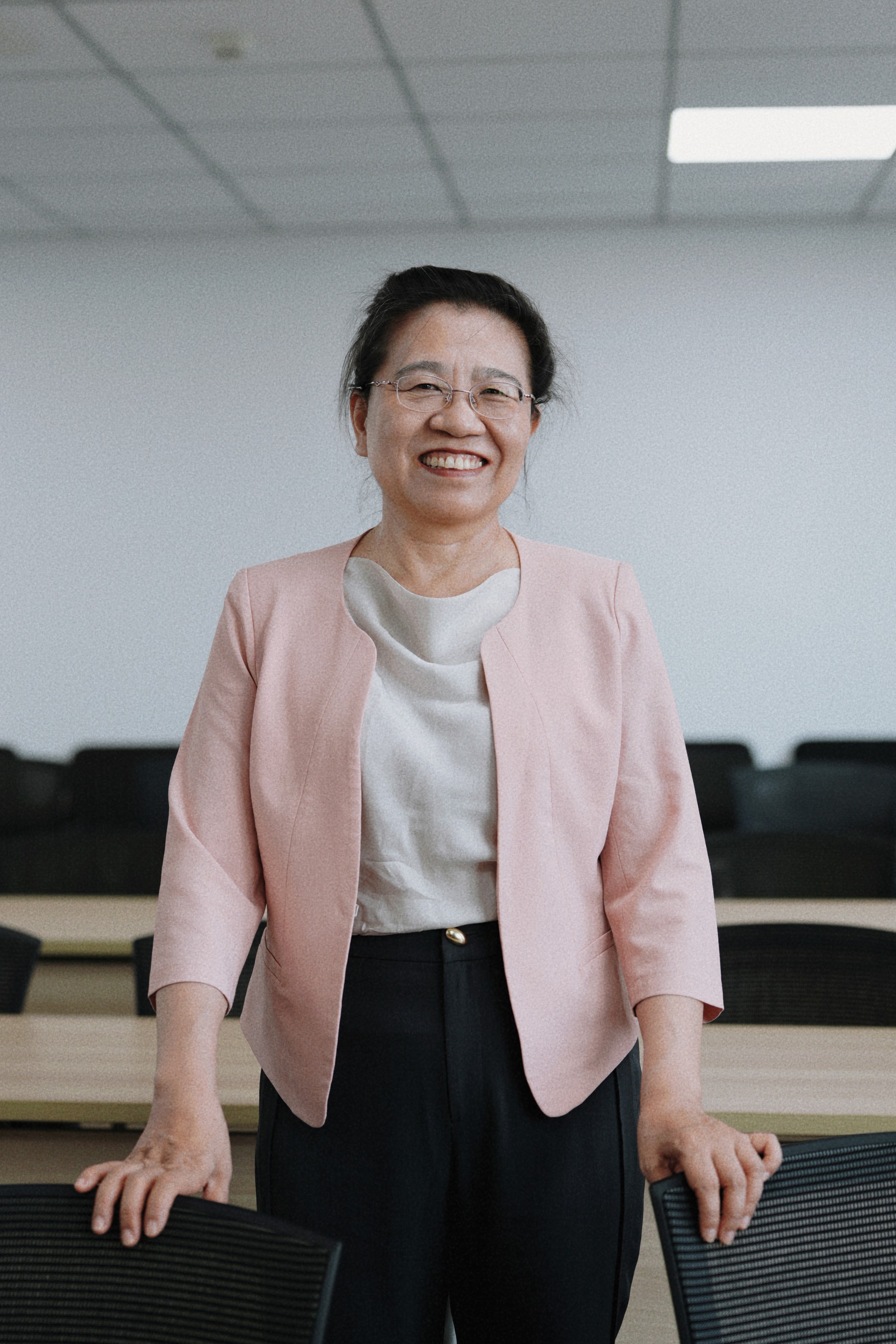
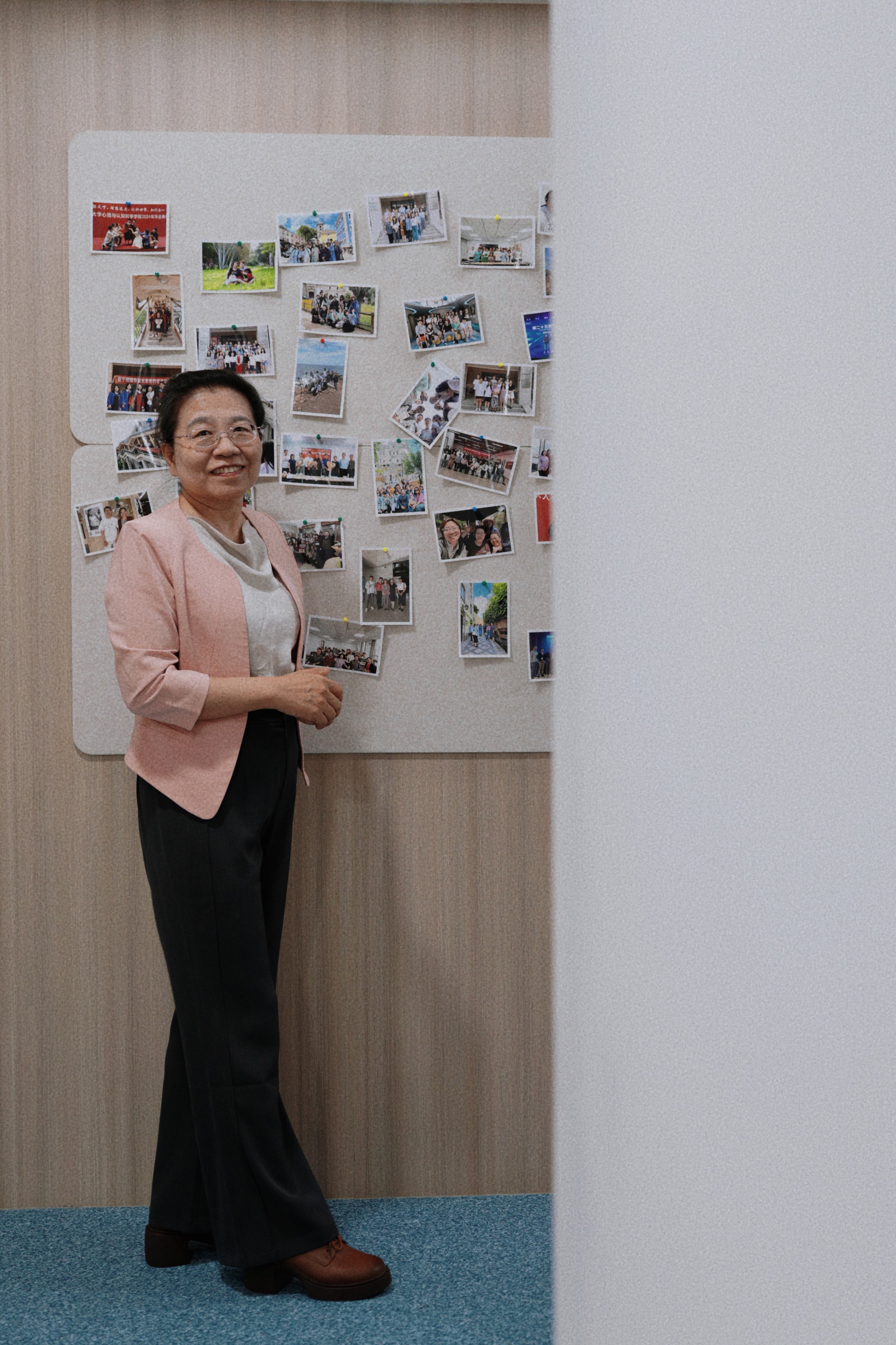
Professor Su Yanjie
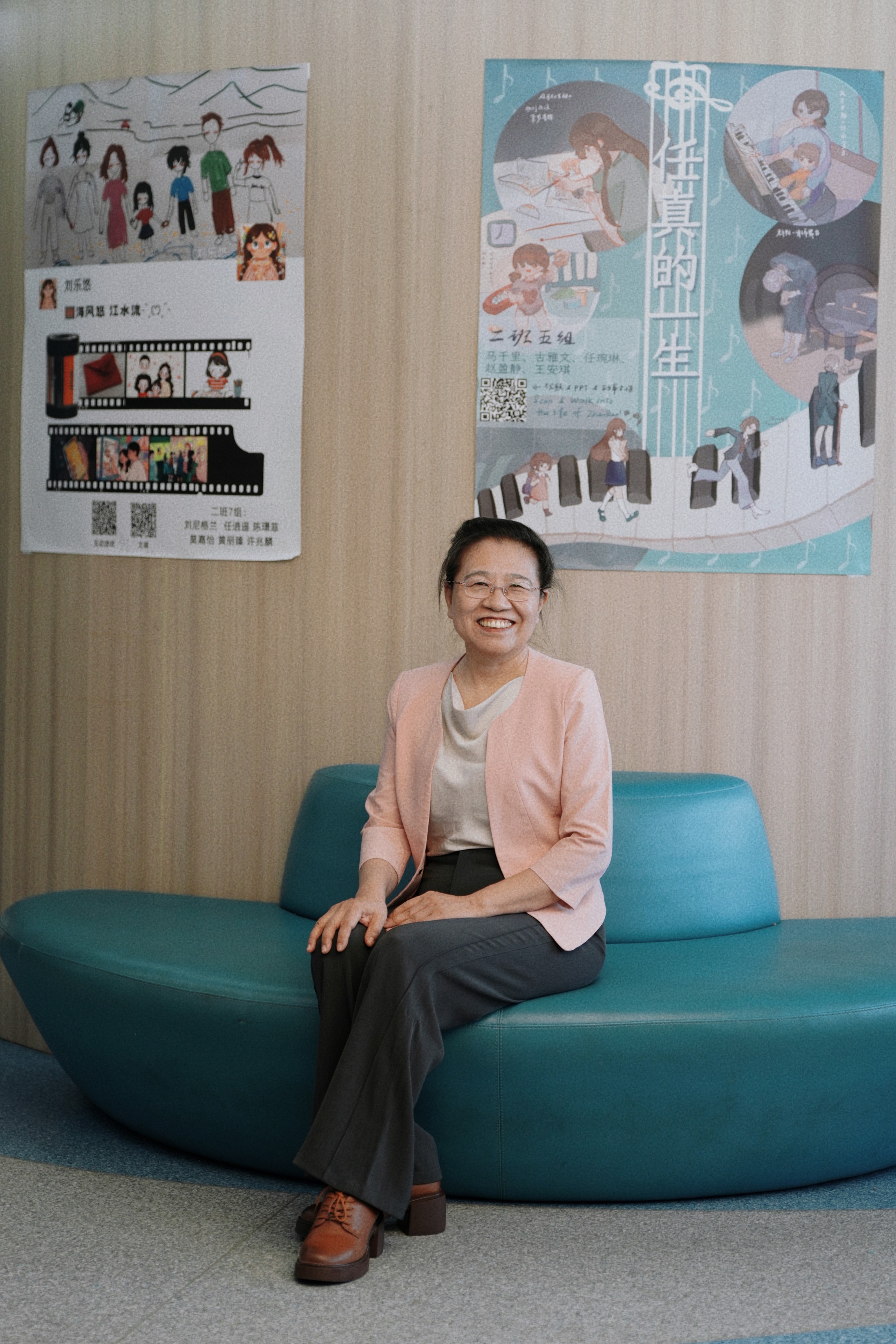
A central component of her course asks students to create a person who does not exist. Working in groups, they give the fictional character a name and family, construct their childhood and relationships, and design experiences ranging from love and conflict to the challenges of adulthood and eventually, death.
Some students become sufficiently engaged to keep a diary for the fictional person throughout the semester. Su believes this assignment encourages students to apply theories of human development to a continuous life story, while considering how family, relationships and social environments interact with psychological development. “If you can become this involved,” she said while looking at one of the students’ posters, “then the course is worth it.”
Su's own journey in psychology began in 1983, when she entered PKU to study the discipline. Psychology was far from the popular field it is today and her cohort had only around 20 students. She completed her doctoral degree in 1992 and remained at PKU.
Her initial academic interests, however, were not in child development. As an undergraduate, she was interested in interpersonal relationships and studied sociology alongside psychology, and for a time considered pursuing social psychology.
Her eventual direction was shaped partly by the development of psychology in China at the time, and partly by two professors who taught physiological and animal psychology. They were, in her memory, the kind of scholars she wanted to become: elegant, knowledgeable and academically accomplished.
Her primary research examines children's performance on classic false-belief tasks and has identified developmental patterns among Chinese children that did not entirely correspond to those observed in Western samples. The findings raised a question that initially surprised her. Chinese culture places considerable emphasis on understanding others and “reading the room,” she thought, so why did Chinese children show a different developmental pattern in some of these tasks?
The question led Su and her team to examine the relationship between cultural experience, family conversation and children's understanding of other people's minds. Over time, the research reinforced a broader principle: development cannot be separated from the environment in which a person actually lives. Different environments can produce different forms of adaptation, and what appears unusual under one set of expectations may have a different meaning in another context.
That idea has gradually become part of the way Su approaches not only research, but also teaching. She believes that students need to encounter people rather than simply learn about them. After teaching developmental psychology for years, she began arranging visits to hospitals, where students could observe newborns who were only a day old. The contrast between a photograph of a baby on a screen and an actual newborn lying in front of them could be striking.
Su also brought students to schools for children with intellectual disabilities. Concepts described in textbooks as “atypical development” suddenly acquired a face, a voice and a gaze. The experience, she said, showed students something that classroom knowledge alone could not. “You read it in a book, but it is particularly different when you go and meet the actual person,” she said.
Artificial intelligence has given psychology another dimension. As machines become capable of surpassing humans in an increasing number of individual tasks, Su has become more interested in the distinction between intelligence and wisdom. Humans possess bodies, emotions, experiences and relationships, and must integrate all of these while navigating complicated environments.
This distinction also points to a changing role for teachers. As knowledge becomes easier to obtain, what students need from teachers may no longer be simply the transmission of knowledge. It may instead be the ability to ask a better question, to acknowledge what one does not know, and to resist the impulse to reach a conclusion too quickly.
Perhaps this is also what developmental psychology has taught Su after more than 40 years: a person is rarely finished when we first encounter them. A child who has not yet learned something may simply be developing along a different path. A student who has not yet found an answer may still be working toward one. And a person who has made a mistake may still have the opportunity to stop, reflect and continue.
To understand development is to understand that a person is always becoming. No particular stage of life is the final definition, and no single moment is the whole story.
Written by: Wong Jun Heng
Edited by: Zhang Jiang