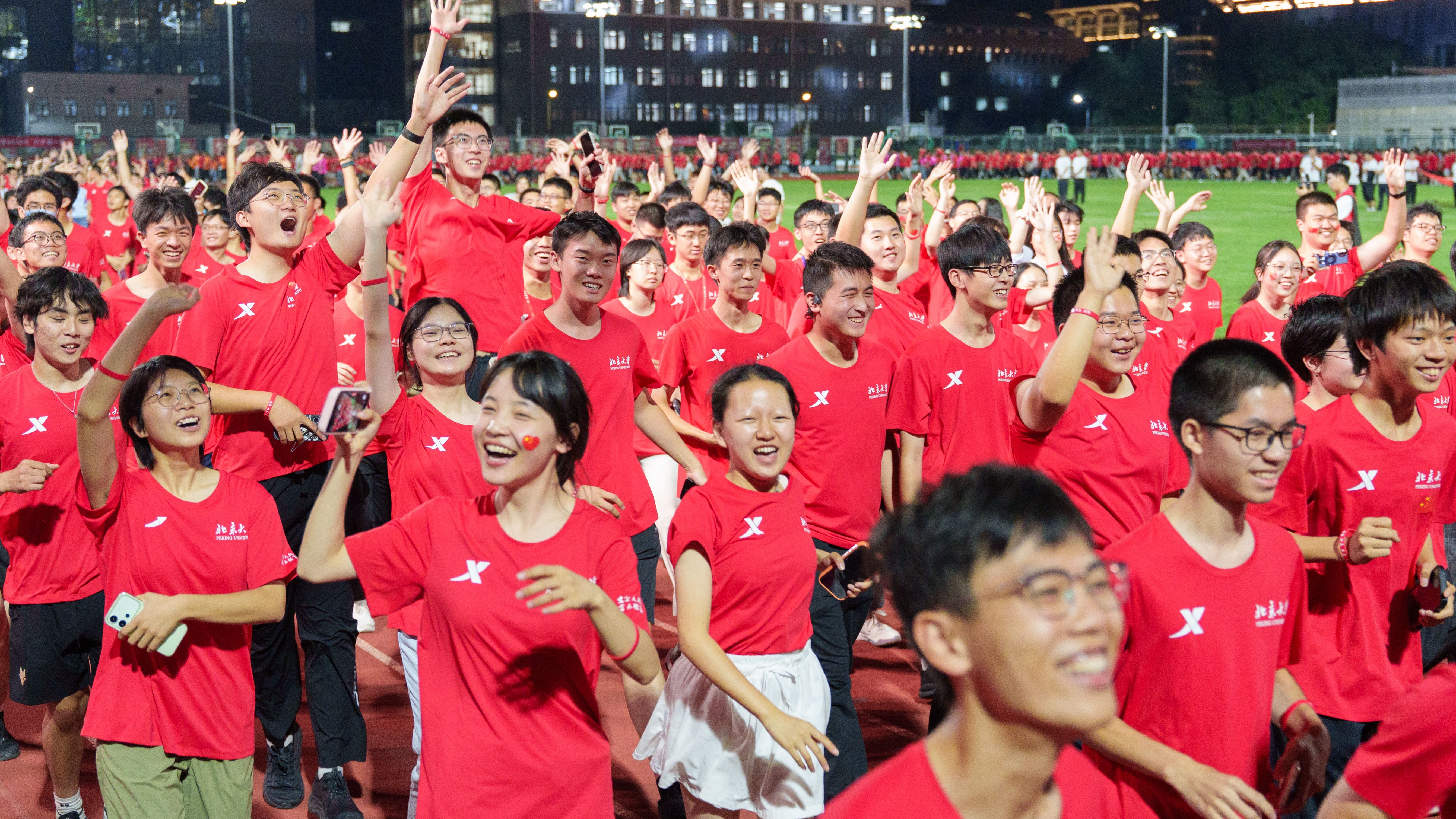
Peking University, October 26, 2026: As a computer science undergraduate at Peking University (PKU), Yu Lijun could hardly have imagined that within a few years he would help develop an artificial intelligence system capable of turning written prompts into videos.
His interest in computers, however, began much earlier. In high school, the bell system was sometimes suspended during mock exams to avoid disrupting graduating seniors.
But classes continued as usual for everyone else, leaving teachers and students without their usual signal that a lesson was over. Yu came up with a simple solution: he wrote a program that made his classroom computer ring at the scheduled times.
It was a useful fix for his classmates — and typical of Yu, who was more interested in tinkering with computers than playing video games on them. He wanted to understand how things worked and what he could make them do.
Today, the PKU alumnus works on Google's Gemini models at Google DeepMind, where questions are considerably more complicated. His research has helped advance artificial intelligence beyond recognizing what happens in a video toward generating videos of its own.
In 2024, VideoPoet, a research project he co-led, won the Best Paper Award at the International Conference on Machine Learning (ICML). And he was included in this year's MIT Technology Review Innovators Under 35 Asia Pacific list.
But Yu has also been thinking about something that is harder to measure than improvements in video quality: as AI-generated videos become more convincing, what are they actually useful for?
When Yu began researching video generation, producing even a short video that looked realistic was a significant challenge. Models struggled with tasks that can now seem routine, such as producing moving images from a written description or editing part of an existing video. As the technology has improved, Yu has found himself asking what people will actually do with it. More impressive outputs, he notes, do not necessarily translate into greater productivity.
Charting new frontiers
That pragmatism goes back to the classroom bell, though there was little indication then that Yu would end up in AI. At PKU, he studied computer science despite encouragement from his family to pursue economics, a popular major at the time. He eventually studied both, graduating with two bachelor's degrees in 2019.
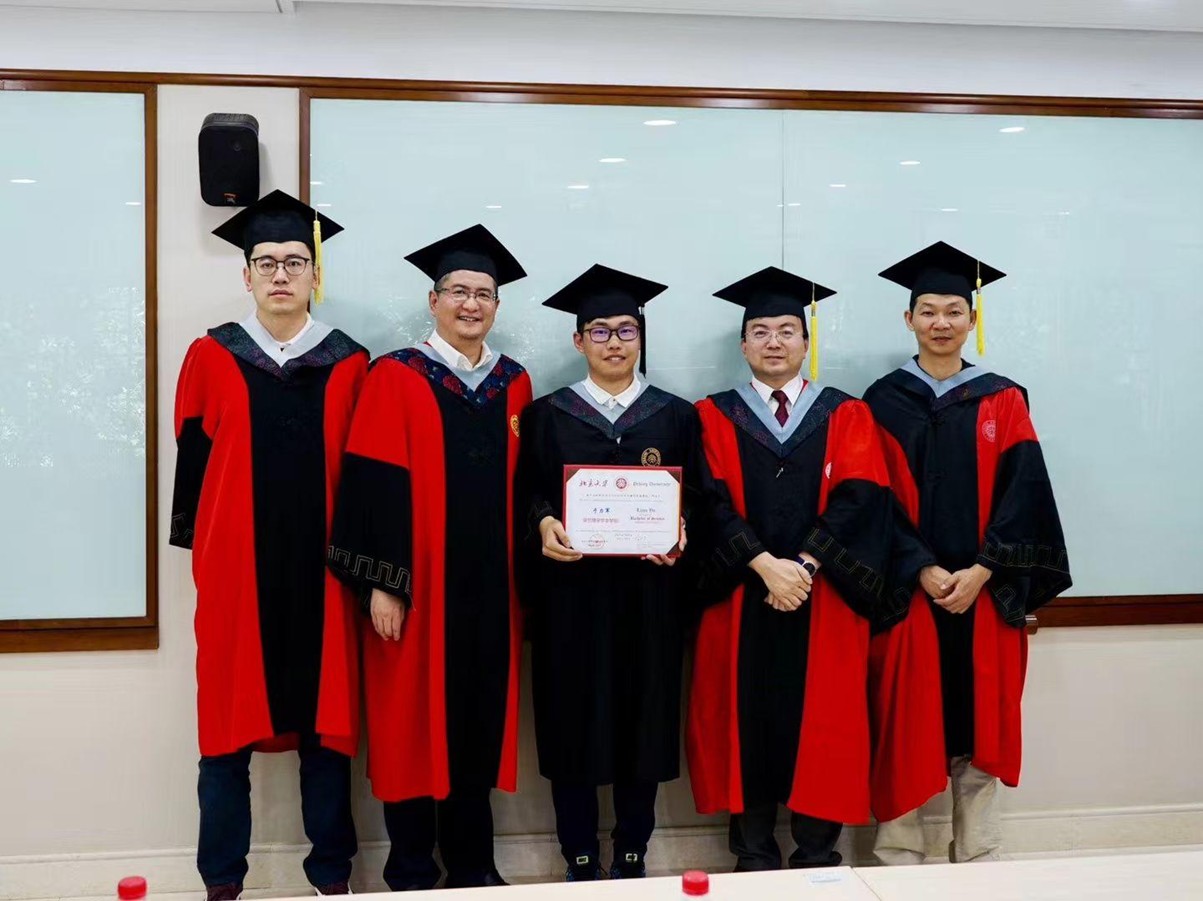
Yu Lijun at his undergraduate graduation at Peking University.
Computer science explained how systems were built; economics prompted questions about how resources are distributed and why people make certain choices. He later came to see that the usefulness of technology depends as much on social needs as on technical capabilities.
Not every class was smooth sailing. A difficult mechanics class left him struggling to catch up with classmates with stronger backgrounds in physics. Then, in his second year, an introductory computer systems course caught his attention. He read the textbook before the semester began and became fascinated by how hardware and software worked together.
He briefly considered researching operating systems. Then his instructor, Chen Xiangqun, encouraged him to explore AI and connected him with a more experienced researcher at Microsoft Research Asia. Yu has described that guidance as a turning point in his career.
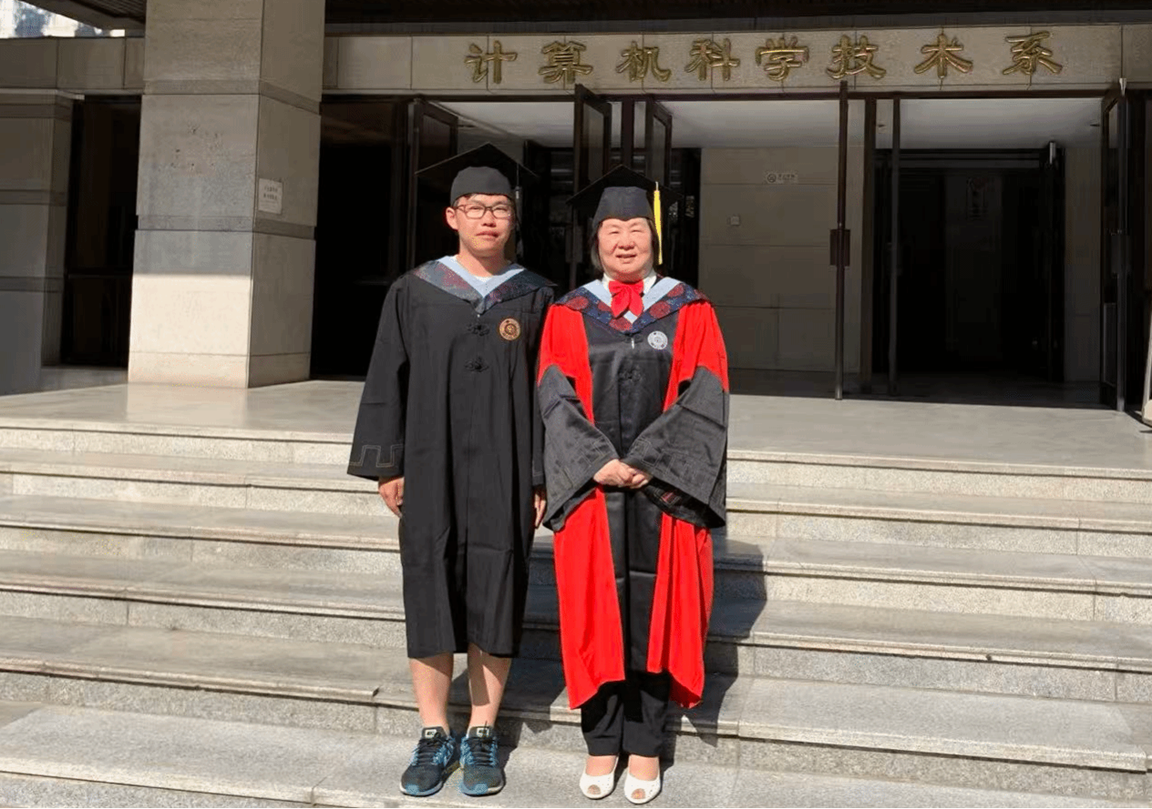
Yu Lijun's graduation photo taken outside the Department of Computer Science and Technology at Peking University.
From understanding videos to generating them
Another opportunity arose in 2018, when a PKU summer research program took him to Carnegie Mellon University. After contacting multiple professors about research opportunities, he joined Alexander G. Hauptmann's laboratory and began studying video analysis. Unlike still images, videos carry information across time, making them more demanding for computers to process.
During his doctoral research, a Google internship offered another change in direction. He connected with researcher Lu Jiang and began working on video generation instead of video understanding.
That led to MAGVIT, a system that could handle several video-generation tasks with a single model. Yu still remembers seeing its early output in 2022. By today's standards, the videos might not look especially impressive, but for someone building such a system for the first time, they represented a major step forward.
The work led to MAGVIT-v2 and then VideoPoet, which used a multimodal approach to work across text, images, video, and audio. Instead of treating each task as a separate problem, the researchers explored how one framework could support a range of tasks including video generation from prompts, video generation from images, and video editing.
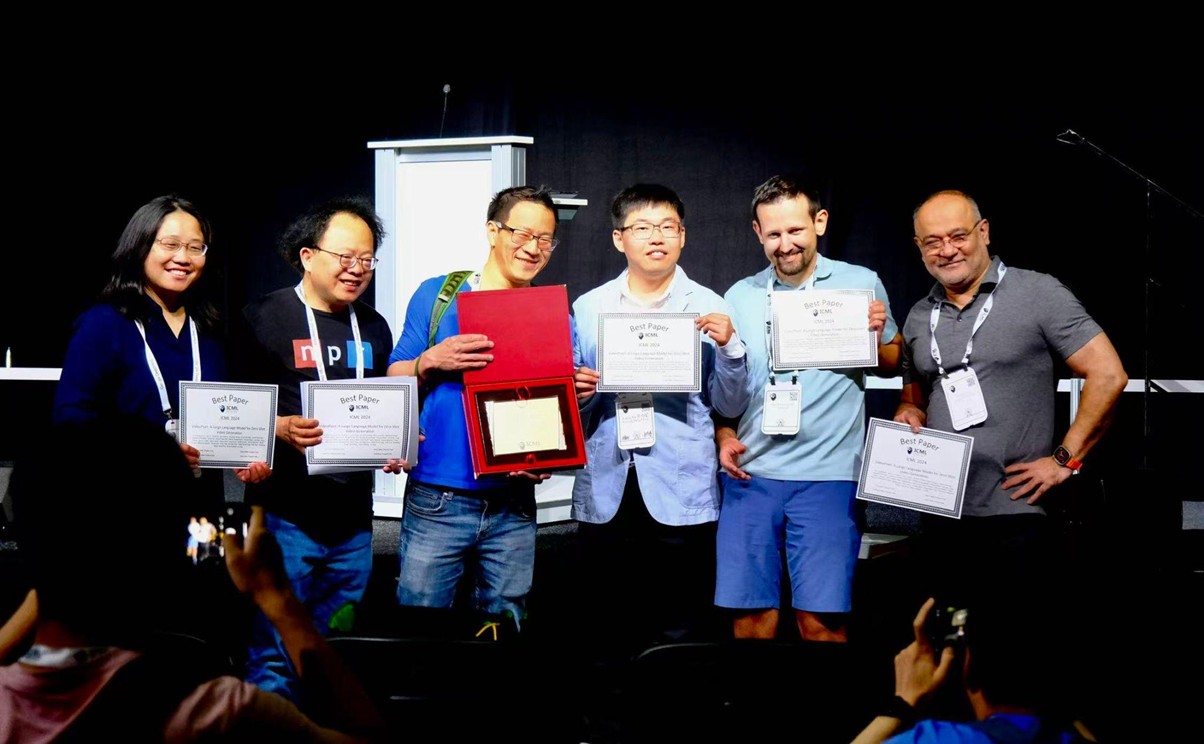
Yu and his collaborators at the ICML 2024 award ceremony.
Beyond what AI can generate
Now Yu is looking beyond what the technology can produce on a screen. He is interested in applications that interact with the physical world, including robotics, but is careful not to confuse progress in video generation with progress in physical tasks. A better multimodal understanding can help a robot recognize its surroundings and decide on its next move. But the robot still needs time and space to fold clothes or clear dishes, regardless of how realistic an AI-generated video may appear.
Yu sees a similar challenge in scientific research. While AI can help researchers gather information, perform tasks and generate results more efficiently, he emphasizes that speed does not guarantee accuracy. Researchers must still understand how results were obtained, evaluate the methods used, and determine whether the evidence supports the conclusions. For Yu, this in turn highlights the importance of scientific rigor, as the responsibility for ensuring reliable findings ultimately remains with the researcher, regardless of how much of the work is assisted by AI.
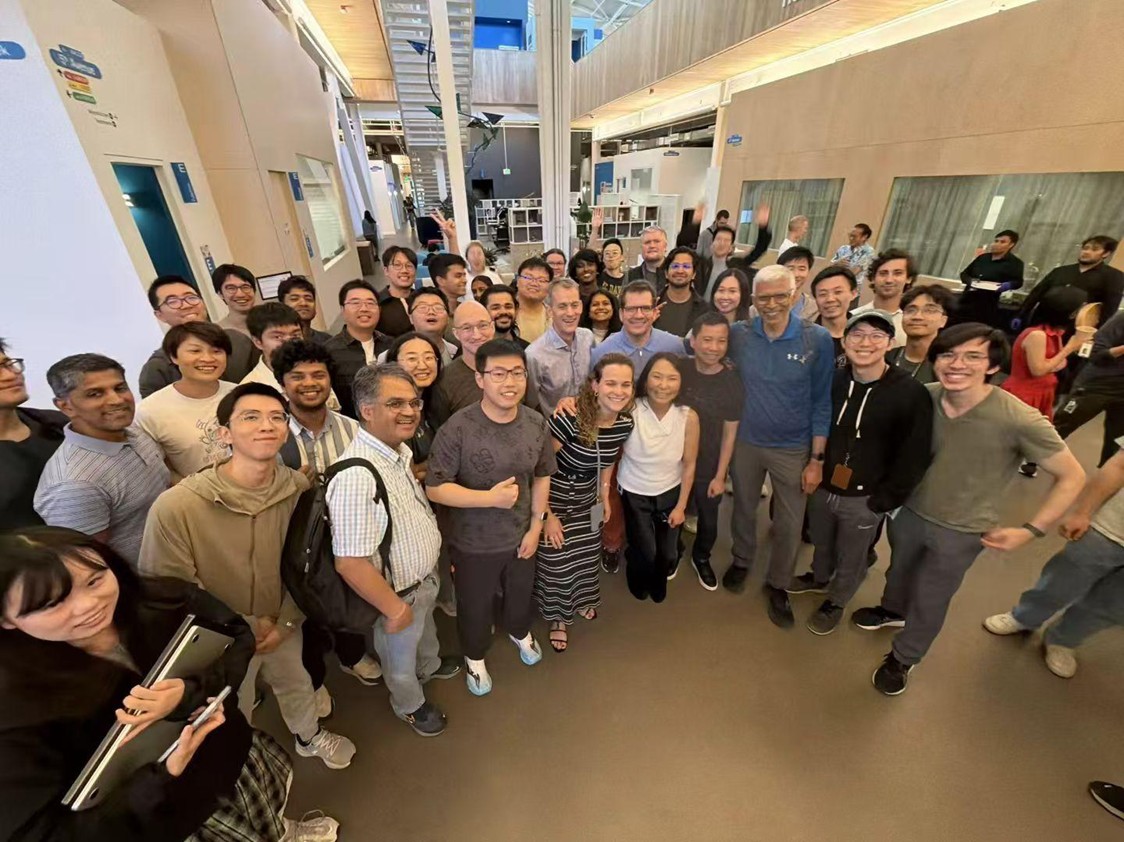
Yu with friends
His advice to students considering the field is less about keeping pace with each new model than about being sure they want to understand the problems underneath. He has a question for them: “When the AI buzz eventually fizzles out, would you still want to research it?”
Written by: Chiara Isabelle Gunaman
Edited by: Wong Jun Heng, Chen Shizhuo
Source: PKU News (
Chinese)