Peking University, December 17, 2025: A research team led by Professor Li Sheng from the School of Life Sciences at Peking University published a research paper titled "Effects of protected areas on human-induced shifts in nocturnal activity in mammal communities in southwestern China" in
Conservation Biology. The study reveals the crucial role of protected areas in mitigating human-induced behavioral disturbances to mammals.
 Background
Globally, intensified human activities have disrupted wildlife behaviour. Beyond the lethal effects of hunting, they cause "sublethal effects" by altering mammals’ daily rhythms—mammals often shift to nocturnal activities to avoid humans, at the expense of reduced foraging time or diminished anti-predator strategies. Protected areas are biodiversity cores, but evidence of their ability to mitigate such disturbances has been lacking.
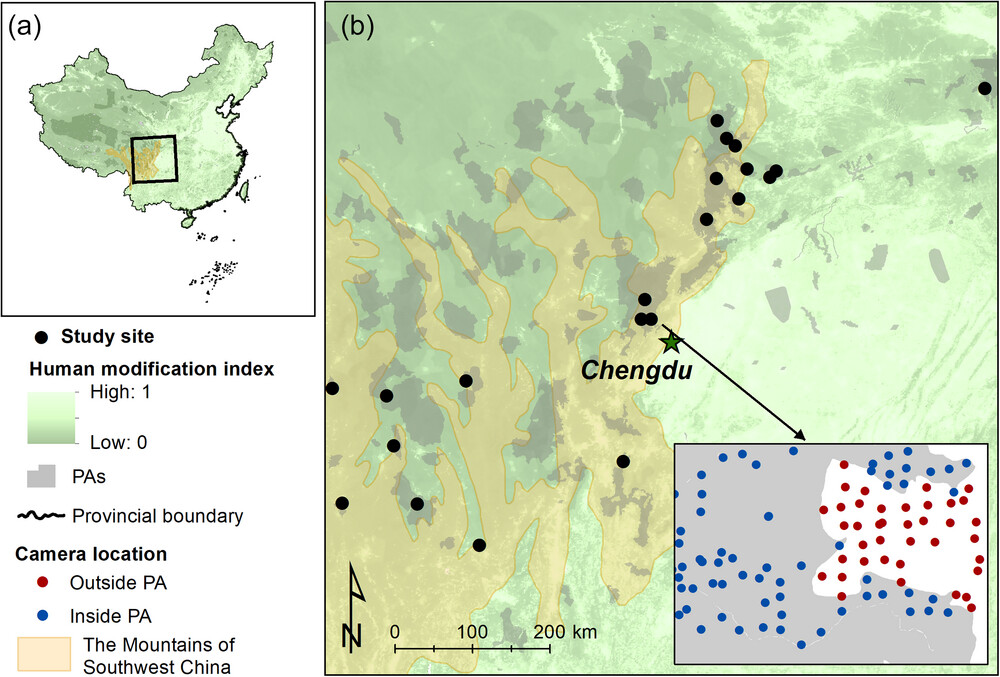 Figure 1. Study area (a): location of the Mountains of Southwest China, and survey sites (b):locations of the 21 study sites and the layout of camera stations at the Anzihe Provincial Nature Reserve (In Figure 1b, the enlarged view at the bottom right shows the distribution of infrared camera sites in and around nature reserves, where red sites represent areas outside protected areas and blue sites represent areas inside protected areas).
Key Findings
Figure 1. Study area (a): location of the Mountains of Southwest China, and survey sites (b):locations of the 21 study sites and the layout of camera stations at the Anzihe Provincial Nature Reserve (In Figure 1b, the enlarged view at the bottom right shows the distribution of infrared camera sites in and around nature reserves, where red sites represent areas outside protected areas and blue sites represent areas inside protected areas).
Key Findings
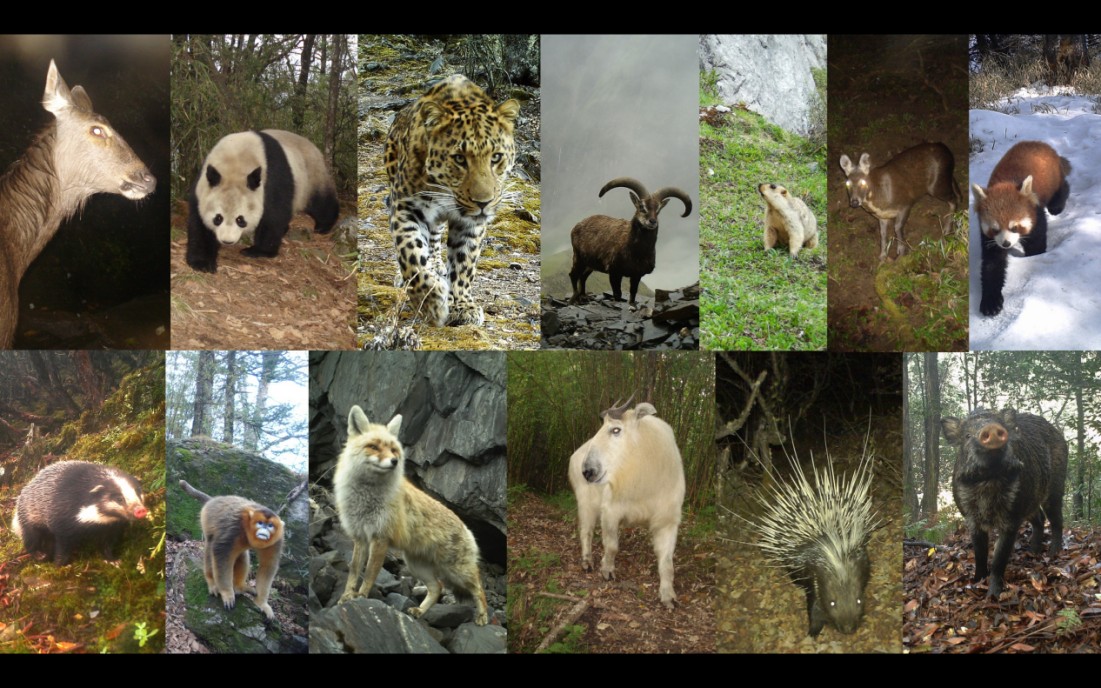
Focusing on 29 large and medium mammal species, the study used extensive camera-trap data from 1,897 locations of 21 study sites, spanning 200,750 camera days, peppering the mountains of Southwest China to explore how protected areas could impact human disturbance to mammal activities.
Outside protected areas, greater human disturbance led to increased mammal nocturnal shifts; most groups delayed activities by 1.23–2.89 hours. With equal levels of human disturbance, protected areas saw far smaller mammal nocturnal shifts—most groups showed no obvious shifts. Notably, protected areas reduced disturbances and "sublethal effects" by lessening wildlife’s fear of humans.
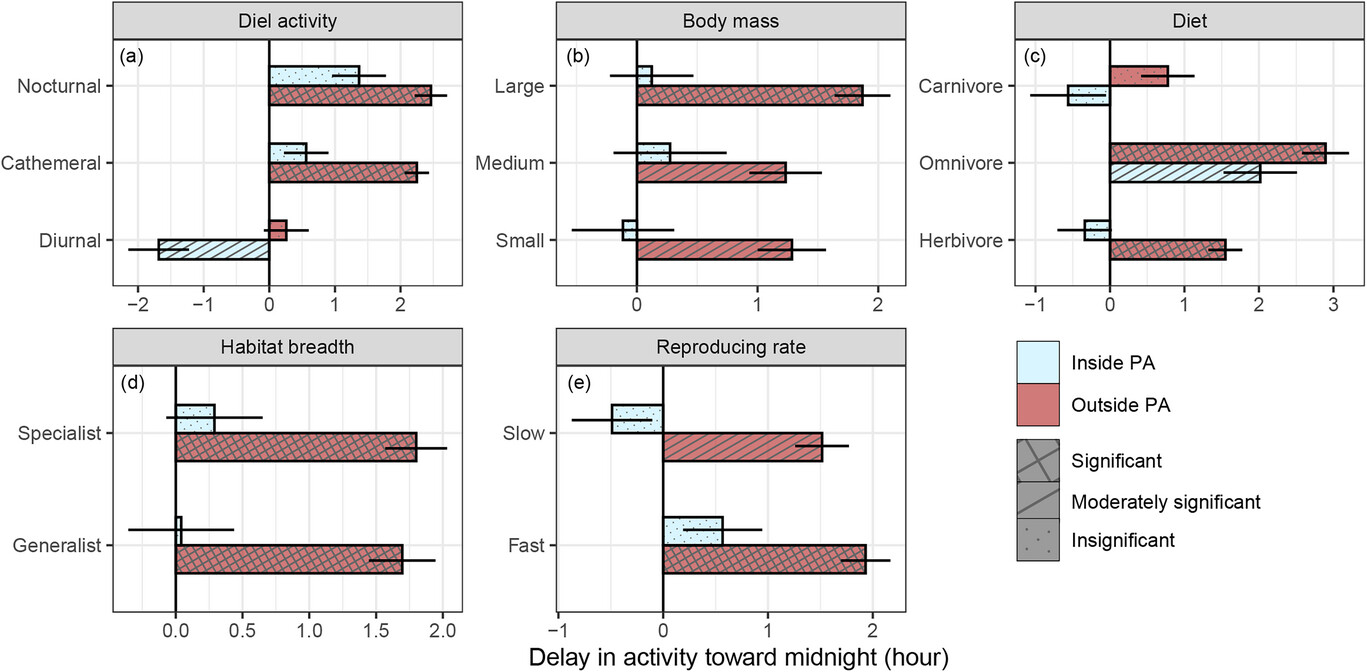 Figure 2. Estimated difference in delay in activity relative to (a) diel activity, (b) body mass, (c) diet, (d) habitat breadth, and (e) reproductive rate for eachmammal guild when human modification index values range from 0 inside to 0.35 outside protected areas (PAs) (whiskers, 1 posterior SD; bars, significance of theestimated time delay).
Future Implications
Figure 2. Estimated difference in delay in activity relative to (a) diel activity, (b) body mass, (c) diet, (d) habitat breadth, and (e) reproductive rate for eachmammal guild when human modification index values range from 0 inside to 0.35 outside protected areas (PAs) (whiskers, 1 posterior SD; bars, significance of theestimated time delay).
Future Implications
Future assessments of protected areas should include behavioral indicators (e.g., diel rhythms) for comprehensive evaluations. Amidst global expansion of human activity, the study provides a new scientific perspective and policy basis for protected area design, management, and biodiversity conservation optimization.
* This article is featured in PKU News "Why It Matters" series. More from this series.
Read more: https://doi.org/10.1111/cobi.70188
Written by: Luo Siwei
Edited by: Lee Jie Xin, Chen Shizhuo
Source: PKU News (
Chinese)