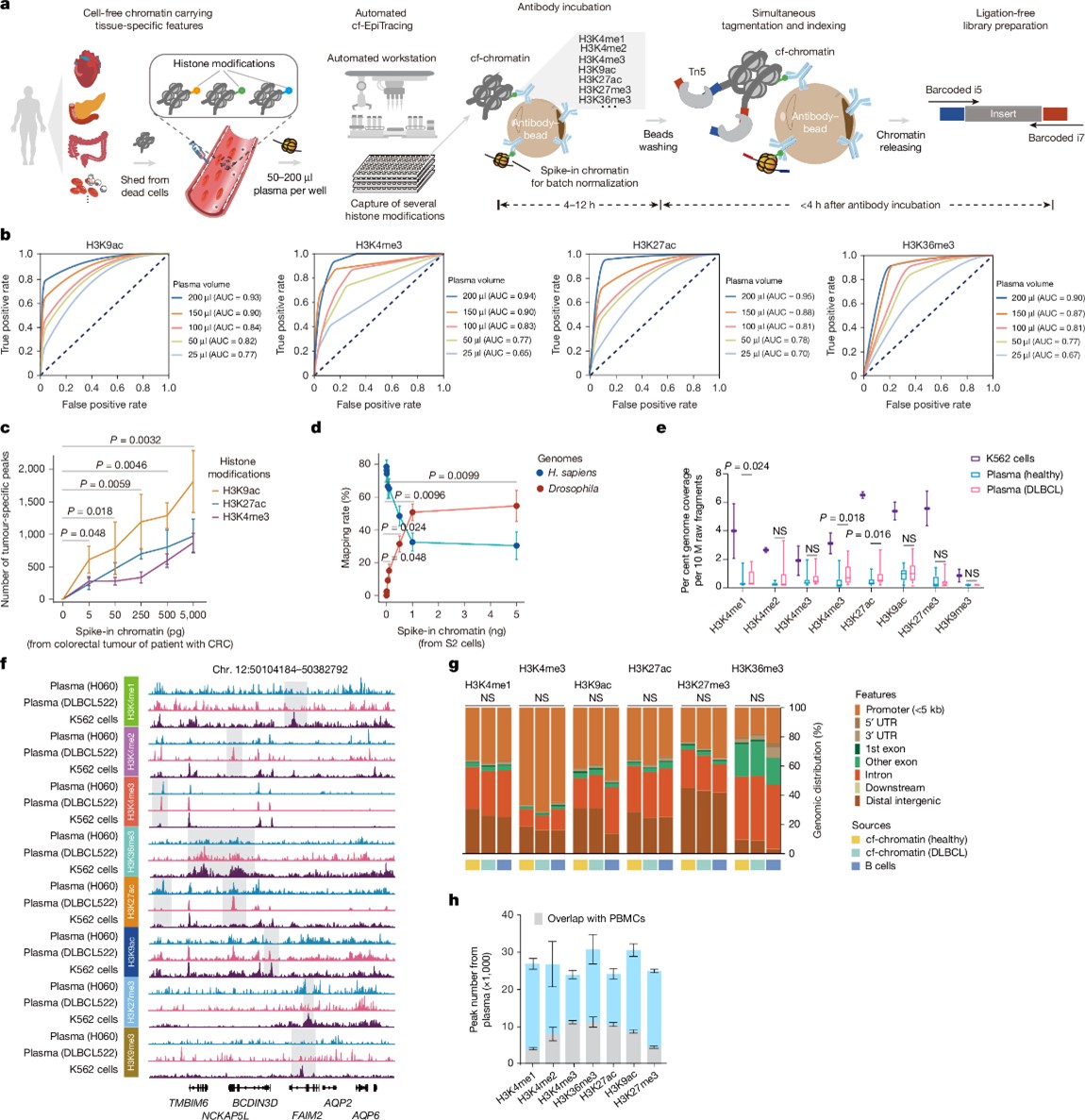
Peking University, Mar 16, 2026: An innovative platform developed by PKU researchers called "cf-EpiTracing" has proved capable of detecting and tracing diseases from as little as 50 μl of human plasma, or roughly a drop of blood. The research, published in Nature on March 4, 2026, was led by Professor He Aibin from the College of Future Technology and Professor Jing Hongmei from the Department of Hematology, PKU Third Hospital.
Why it mattersThe platform has delivered impressive results in differentiating patients of colorectal cancer from healthy people. By integrating multimodal epigenomic features from cell-free chromatin and leveraging machine learning algorithms, cf-EpiTracing reached an accuracy rate of up to 97.6% in training group samples, and remaind robust at 92.2% in independent validation group samples. It also achieved a true detection rate of 77.27% in detecting patients with colorectal precancerous lesions, or colorectal adenoma (CRA).
In another notable discovery, the technology uncovered that patients with diffuse large B cell lymphoma exhibit stronger signals of CD34-positive cells in their plasma, potentially reflecting bone marrow involvement and disease aggressiveness. This finding offers new insights for lymphoma subtyping and treatment strategies.