
Peking University, July 20, 2026: A research team led by Professor Yang Yuchao of Peking University, together with researchers from the Shanghai Institute of Microsystem and Information Technology, Chinese Academy of Sciences, has developed the world’s first chip that can match the functioning speed of the human brain. The study, titled "A sub–10-millisecond neural dynamical system based on phase-change memristors," was published in Science.
Background
Neural dynamical systems combine neural networks with mathematical equations that describe how complex systems change over time. They are useful for physical modeling, medical imaging, and three-dimensional brain reconstruction. However, these systems require repeated calculations, error checks, and adjustments to the size of each calculation step. In conventional computers, data must also move frequently between the memory and processor, increasing processing time and energy use.
Why it matters
Fast and accurate brain modeling is important for technologies that must respond in real time, including brain–computer interfaces, surgical navigation, and medical imaging. Existing hardware often requires too much time and power for these demanding calculations. By performing key operations directly in memory, the new chip reduces data movement and brings high-quality brain modeling closer to real-time use.
Key findings
Fabricated using a 40-nm process, the chip's in-memory computing and conductance-drift arrays occupy only 0.28 square millimeters. It operates at 50 MHz and uses nine pipeline stages for each integration step. In neural dynamics calculations, the system is 3.82× to 36.27× faster and consumes 11.75× to 24.73× less power than state-of-the-art ASICs, or application-specific integrated circuits. In cortical surface reconstruction tasks, it achieves up to a 478.18× speedup compared with an NVIDIA A100 GPU.
The researchers used the chip to reconstruct the surfaces of the brain's white and gray matter and generate 3D manifold-based surface meshes in real time. The system produced smooth, closed, and topologically consistent cortical surfaces while accurately capturing complex brain folds. It also performed well in average symmetric surface distance and Hausdorff distance measurements, demonstrating its ability to support high-fidelity brain modeling.
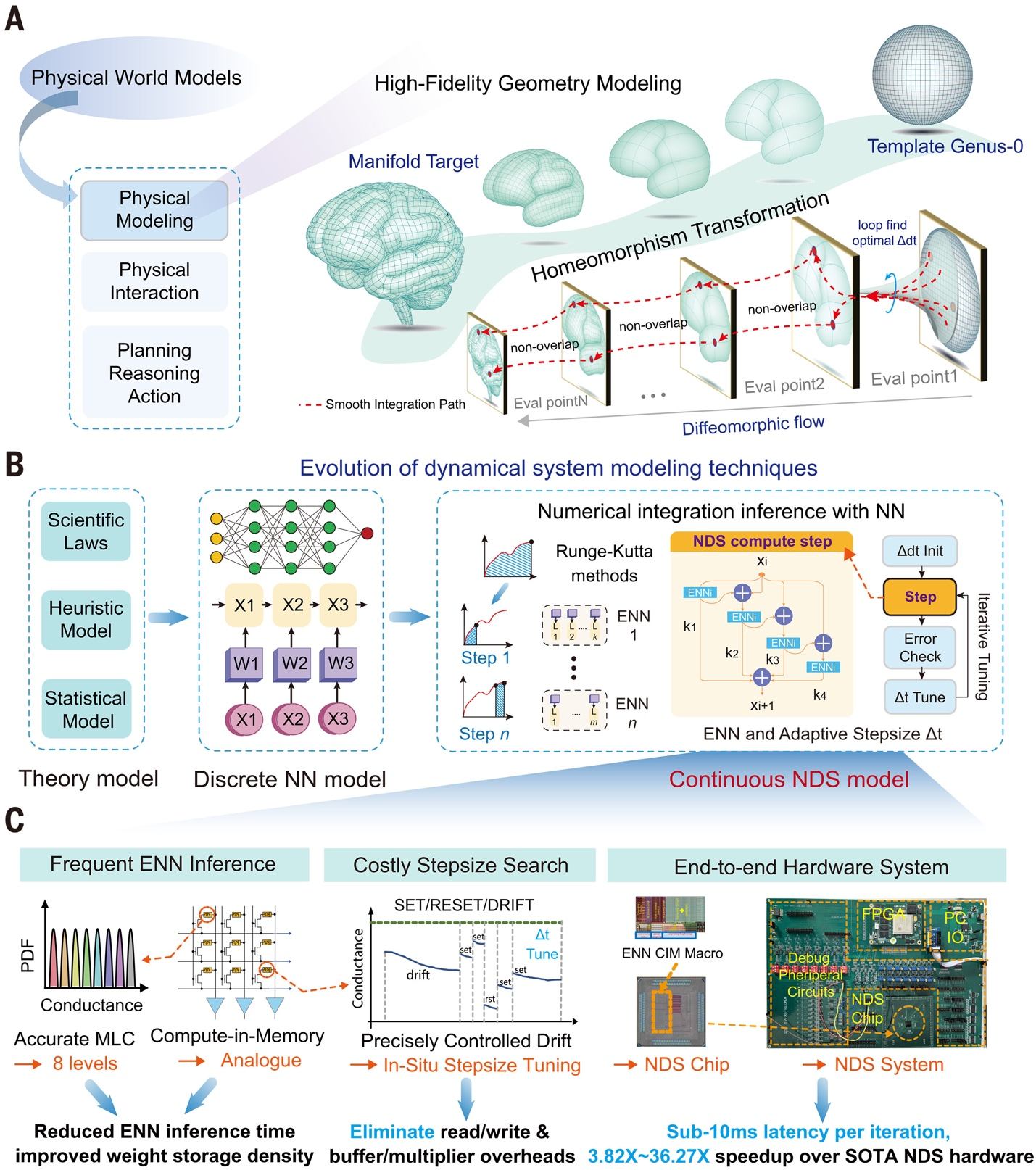
Fig. 1. Overview of NDS hardware with multilevel and fine-grained CCD memristor.
Future Implications
The chip could help move complex neural modeling from slow, offline processing toward millisecond-scale operation. In the future, the technology may support brain–computer interfaces, digital brain twins, real-time surgical navigation, brain-surface reconstruction, and tools for studying neurodegenerative diseases such as Alzheimer's and Parkinson's.
*This article is featured in PKU News "Why It Matters" series.
More from this series.
Read more: https://www.science.org/doi/10.1126/science.aee6277
Written by: Akaash Babar
Edited by: Chen Shizhuo
Source: PKU WeChat (
Chinese)