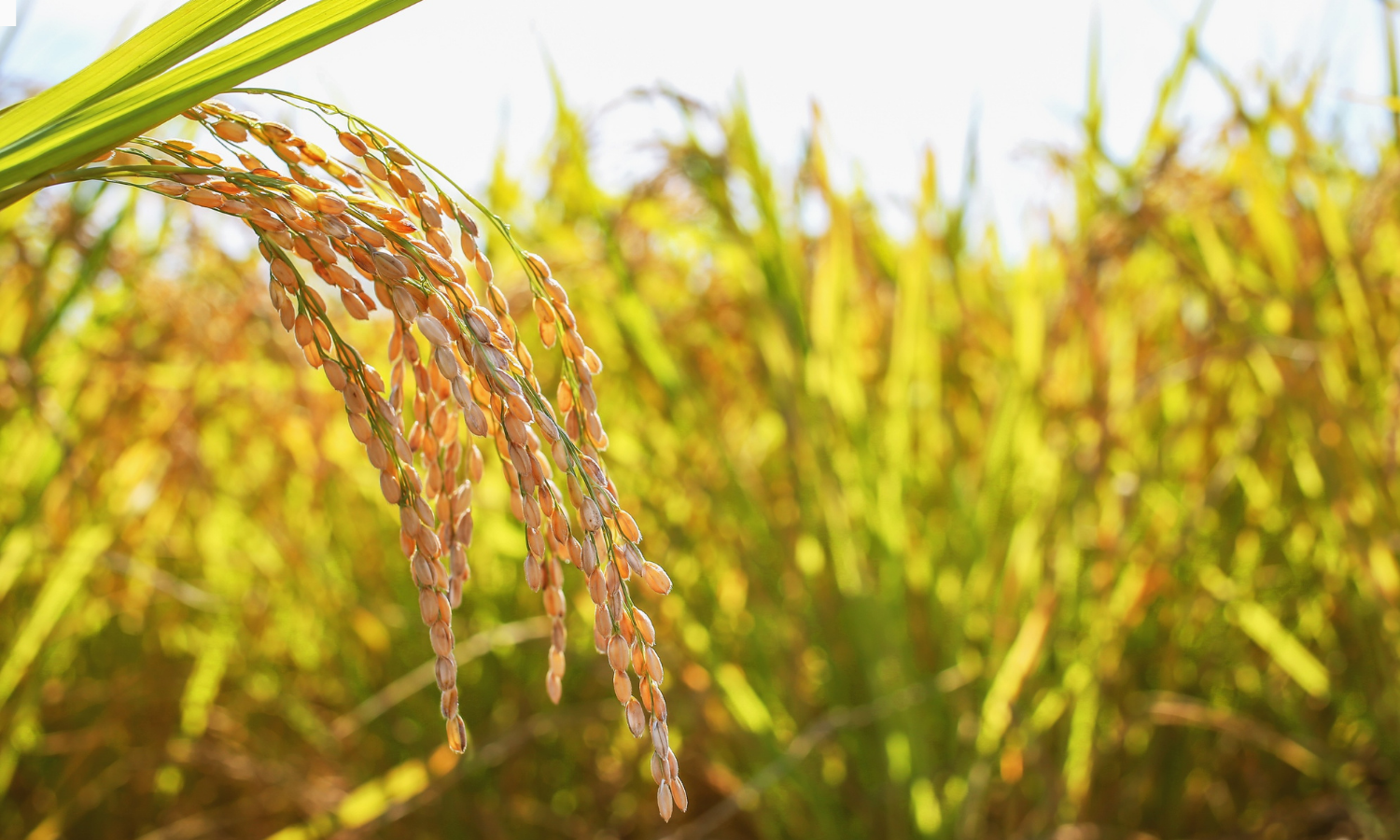
Peking University, August 12, 2026: Rice is a staple food for more than half of the global population, yet how climate change will affect future rice production remains uncertain. A major challenge is that previous assessments often focused on rising average temperatures while overlooking the impacts of extreme heat events.
A research team involving Professors Zhou Feng and Wang Xuhui from Peking University's College of Urban and Environmental Sciences, together with international collaborators, has revealed that extreme high temperatures are a dominant driver of warming-related rice yield losses. The study, titled "Vulnerability to high temperature shapes global warming impacts on rice yield," was published in
Science Advances.
Why it matters
Global warming threatens agricultural productivity, particularly for heat-sensitive crops such as rice. However, current estimates of future yield losses vary widely because many crop models do not fully capture the effects of extreme heat, especially during critical growth stages.
Key findings
The research team analyzed 214 observations from field-warming experiments worldwide and compared them with simulations from seven crop models. The results show that temperatures above 30°C are a key factor controlling rice yield losses. At more than 70% of experimental sites, heat exposure accounted for over half of the observed yield changes.
Rice is particularly vulnerable during reproductive stages, including flowering and grain filling. Extreme heat during these periods reduces grain-setting rates and disrupts grain development, leading to significant yield declines.
The study found that existing crop models substantially underestimate rice sensitivity to extreme heat. Under a 1°C global warming scenario, previous models projected a global rice yield decline of 3.8 ± 1.7%, while field-observation-based corrections increased the estimate to 8.1 ± 2.3%. The largest revisions occurred in South and Southeast Asia, where rice production is highly exposed to heat stress. For Pakistan, India, and Bangladesh, projected yield losses increased from 2.1% to 6.6% after model correction. These findings highlight that extreme heat, rather than changes in average temperature alone, is a critical factor shaping future agricultural risks.
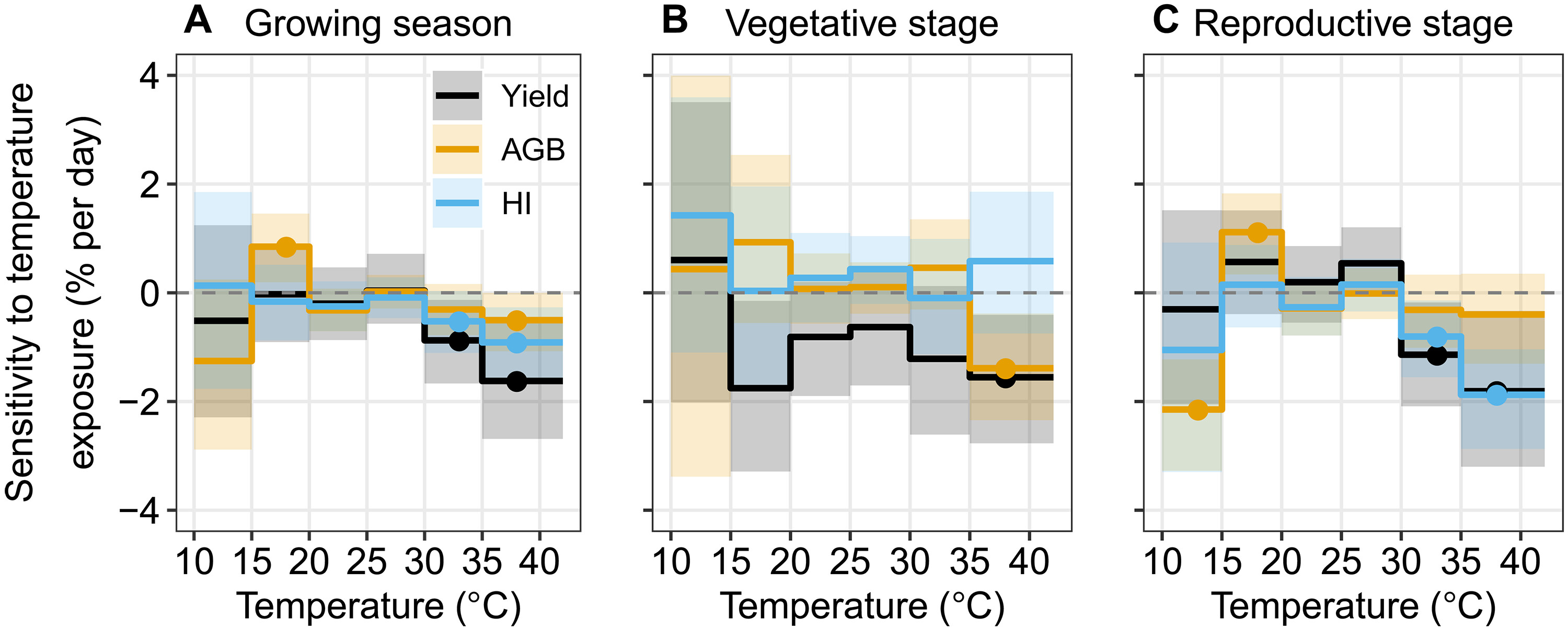
Fig. Sensitivities of rice yield, AGB, and HI to high-temperature exposures.
Future implications
This study provides a new approach for improving global crop models by incorporating field-based evidence of heat vulnerability. The results emphasize the need for climate adaptation strategies, including heat-tolerant rice varieties, optimized planting schedules, improved irrigation management, and better soil practices.
By improving projections of climate impacts on rice production, the research provides scientific support for strengthening global food security under a warming climate.
*This article is featured in PKU News "Why It Matters" series.
More from this series.
Read more: https://www.science.org/doi/10.1126/sciadv.aed9226
Written by: Akaash Babar
Edited by: Chen Shizhuo
Source: PKU News (
Chinese)